


Asustek Computer Inc (華碩) yesterday showcased key components of its artificial intelligence (AI)-driven smart city initiatives at a trade show in Taipei, eyeing new business opportunities as cities develop sovereign AI infrastructure.
Advances in generative, multimodal and physical AI are driving cities toward a new phase of “sovereign AI,” Asustek cochief executive officer Samson Hu (胡書賓) told reporters on the sidelines of the Smart City Summit and Expo at Taipei Nangang Exhibition Center’s Hall 2.
The company showcased its “AI City” framework, which comprises three layers — computing infrastructure centered on AI servers, AI models and a platform layer for data processing and integration.
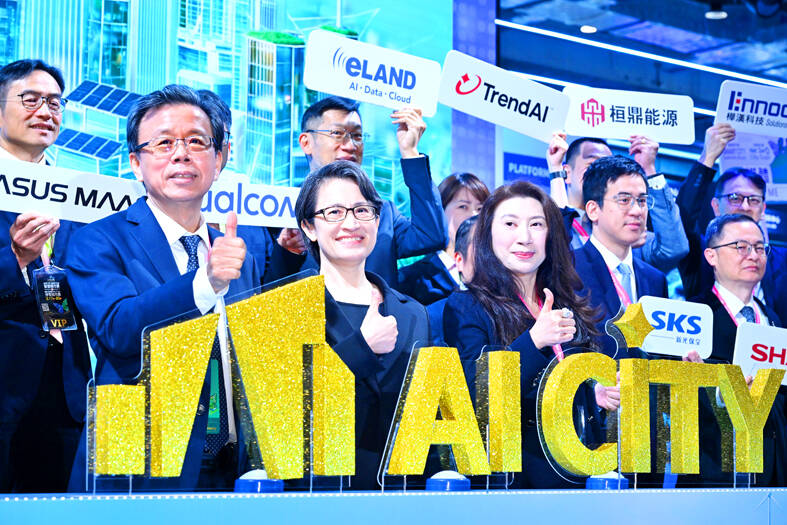
Photo: Chen Yi-kuan, Taipei Times
The framework supports applications such as smart transportation, healthcare, energy management and public services, enabling governments to shift toward data-driven decisionmaking, he said.
AI City initiatives are expected to generate multi-layered business opportunities as AI demand becomes more distributed, and extends to edge computing and Internet of Things devices, he said.
Asustek’s products include NUC mini PCs, industrial PCs and edge AI systems developed with Nvidia Corp, Hu said.

Photo courtesy of Asustek Computer Inc
Near-term growth would mainly come from AI server infrastructure, while edge AI is expected to drive long-term demand, he said.
To address power constraints, Asustek is promoting “virtual power plants,” which integrate idle electricity from households, businesses and factories.
Pilot projects are under way in Taichung, Yunlin County and Tainan, with applications to roll out from this year, he said.
The company has formed a “smart city national team” with Hon Hai Precision Industry Co (鴻海精密) and more than 30 Taiwanese firms to advance AI City solutions, he added.
At the expo, Asustek subsidiary Taiwan AI Cloud (台智雲) presented a comprehensive package of AI computing infrastructure, localized models and AI platform services, which would enable cities to quickly establish scalable AI infrastructure that meets cybersecurity and local governance requirements, it said.
Taiwan AI Cloud president Peter Wu (吳漢章) said the firm’s overseas customers are shifting from purchasing hardware to seeking integrated AI infrastructure and solutions, as generative AI advances and demand for graphics processing unit servers rises.
Overseas markets would be the firm’s main growth driver over the next three years, as it aims to maintain double-digit percentage growth this year and targets about 50 percent of revenue from abroad by 2028, he said.
The company has focused on enterprise clients in Japan and government projects in Vietnam, Wu said.
Europe is emerging as a potential market amid rising demand for sovereign AI and computing power, he added.
As AI development shifts from training to inference, enterprise demand is expected to become the next major growth driver, Wu said.
Taiwan AI Cloud plans to debut on the Emerging Stock Board in May. It reported revenue of about NT$3 billion (US$94.1 million) last year and net profit of about NT$130 million, company data showed.
Shares of contract chipmaker Taiwan Semiconductor Manufacturing Co (TSMC, 台積電) came under pressure yesterday after a report that Apple Inc is looking to shift some orders from the Taiwanese company to Intel Corp. TSMC shares fell NT$55, or 2.4 percent, to close at NT$2,235 on the local main board, Taiwan Stock Exchange data showed. Despite the losses, TSMC is expected to continue to benefit from sound fundamentals, as it maintains a lead over its peers in high-end process development, analysts said. “The selling was a knee-jerk reaction to an Intel-Apple report over the weekend,” Mega International Investment Services Corp (兆豐國際投顧) analyst Alex Huang
Taiwan Semiconductor Manufacturing Co (TSMC, 台積電) is expected to remain Apple Inc’s primary chip manufacturing partner despite reports that Apple could shift some orders to Intel Corp, industry experts said yesterday. The comments came after The Wall Street Journal reported on Friday that Apple and Intel had reached a preliminary agreement following more than a year of negotiations for Intel to manufacture some chips for Apple devices. Taiwan Institute of Economic Research (台灣經濟研究院) economist Arisa Liu (劉佩真) said TSMC’s advanced packaging technologies, including integrated fan-out and chip-on-wafer-on-substrate, remain critical to the performance of Apple’s A-series and M-series chips. She said Intel and Samsung
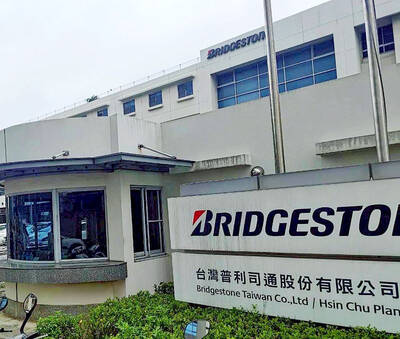
TRANSITION: With the closure, the company would reorganize its Taiwanese unit to a sales and service-focused model, Bridgestone said Bridgestone Corp yesterday announced it would cease manufacturing operations at its tire plant in Hsinchu County’s Hukou Township (湖口), affecting more than 500 workers. Bridgestone Taiwan Co (台灣普利司通) said in a statement that the decision was based on the Tokyo-based tire maker’s adjustments to its global operational strategy and long-term market development considerations. The Taiwanese unit would be reorganized as part of the closure, effective yesterday, and all related production activities would be concluded, the statement said. Under the plan, Bridgestone would continue to deepen its presence in the Taiwanese market, while transitioning to a sales and service-focused business model, it added. The Hsinchu
Taiwan Semiconductor Manufacturing Co (TSMC, 台積電) has approved a capital budget of US$31.28 billion for production expansion to meet long-term development needs during the artificial intelligence (AI) boom. The company’s board meeting yesterday approved the capital appropriation plan for purposes such as the installation of advanced technology capacity and fab construction, the world’s largest contract chipmaker said in a statement. At an earnings conference last month, TSMC forecast that its capital expenditure for this year would be at the higher end of the US$52 billion to US$56 billion range it forecast in January in response to robust demand for 5G, AI and


 RSS
RSS