


Taiwan is considering selling debt for the first time to finance overseas investments as it intensifies efforts to resist the diplomatic isolation imposed by China, officials familiar with the matter said.
The department of the Ministry of Foreign Affairs responsible for international aid is preparing the issuance of sustainable development bonds likely denominated in New Taiwan dollars, with an initial size equivalent to as much as US$200 million, the officials said, asking not be identified discussing private deliberations.
The financing raised by the International Cooperation and Development Fund (ICDF) would mainly go toward projects abroad, potentially including those related to green energy infrastructure, renewable-powered computing centers for artificial intelligence (AI) and remote sensing systems monitoring climate change, they said.
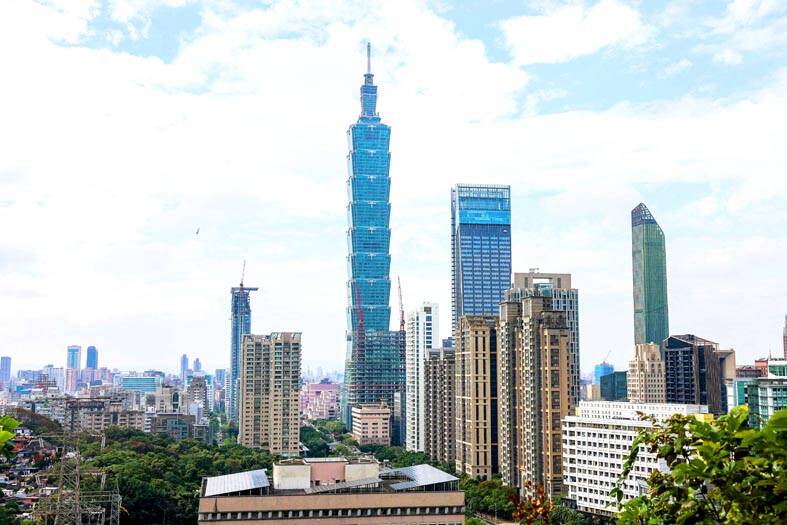
Photo: I-hwa Cheng, AFP
A new source of funding for overseas ventures would give Taipei more financial muscle to counter Beijing’s efforts to isolate the nation.
The ICDF’s first attempt at tapping debt markets follows efforts by Taiwan to leverage its economic strength to expand the nation’s sway overseas, wielding its technological edge as a weapon to deter adversaries and a tool to engage with others. After taking office in 2024, Minister of Foreign Affairs Lin Chia-lung (林佳龍) announced the establishment of a task force to promote economic diplomacy through cooperation between different ministries.
The ICDF, which holds about NT$15 billion (US$471.3 million) in assets, is consulting with authorities, including the Financial Supervisory Commission and the Taipei Exchange, to clear regulatory requirements, the officials said.
The bond issuance requires regulatory approval, because it would be the first time a non-profit private entity, sometimes used for government projects, has sought to borrow money from the public this way.
In response to a request for comment, the fund’s spokesperson said the option of borrowing is still under discussion and has not been finalized.
Founded in 1996, the ICDF is at the forefront of programs to provide aid to Taiwan’s diplomatic allies, with agriculture and healthcare as its main focus areas.
The scope of its development projects has recently been expanding to fields such as AI applications, including in countries without official diplomatic ties with Taiwan — with the Philippines being one such example.
Taiwan has also backed a plan to build an AI computing center in Paraguay, one of the officials said.
The project, which is not linked to the possible bond fundraising, is already under way in the Latin American nation that recognizes Taiwan, the official said, adding that using the bonds for AI computing centers in the future remains under discussion.
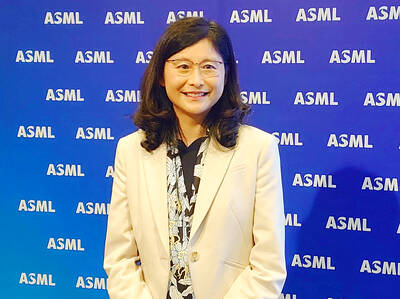
Netherlands-based semiconductor equipment supplier ASML Holding NV yesterday said that it is planning to hire an additional 1,000 people in Taiwan this year in response to growing demand from clients. ASML had previously planned to recruit 600 people this year, but that the plan has been adjusted upward, ASML vice president and ASML Taiwan general manager Grace Wang (汪佳慧) told reporters. ASML has a workforce of more than 4,500 in Taiwan, accounting for about 10 percent of its global total, Wang said. This year’s recruitment campaign would focus on adding people in the customer support, manufacturing and supply chain domains to assist ASML
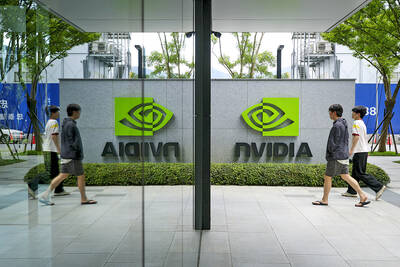
UNDER MICROSCOPE: Taiwan detained three people who allegedly conspired to buy servers in Taiwan and export them using fraudulent documentation, prosecutors said Nvidia Corp chief executive officer Jensen Huang (黃仁勳) on Saturday urged Super Micro Computer Inc to tighten up on compliance after Taiwan detained three people this week for allegedly making fraudulent declarations about artificial intelligence (AI) servers made by its US partner. The development marked the nation’s first crackdown on semiconductor smuggling, which grew after the US slapped restrictions on exports of high-end chips such as Nvidia AI accelerators to China. Nvidia is “rigorous” in explaining regulations to all of its partners, Huang told reporters after arriving in Taipei. “Ultimately Super Micro has to run their own company,” he said in response to

Nvidia Corp yesterday announced that CEO Jensen Huang (黃仁勳) would attend an employee meeting in Taipei tomorrow to celebrate the launch of the company’s Taiwan headquarters project. Huang would attend a gathering at the site of Nvidia’s planned headquarters in Beitou Shilin Technology Park (北投士林科技園區), the company said in a statement. After arriving in Taiwan on Saturday last week, Huang told reporters that he plans to meet with Quanta Computer Inc (廣達) chairman Barry Lam (林百里) and Taiwan Semiconductor Manufacturing Co (TSMC, 台積電) chairman C.C. Wei (魏哲家), and would attend the groundbreaking ceremony for Nvidia’s Taiwan headquarters tomorrow. Nvidia has not yet applied

Huawei Technologies Co (華為) said it has come up with a new pathway to shorten its gap with industry leader Taiwan Semiconductor Manufacturing Co (TSMC, 台積電), potentially achieving a breakthrough in making advanced semiconductors without cutting-edge equipment. Right now there is about a five-year gap between what TSMC is capable of and what Huawei, together with its manufacturing partner Semiconductor Manufacturing International Corp (中芯), can produce. Huawei is to start making 1.4-nanometer chips by 2031 with its own “LogicFolding” technology, Huawei semiconductor chief He Tingbo (何庭波) said in a rare public appearance during a chip conference yesterday, while TSMC has


 RSS
RSS