


Lite-On Technology Corp (光寶科技) yesterday said that demand for artificial intelligence (AI) infrastructure is expected to remain resilient over the next two years, although the escalating Middle East conflict could increase operating costs for consumer electronics markets.
The pressures from the fighting are expected to push up costs and further weigh on consumer electronics demand already pressured by memory shortages, Lite-On president Anson Chiu (邱森彬) told a news conference in Taipei.
The company had already adopted a conservative outlook for the segment earlier this year, even before the outbreak of the war, and the situation has since worsened as rising raw material costs add further pressure, Chiu said.
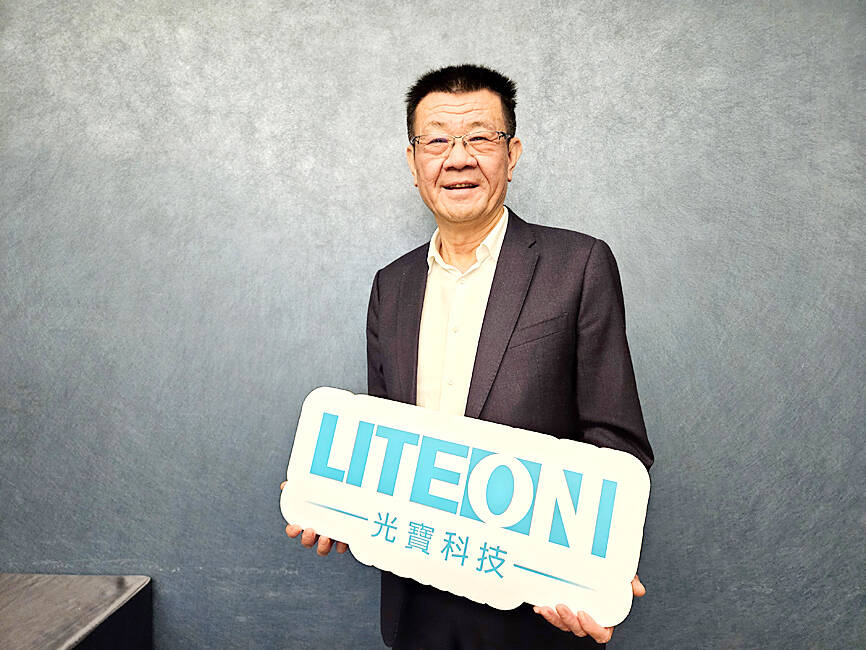
Photo: CNA
Lite-On has been adjusting its strategy for such products, shifting away from pursuing high-volume shipments in the mass market toward higher-value products with greater technological barriers, he said.
The company sees strong demand for AI infrastructure over the next two years, given sizable capital expenditures set by major cloud service providers, he said.
One of Lite-On’s largest customers has orders covering at least the next year and a half, with shipments doubling and even tripling from original expectations, he said.
The company’s new 110 kilowatt power shelves — designed mainly to support Nvidia Corp’s Vera Rubin AI server platform — are expected to boost its AI business, Chiu said.
Based on customers’ latest forecasts, demand in the second half of this year is expected to be stronger than anticipated in the fourth quarter last year, mainly driven by upgrades in power shelf specifications and rising demand for new models, he said.
To meet customers’ demand, Lite-On’s new Kaohsiung plant is expected to begin operations in August, while additional manufacturing capacity in Vietnam could come online as early as the third quarter, he said.
Supply of the company’s new power shelf products is expected to remain tight in the near term, but could begin to ease in the second half of this year after the new capacity comes online, Chiu said.
Regarding the company’s backup battery unit business, Lite-On plans to expand production lines to about 12 this year, including four in Taiwan and four in China, he said.
The company’s new capacity in the US would aim for greater automation, Chiu said. Lite-On plans to acquire an additional plant in North America, alongside its facility in Plano, Texas, with new capacity for higher-power products such as power racks expected to come online as early as next year, he said.

Cairo’s new monorail slices across the city skyline, running above the familiar chaos of blaring horns and aging buses’ exhaust fumes that mark rush hour below. The US$4.5 billion monorail, opened this month, is among Egypt’s most prominent new transport projects, part of a debt-funded infrastructure drive criticized for sapping state finances while bringing limited benefits to most of the country’s 109 million people. “It feels like you’re in a different country,” said Ramy Sayed, a restaurant manager, aboard a driverless Innovia 300 train. “No noise, no traffic, we’re not used to this.” The eastern line runs 56km from the bustling middle-class
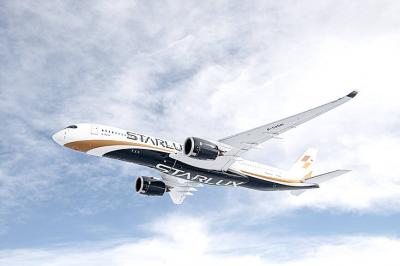
Starlux Airlines Co (星宇航空) today unveiled a long-haul network expansion plan at a shareholders’ meeting in Taipei, including direct flights to Barcelona, Spain, and Zurich, Switzerland, as well as a service connecting Taipei, Sydney and New Zealand. Starlux is to become the first Taiwanese carrier to offer non-stop services to the two European cities, while the inaugural oceanic route is expected to expand transit opportunities within the Australia-New Zealand market, Starlux said. Flight services to Chicago, Dallas, Washington and New York are under evaluation, the airline added. Prior to the shareholders’ meeting, the airline earlier this year announced that it would be
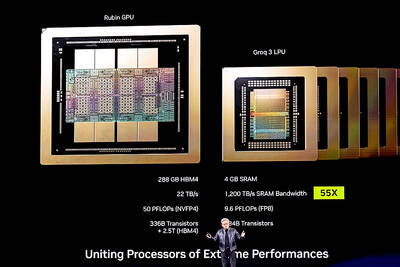
Taiwanese prosecutors suspect that three people successfully smuggled at least one shipment of Nvidia Corp artificial intelligence (AI) chips to China after first exporting them to Japan, people familiar with the matter said. The trio was detained last week by the Keelung District Prosecutors’ Office for allegedly falsifying documents related to exports of Super Micro Computer Inc servers containing advanced Nvidia chips, which the US has barred from sale to China without a license from Washington. The move marked Taiwan’s first public crackdown on AI chip diversion after years of pressure from the US to take a more active role in curtailing
Taiwan Semiconductor Manufacturing Co (TSMC, 台積電) employee bonuses are likely to grow more than 30 percent this year, in line with the past few years as the company’s profits continue to set new records, an anonymous source cited TSMC chairman C.C. Wei (魏哲家) as saying yesterday. TSMC, the world’s largest contract chipmaker, is committed to taking care of its workers, the source said, citing Wei’s meeting with employees yesterday morning. Wei also expressed gratitude to employees for their contribution to the company’s improving bottom line, the source added. Since 2023, TSMC’s employee bonuses have grown at an annual rate of


 RSS
RSS