


US President Donald Trump plans to travel to China from March 31 to April 2 for a meeting with his counterpart Xi Jinping (習近平) as the two leaders look to navigate a trade relationship again plunged into uncertainty and navigate tensions around Taiwan.
The planned meeting comes as the US Supreme Court on Friday moved to strike down sweeping US tariffs on exports, which seems certain to jumble the dynamics around efforts to extend a truce negotiated last year following months of tit-for-tat tariff escalations.
“I’m going to be going to China in April, that’s going to be a wild one,” Trump said on Thursday during the first meeting of the Board of Peace in Washington.
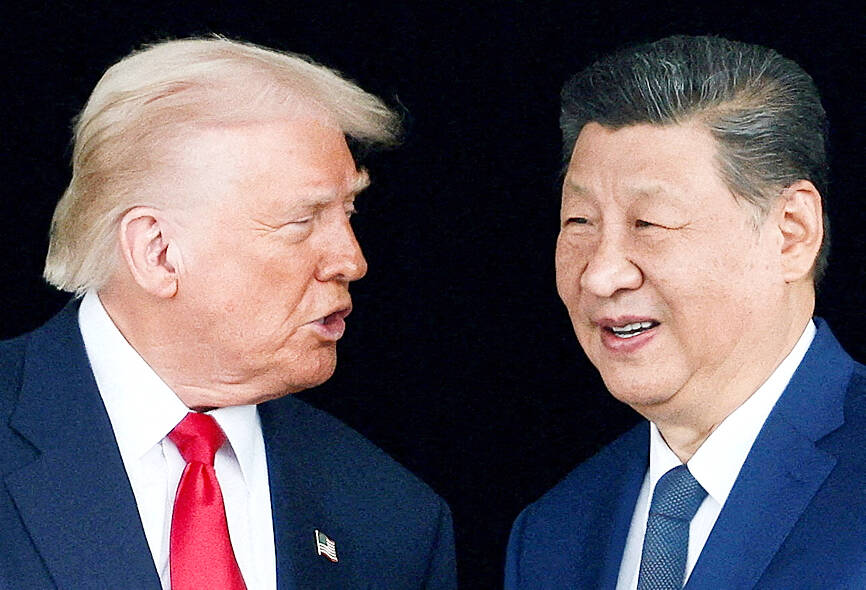
Photo: Reuters
The US president said he expects a welcome that includes pomp and ceremony that surpasses his visit to Beijing in 2017 during his first term.
“President Xi, he treated me so well, he gave me a display, I never saw so many soldiers all the same height, exactly the same height,” Trump said. “But I said, ‘You’ve got to top it.’ He said, ‘I’ll top it. We’re going to top it.’”
Trump has said he also expects to welcome Xi to Washington later this year, and the Chinese president is expected to attend a meeting of the G20 in Florida.
It is a marked change from the dynamic between the US and China early last year, when a series of tit-for-tat tariff hikes and export curbs rattled global financial markets and raised fears of an economic downturn. Following months of talks, Trump and Xi reached a one-year agreement in October to lower duties and export restrictions.
Beijing’s main objective in the upcoming talks is extending that truce and officials are likely to push for further tariff rollbacks and an easing of restrictions on the shipment of advanced artificial-intelligence chips, the Wall Street Journal reported on Wednesday, citing unnamed people close to the Chinese government.
Friday’s tariff ruling will likely strengthen Beijing’s hand and could make Trump’s expected asks for large quantities of soybean purchases, Boeing Co aircraft, and energy exports a tougher sell.
Narrowing trade deficits have been a persistent focus of Trump. The US’ annual shortfall with China shrank in 2025 to about US$202 billion — a 21-year low, according to US Commerce Department data.
Simmering political tensions — including around Taiwan and US moves in South America — also threaten to intrude on any detente. Xi told Trump in a phone call this month that Beijing would never allow Taiwan to be separated and warned the US should handle arms sales to Taipei with “utmost caution,” according to the Chinese government.
Washington approved a package of arms sales to Taiwan worth as much as US$11 billion in December, and the foreign ministry in Taipei said the US has continued its policy of normalizing arms sales to Taiwan. The December announcement drew swift condemnation from Beijing, though Xi stopped short of demanding Trump halt the sales altogether.
Shares of contract chipmaker Taiwan Semiconductor Manufacturing Co (TSMC, 台積電) came under pressure yesterday after a report that Apple Inc is looking to shift some orders from the Taiwanese company to Intel Corp. TSMC shares fell NT$55, or 2.4 percent, to close at NT$2,235 on the local main board, Taiwan Stock Exchange data showed. Despite the losses, TSMC is expected to continue to benefit from sound fundamentals, as it maintains a lead over its peers in high-end process development, analysts said. “The selling was a knee-jerk reaction to an Intel-Apple report over the weekend,” Mega International Investment Services Corp (兆豐國際投顧) analyst Alex Huang
Taiwan Semiconductor Manufacturing Co (TSMC, 台積電) is expected to remain Apple Inc’s primary chip manufacturing partner despite reports that Apple could shift some orders to Intel Corp, industry experts said yesterday. The comments came after The Wall Street Journal reported on Friday that Apple and Intel had reached a preliminary agreement following more than a year of negotiations for Intel to manufacture some chips for Apple devices. Taiwan Institute of Economic Research (台灣經濟研究院) economist Arisa Liu (劉佩真) said TSMC’s advanced packaging technologies, including integrated fan-out and chip-on-wafer-on-substrate, remain critical to the performance of Apple’s A-series and M-series chips. She said Intel and Samsung
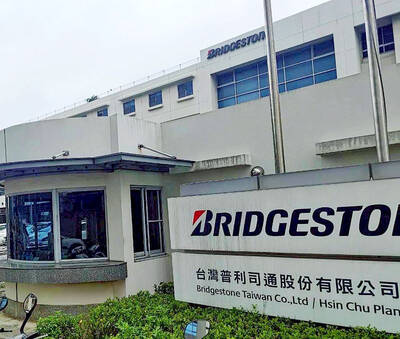
TRANSITION: With the closure, the company would reorganize its Taiwanese unit to a sales and service-focused model, Bridgestone said Bridgestone Corp yesterday announced it would cease manufacturing operations at its tire plant in Hsinchu County’s Hukou Township (湖口), affecting more than 500 workers. Bridgestone Taiwan Co (台灣普利司通) said in a statement that the decision was based on the Tokyo-based tire maker’s adjustments to its global operational strategy and long-term market development considerations. The Taiwanese unit would be reorganized as part of the closure, effective yesterday, and all related production activities would be concluded, the statement said. Under the plan, Bridgestone would continue to deepen its presence in the Taiwanese market, while transitioning to a sales and service-focused business model, it added. The Hsinchu
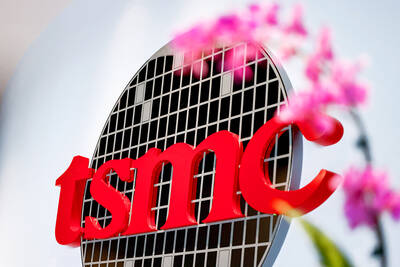
Taiwan Semiconductor Manufacturing Co (TSMC, 台積電) has approved a capital budget of US$31.28 billion for production expansion to meet long-term development needs during the artificial intelligence (AI) boom. The company’s board meeting yesterday approved the capital appropriation plan for purposes such as the installation of advanced technology capacity and fab construction, the world’s largest contract chipmaker said in a statement. At an earnings conference last month, TSMC forecast that its capital expenditure for this year would be at the higher end of the US$52 billion to US$56 billion range it forecast in January in response to robust demand for 5G, AI and


 RSS
RSS