


Japan’s key inflation gauge eased to the slowest pace in two years, posing a communication challenge for a central bank that would likely stay determined to raise the benchmark interest rate when the timing is right.
Consumer prices excluding fresh food rose 2 percent from a year earlier last month, the smallest gain since January 2024, the Japanese Ministry of Internal Affairs and Communications said yesterday.
That matched the median economist forecast and came after the gauge climbed 2.4 percent in the previous month.
Photo: Reuters
The measure that also strips out energy to reflect underlying strength increased 2.6 percent, well above the Bank of Japan’s (BOJ) 2 percent target.
Overall inflation that includes everything dropped to 1.5 percent, slipping below 2 percent for the first time since March 2022.
The data show that price growth in Japan has entered a slightly cooler phase compared with last year thanks in part to Japanese Prime Minister Sanae Takaichi’s fiscal measures aimed at easing costs of living.
A historic surge pushed the pace of inflation excluding fresh food to 3.1 percent last year, the fourth straight year above 2 percent.
Temporary factors and food prices drove the slowdown. Government steps to reduce fuel costs through tax measures helped push overall energy prices 5.2 percent lower last month.
The price advance for food excluding fresh goods also slowed due in part to comparisons with a year earlier.
“Softer food inflation and lowered gasoline prices were the two main drivers for the inflation slowdown this time,” said Taro Saito, head of economic research at NLI Research Institute. “It’s almost certain that core CPI will go below 2 percent from the next data set, as the impact of government utility measures kicks in.”
The yen weakened to about ¥155.20 to the US dollar after the data were released, from about 154.98 just before.
The BOJ has flagged expectations that price growth would slow partly due to more government steps, including utility subsidies as well as comparisons with price spikes a year earlier. Authorities have said they remain focused on underlying inflation rather than such one-off factors.
For that reason, the data are not likely to shake the central bank’s resolve to continue normalizing policy settings with rate hikes when conditions allow.
Many economists think the next move could come as soon as April, with an outside risk of an adjustment when authorities next set policy on March 19.
“I don’t think today’s data will change BOJ’s stance on raising rates,” Saito said. “But this points out the need of careful communications as they are going to be raising rates when inflation data suggest a slowdown.”
“Cooling inflation — and tacit pressure from pro-stimulus Premier Sanae Takaichi after her landslide snap-election win — argues against haste at the BOJ. We expect higher labor costs to keep feeding through to prices and nudge the central bank to raise its policy rate in July,” Bloomberg economist Taro Kimura said.
Service prices, a vital component of the index that indicates the sustainability of inflation, increased 1.4 percent from a year earlier, the same pace as the previous month.
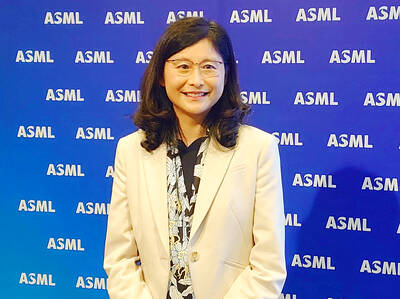
Netherlands-based semiconductor equipment supplier ASML Holding NV yesterday said that it is planning to hire an additional 1,000 people in Taiwan this year in response to growing demand from clients. ASML had previously planned to recruit 600 people this year, but that the plan has been adjusted upward, ASML vice president and ASML Taiwan general manager Grace Wang (汪佳慧) told reporters. ASML has a workforce of more than 4,500 in Taiwan, accounting for about 10 percent of its global total, Wang said. This year’s recruitment campaign would focus on adding people in the customer support, manufacturing and supply chain domains to assist ASML
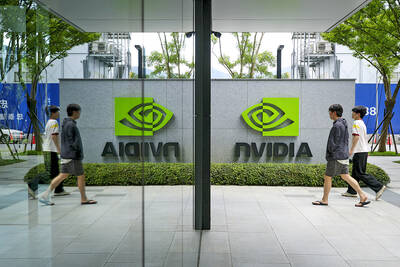
UNDER MICROSCOPE: Taiwan detained three people who allegedly conspired to buy servers in Taiwan and export them using fraudulent documentation, prosecutors said Nvidia Corp chief executive officer Jensen Huang (黃仁勳) on Saturday urged Super Micro Computer Inc to tighten up on compliance after Taiwan detained three people this week for allegedly making fraudulent declarations about artificial intelligence (AI) servers made by its US partner. The development marked the nation’s first crackdown on semiconductor smuggling, which grew after the US slapped restrictions on exports of high-end chips such as Nvidia AI accelerators to China. Nvidia is “rigorous” in explaining regulations to all of its partners, Huang told reporters after arriving in Taipei. “Ultimately Super Micro has to run their own company,” he said in response to

Nvidia Corp yesterday announced that CEO Jensen Huang (黃仁勳) would attend an employee meeting in Taipei tomorrow to celebrate the launch of the company’s Taiwan headquarters project. Huang would attend a gathering at the site of Nvidia’s planned headquarters in Beitou Shilin Technology Park (北投士林科技園區), the company said in a statement. After arriving in Taiwan on Saturday last week, Huang told reporters that he plans to meet with Quanta Computer Inc (廣達) chairman Barry Lam (林百里) and Taiwan Semiconductor Manufacturing Co (TSMC, 台積電) chairman C.C. Wei (魏哲家), and would attend the groundbreaking ceremony for Nvidia’s Taiwan headquarters tomorrow. Nvidia has not yet applied

Huawei Technologies Co (華為) said it has come up with a new pathway to shorten its gap with industry leader Taiwan Semiconductor Manufacturing Co (TSMC, 台積電), potentially achieving a breakthrough in making advanced semiconductors without cutting-edge equipment. Right now there is about a five-year gap between what TSMC is capable of and what Huawei, together with its manufacturing partner Semiconductor Manufacturing International Corp (中芯), can produce. Huawei is to start making 1.4-nanometer chips by 2031 with its own “LogicFolding” technology, Huawei semiconductor chief He Tingbo (何庭波) said in a rare public appearance during a chip conference yesterday, while TSMC has


 RSS
RSS