


Everyone in Europe agrees the EU needs to rescue its industry, but the bloc is split over how far it should push a “Buy European” approach to do so.
The European Commission, the EU’s executive arm, plans to propose new rules next week that are expected to include a requirement for companies in strategic sectors to produce in Europe if they want to receive public money.
However, the definition of “European preference” has triggered debate, with calls especially from France for more “Made in Europe,” while other EU states such as Germany call for “Made with Europe.”
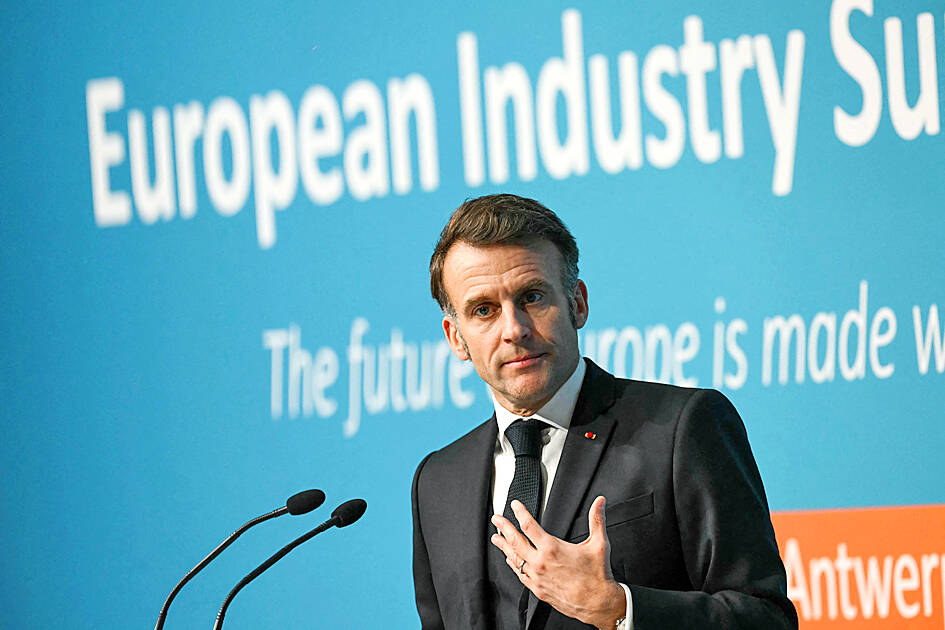
Photo: AFP
French President Emmanuel Macron insisted the new rules would be about “protecting our industry” without “being protectionist,” by defending “certain strategic sectors, such as cleantech, chemicals, steel, cars or defense.”
Otherwise, “Europeans will be swept aside,” he warned.
However, other EU countries, which are proponents of free trade, oppose the plans.
Swedish Prime Minister Ulf Kristersson said Europe should compete based on quality and innovation, not because it wanted to protect European markets.
“We do not want to protect European businesses that are basically not competitive,” Kristersson told the Financial Times last week.
EU leaders during talks on Thursday last week appeared to reach a consensus on the issue, pushing for the measure in certain specific sectors since they say Europe faces unfair competition from China and other countries.
“We are in favor of open markets,” German Minister of Finance Lars Klingbeil said on Monday. “But I also want to be very clear: If China changes the rules of the game, if we are confronted with overcapacity, subsidies, and the fact that markets in Europe are flooded, then Europe must defend itself.”
Supporters want “Made in Europe” to be strictly defined, and only for industrial goods made from components manufactured in the European Economic Area, made up of the EU’s 27 states as well as Iceland, Liechtenstein and Norway.
Critics say this definition would be too restrictive and instead call for a more flexible measure, like German Chancellor Friedrich Merz, who calls for “Made with Europe” not “Made in Europe.”
They also argue it would be difficult to apply in practice and risks destabilizing European supply chains.
“Typically, even a vehicle assembled in Europe incorporates hundreds of specialized components sourced from all over the world. Many critical inputs cannot be competitively produced at scale in Europe,” Japanese carmaker Honda Motor Co said.
Britain and Turkey, for whom the EU is an important trading partner, have also privately expressed concern to Brussels about keeping their countries out.
Some EU capitals are worried about potential retaliatory measures from supplier countries, which would drag Europe into showdowns at a moment when it needs to strengthen its exports.
The EU executive insists it has balanced the need to be open and protect firms.
The measure will be “targeted in three ways,” said the office of European Commission Executive Vice President for Prosperity and Industrial Strategy Stephane Sejourne — who is spearheading the push. It will affect: a limited number of critical components, a limited number of strategic sectors and only when public funding is involved.
The final proposal, which is to be announced on Feb. 25, could end up only touching a handful of sectors: the auto industry and those playing an essential role in the green transition and confronted by what the EU says unfair Chinese competition, such as solar panels, wind turbines and batteries.
Sejourne’s office insisted companies producing in the EU would be considered European and there will be “reciprocal commitments” with trusted partners.
A draft document seen by AFP says products made in countries outside the EU with rules similar to the bloc will be treated like those made in Europe.
However, non-EU countries remain watchful until the real proposal lands.
For example, there are still many unknowns including what the percentages of European or equivalent components will be required from manufacturers if they wish to continue accessing public money.

SECOND-RATE: Models distilled from US products do not perform the same as the original and undo measures that ensure the systems are neutral, the US’ cable said The US Department of State has ordered a global push to bring attention to what it said are widespread efforts by Chinese companies, including artificial intelligence (AI) start-up DeepSeek (深度求索), to steal intellectual property from US AI labs, according to a diplomatic cable. The cable, dated Friday and sent to diplomatic and consular posts around the world, instructs diplomatic staff to speak to their foreign counterparts about “concerns over adversaries’ extraction and distillation of US AI models.” Distillation is the process of training smaller AI models using output from larger, more expensive ones to lower the costs of training a powerful new
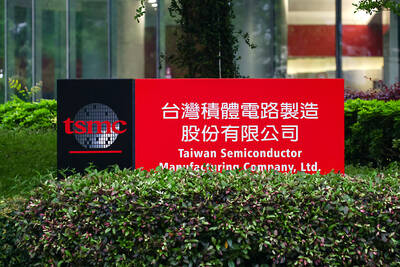
Shares of Taiwan Semiconductor Manufacturing Co (TSMC, 台積電) have repeatedly hit new highs, but an equity analyst said the stock’s valuation remains within a reasonable range and any pullback would likely be technical. The contract chipmaker’s historical price-to-earnings (P/E) ratio has ranged between 20 and 30, Cathay Futures Consultant Co (國泰證期) analyst Tsai Ming-han (蔡明翰) told Central News Agency. With market consensus projecting that TSMC would post earnings per share of about NT$100 (US$3.17) this year, supported by strong global demand for artificial intelligence (AI) applications, and the stock currently trading at a P/E ratio of below 25, Tsai said the valuation
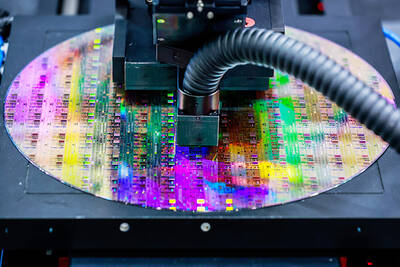
The artificial intelligence (AI) boom has triggered a seismic reshuffling of global equity markets, with Taiwan and South Korea muscling past European nations one by one. With its stock market now valued at nearly US$4.3 trillion, Taiwan surpassed the UK, Europe’s biggest market, earlier this month, data compiled by Bloomberg showed. South Korea is about US$140 billion away from doing the same. The tech-heavy Asian markets have shot past Germany and France in the past seven months. The shift is largely down to massive gains in shares of three companies that provide essential hardware for AI: Taiwan Semiconductor Manufacturing Co (TSMC, 台積電),
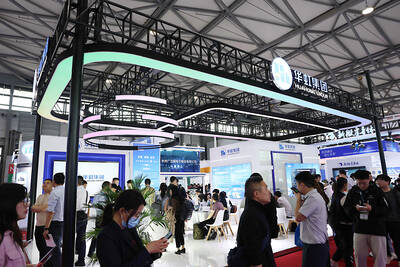
The US Department of Commerce last week ordered multiple chip equipment companies to halt shipments of certain tools to China’s second-largest chipmaker, Hua Hong Semiconductor Ltd (華虹半導體), its latest action to slow the country’s development of advanced chips, two people familiar with the matter said. The department sent letters to at least a handful of companies informing them of restrictions on tools and other materials destined for two Hua Hong facilities US officials believe make China’s most sophisticated chips, the people said. Top US chip equipment companies Lam Research Corp, Applied Materials Inc and KLA Corp, each of which has significant


 RSS
RSS