


Cuba’s already shattered economy is being assailed on various fronts as US President Donald Trump has vowed to bring the communist island to its knees.
A blockade of oil deliveries to Cuba has forced emergency rationing, kneecapping the country’s critical tourism and tobacco sectors even as remittances are under threat and income earned from sending doctors abroad has been all but cut off.
Sending medical missions abroad has long been a key source of foreign currency for Cuba, totaling around US$7 billion last year, according to official figures. Last year, 24,000 health professionals were deployed in 56 countries, more than half of them (13,000) in Venezuela.

Photo: AFP
Foreign governments pay Havana directly for the doctors’ services, but Washington has taken aim at the program, which it claims amounts to forced labor, with countries wishing to stay in the good books of Trump having started to yield.
Guatemala recently ended a 27-year agreement that had allowed thousands of Cuban doctors to work in remote areas of the Central American nation, and Antigua and Barbuda broke a similar deal in December last year.
Guyana, which has had agreements with Havana for decades, said it will in future pay doctors directly.
“Those agreements [with Cuba] are going to change over time,” Guyanese Health Minister Frank Anthony said.
The US-imposed oil blockade since it ousted Venezuela’s leader Nicolas Maduro early last month has badly hit Cuba’s electricity grid, threatening to plunge the entire island into darkness.
The oil dearth also threatens to deal a fatal blow to tourism, the island’s second source of foreign income after doctors.
The tourism sector, which employs more than 300,000 people, had already been weakened by US sanctions and the COVID-19 pandemic, with revenues dropping by 70 percent in six years.
Earlier this month, Havana announced it was suspending jet fuel supplies over the energy crisis, prompting Canadian and Russian airlines and Latin American carrier LATAM to repatriate stranded passengers before suspending flights, while countries including Canada, Russia, Spain and Germany have advised their citizens to avoid traveling to the island.
Meanwhile, despite a brief resumption, the last official channel for people abroad to send money home to family in Cuba all but disappeared in 2020 when Western Union suspended transfers.
Since then, Cubans have been receiving dollars mainly thanks to people who travel by plane from Miami, also bringing medicines and other essentials.
Early this month, Florida Republican Congressman Carlos Gimenez said he had asked US airlines serving Cuba to cancel all flights due to the “brutal” nature of the regime there.
This has not come to pass to date.
Cuba is known as a producer of high-quality tobacco and cigars, with sales totaling US$827 million in 2024.
Cigar export figures for last year were due to be announced at an annual festival scheduled for late this month, but were canceled due to the energy crisis.
Each year, the festival earns the government several million dollars thanks to a prestigious auction — nearly US$19 million last year.
“Agriculture is not spared by the current oil situation, which is very serious,” said Hector Luis Prieto, a producer from the western Vuelta Abajo region.
With practically no fuel left, he is finding it ever harder to harvest and irrigate his crops, relying for power mainly on a solar panel provided by the state.

SECOND-RATE: Models distilled from US products do not perform the same as the original and undo measures that ensure the systems are neutral, the US’ cable said The US Department of State has ordered a global push to bring attention to what it said are widespread efforts by Chinese companies, including artificial intelligence (AI) start-up DeepSeek (深度求索), to steal intellectual property from US AI labs, according to a diplomatic cable. The cable, dated Friday and sent to diplomatic and consular posts around the world, instructs diplomatic staff to speak to their foreign counterparts about “concerns over adversaries’ extraction and distillation of US AI models.” Distillation is the process of training smaller AI models using output from larger, more expensive ones to lower the costs of training a powerful new
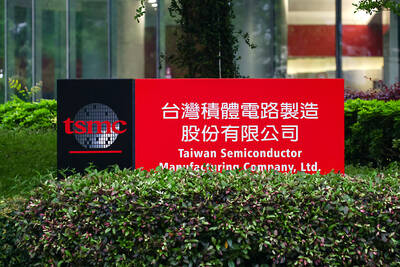
Shares of Taiwan Semiconductor Manufacturing Co (TSMC, 台積電) have repeatedly hit new highs, but an equity analyst said the stock’s valuation remains within a reasonable range and any pullback would likely be technical. The contract chipmaker’s historical price-to-earnings (P/E) ratio has ranged between 20 and 30, Cathay Futures Consultant Co (國泰證期) analyst Tsai Ming-han (蔡明翰) told Central News Agency. With market consensus projecting that TSMC would post earnings per share of about NT$100 (US$3.17) this year, supported by strong global demand for artificial intelligence (AI) applications, and the stock currently trading at a P/E ratio of below 25, Tsai said the valuation
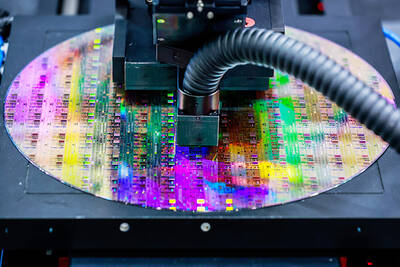
The artificial intelligence (AI) boom has triggered a seismic reshuffling of global equity markets, with Taiwan and South Korea muscling past European nations one by one. With its stock market now valued at nearly US$4.3 trillion, Taiwan surpassed the UK, Europe’s biggest market, earlier this month, data compiled by Bloomberg showed. South Korea is about US$140 billion away from doing the same. The tech-heavy Asian markets have shot past Germany and France in the past seven months. The shift is largely down to massive gains in shares of three companies that provide essential hardware for AI: Taiwan Semiconductor Manufacturing Co (TSMC, 台積電),

The US Department of Commerce last week ordered multiple chip equipment companies to halt shipments of certain tools to China’s second-largest chipmaker, Hua Hong Semiconductor Ltd (華虹半導體), its latest action to slow the country’s development of advanced chips, two people familiar with the matter said. The department sent letters to at least a handful of companies informing them of restrictions on tools and other materials destined for two Hua Hong facilities US officials believe make China’s most sophisticated chips, the people said. Top US chip equipment companies Lam Research Corp, Applied Materials Inc and KLA Corp, each of which has significant


 RSS
RSS