


India is hoping to garner as much as US$200 billion in investments for data centers over the next few years as it scales up its ambitions to become a hub for artificial intelligence (AI), Indian Minister for Electronics and Information Technology Ashwini Vaishnaw said yesterday.
The investments underscore the reliance of tech titans on India as a key technology and talent base in the global race for AI dominance.
For New Delhi, they bring in high-value infrastructure and foreign capital at a scale that can accelerate its digital transformation ambitions.
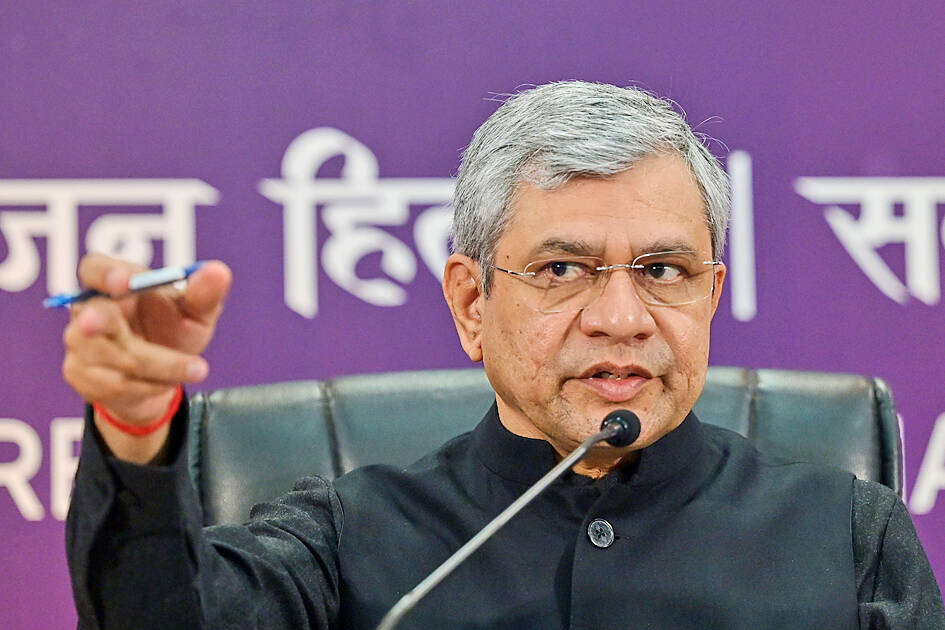
Photo: AP
“Today, India is being seen as a trusted AI partner to the Global South nations seeking open, affordable and development-focused solutions,” Vaishnaw told The Associated Press in an e-mail interview, as New Delhi hosts a major AI Impact Summit this week drawing participation from at least 20 global leaders and a who’s who of the tech industry.
In October last year, Google announced a US$15 billion investment plan in India over the next five years to establish its first AI hub in the South Asian country. Microsoft Corp followed two months later with its biggest-ever Asia investment announcement of US$17.5 billion to advance India’s cloud and AI infrastructure over the next four years.
Amazon.com Inc has committed US$35 billion investment in India by 2030 to expand its business, specifically targeting AI-driven digitization. The cumulative investments are part of US$200 billion in investments that are in the pipeline and New Delhi hopes would flow in.
Vaishnaw said India’s pitch is that AI must deliver measurable impacts at scale rather than remain an elite technology.
“A trusted AI ecosystem will attract investment and accelerate adoption,” he said, adding that a central pillar of India’s strategy to capitalize on the use of AI is building infrastructure.
The government recently announced a long-term tax holiday for data centers as it hopes to provide policy certainty and attract global capital.
Vaishnaw said the government has already operationalized a shared computing facility with more than 38,000 graphics processing units, allowing start-ups, researchers and public institutions to access high-end computing without heavy upfront costs.
“AI must not become exclusive. It must remain widely accessible,” he said.
Alongside the infrastructure drive, India is backing the development of sovereign foundational AI models trained on Indian languages and local contexts. Some of these models meet global benchmarks and in certain tasks rival widely used large language models, Vaishnaw said.
India is also seeking a larger role in shaping how AI is built and deployed globally as the country does not see itself strictly as a “rule maker or rule taker,” according to Vaishnaw, but an active participant in setting practical, workable norms while expanding its AI services footprint worldwide.
“India will become a major provider of AI services in the near future,” he said, describing a strategy that is “self-reliant yet globally integrated” across applications, models, chips, infrastructure and energy.
Investor confidence is another focus area for New Delhi as global tech funding becomes more cautious.
Vaishnaw said the technology’s push is backed by execution, pointing to the Indian government’s AI Mission program, which emphasizes sector specific solutions through public-private partnerships.
The government is also betting on reskilling its workforce as global concerns grow that AI could disrupt white collar and technology jobs.
New Delhi is scaling AI education across universities, skilling programs and online platforms to build a large AI-ready talent pool, the minister said.
Widespread 5G connectivity across the country and a young, tech-savvy population are expected to help with the adoption of AI at a faster pace, he added.
Balancing innovation with safeguards remains a challenge though, as AI expands into sensitive sectors such as governance, health care and finance.
Vaishnaw outlined a fourfold strategy that includes implementable global frameworks, trusted AI infrastructure, regulation of harmful misinformation and stronger human and technical capacity to hedge the impact.
“The future of AI should be inclusive, distributed and development-focused,” he said.
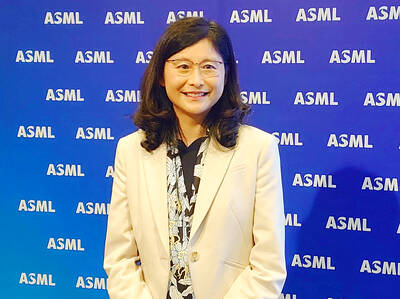
Netherlands-based semiconductor equipment supplier ASML Holding NV yesterday said that it is planning to hire an additional 1,000 people in Taiwan this year in response to growing demand from clients. ASML had previously planned to recruit 600 people this year, but that the plan has been adjusted upward, ASML vice president and ASML Taiwan general manager Grace Wang (汪佳慧) told reporters. ASML has a workforce of more than 4,500 in Taiwan, accounting for about 10 percent of its global total, Wang said. This year’s recruitment campaign would focus on adding people in the customer support, manufacturing and supply chain domains to assist ASML
UNDER MICROSCOPE: Taiwan detained three people who allegedly conspired to buy servers in Taiwan and export them using fraudulent documentation, prosecutors said Nvidia Corp chief executive officer Jensen Huang (黃仁勳) on Saturday urged Super Micro Computer Inc to tighten up on compliance after Taiwan detained three people this week for allegedly making fraudulent declarations about artificial intelligence (AI) servers made by its US partner. The development marked the nation’s first crackdown on semiconductor smuggling, which grew after the US slapped restrictions on exports of high-end chips such as Nvidia AI accelerators to China. Nvidia is “rigorous” in explaining regulations to all of its partners, Huang told reporters after arriving in Taipei. “Ultimately Super Micro has to run their own company,” he said in response to

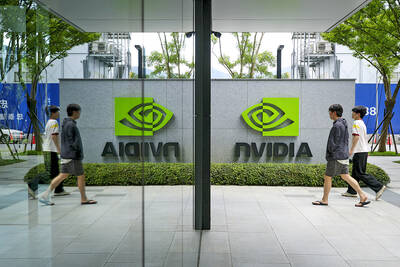
Nvidia Corp yesterday announced that CEO Jensen Huang (黃仁勳) would attend an employee meeting in Taipei tomorrow to celebrate the launch of the company’s Taiwan headquarters project. Huang would attend a gathering at the site of Nvidia’s planned headquarters in Beitou Shilin Technology Park (北投士林科技園區), the company said in a statement. After arriving in Taiwan on Saturday last week, Huang told reporters that he plans to meet with Quanta Computer Inc (廣達) chairman Barry Lam (林百里) and Taiwan Semiconductor Manufacturing Co (TSMC, 台積電) chairman C.C. Wei (魏哲家), and would attend the groundbreaking ceremony for Nvidia’s Taiwan headquarters tomorrow. Nvidia has not yet applied

Huawei Technologies Co (華為) said it has come up with a new pathway to shorten its gap with industry leader Taiwan Semiconductor Manufacturing Co (TSMC, 台積電), potentially achieving a breakthrough in making advanced semiconductors without cutting-edge equipment. Right now there is about a five-year gap between what TSMC is capable of and what Huawei, together with its manufacturing partner Semiconductor Manufacturing International Corp (中芯), can produce. Huawei is to start making 1.4-nanometer chips by 2031 with its own “LogicFolding” technology, Huawei semiconductor chief He Tingbo (何庭波) said in a rare public appearance during a chip conference yesterday, while TSMC has


 RSS
RSS