


Japanese economic growth fell short of market expectations late last year, official data showed yesterday, adding to pressure on Japanese Prime Minister Sanae Takaichi to stimulate activity after her recent election landslide.
GDP in the world’s fourth-biggest economy expanded by just 0.1 percent in the fourth quarter of last year, undershooting market forecasts of growth of 0.4 percent.
The growth follows a contraction of 0.7 percent — revised downwards from an earlier reading of minus 0.6 percent — in the previous quarter.
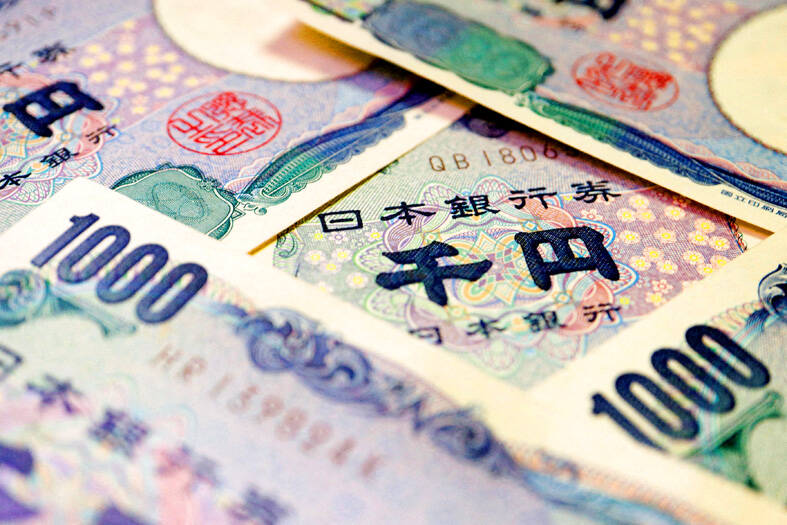
Photo: Reuters
Growth in private consumption, private residential and corporate investments contributed to the expansion, according to the Cabinet Office data.
In calendar 2025, Japan’s economy grew 1.1 percent, after a 0.2-percent contraction in 2024, the data showed.
On an annualized basis, GDP expanded by 0.2 percent in the three months through December, significantly weaker than the median economist estimate of 1.6 percent growth.
Takaichi became Japan’s first woman prime minister in October last year and called snap elections for Feb. 8.
The vote saw her Liberal Democratic Party win a historic two-thirds majority in the lower house.
In November last year, her government pushed through a 21.3 trillion-yen (US$139 billion) stimulus package aimed at boosting growth. However, her spending plans have worried investors.
Japan’s debts are more than twice the size of the country’s economy, with the highest ratio among advanced economies.
Last month, yields on long-term Japanese bonds hit record highs after Takaichi pledged temporarily to exempt food from a consumption tax to ease the pain of inflation on households.
“The minuscule rebound in activity last quarter may embolden PM Takaichi to press ahead with even more fiscal loosening,” Capital Economics Ltd economist Marcel Thieliant said yesterday.
The weak growth “implies that the large supplementary budget passed at the end of November provided no boost to public spending last quarter just yet,” Thieliant said in a note.
“In fact, sluggish economic activity increases the chances that Takaichi will not only press ahead with suspending the sales tax on food but enact a supplementary budget during the first half of the fiscal year that starts in April already rather than wait until the end of this year,” he added.
However, the weak growth is not expected to deter the Bank of Japan (BOJ) from hiking interest rates later this year, economists said.
Japan’s former currency chief said the BOJ is “behind the curve” on taking policy action, adding that higher interest rates would help address inflation and stabilize markets.
“Steady and gradual interest rate hikes can respond to inflation, curb excessive yen depreciation and stabilize long-term bond yields,” Japanese former vice finance minister for international affairs Takehiko Nakao said in an interview with Bloomberg yesterday.
“The BOJ also must look at the exchange rate,” Nakao said, adding that it’s only natural for the central bank to check that the currency is stable even though doing so is not specified in legislation setting out the central bank’s role.
The yen has gained some ground against the US dollar since the election landslide and moved away from levels where the Japanese Ministry of Finance intervened in 2024, but the currency remains weak.
That is despite the BOJ raising its policy rate in December to the highest level in 30 years, a move that further narrowed the rate differential with the US.
Additional reporting by Bloomberg
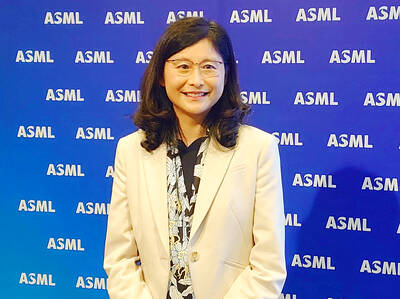
Netherlands-based semiconductor equipment supplier ASML Holding NV yesterday said that it is planning to hire an additional 1,000 people in Taiwan this year in response to growing demand from clients. ASML had previously planned to recruit 600 people this year, but that the plan has been adjusted upward, ASML vice president and ASML Taiwan general manager Grace Wang (汪佳慧) told reporters. ASML has a workforce of more than 4,500 in Taiwan, accounting for about 10 percent of its global total, Wang said. This year’s recruitment campaign would focus on adding people in the customer support, manufacturing and supply chain domains to assist ASML
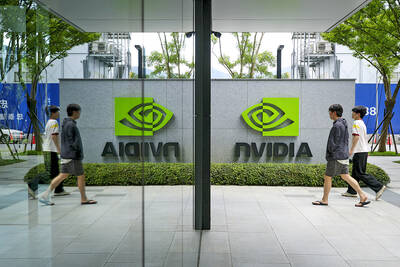
UNDER MICROSCOPE: Taiwan detained three people who allegedly conspired to buy servers in Taiwan and export them using fraudulent documentation, prosecutors said Nvidia Corp chief executive officer Jensen Huang (黃仁勳) on Saturday urged Super Micro Computer Inc to tighten up on compliance after Taiwan detained three people this week for allegedly making fraudulent declarations about artificial intelligence (AI) servers made by its US partner. The development marked the nation’s first crackdown on semiconductor smuggling, which grew after the US slapped restrictions on exports of high-end chips such as Nvidia AI accelerators to China. Nvidia is “rigorous” in explaining regulations to all of its partners, Huang told reporters after arriving in Taipei. “Ultimately Super Micro has to run their own company,” he said in response to

Nvidia Corp yesterday announced that CEO Jensen Huang (黃仁勳) would attend an employee meeting in Taipei tomorrow to celebrate the launch of the company’s Taiwan headquarters project. Huang would attend a gathering at the site of Nvidia’s planned headquarters in Beitou Shilin Technology Park (北投士林科技園區), the company said in a statement. After arriving in Taiwan on Saturday last week, Huang told reporters that he plans to meet with Quanta Computer Inc (廣達) chairman Barry Lam (林百里) and Taiwan Semiconductor Manufacturing Co (TSMC, 台積電) chairman C.C. Wei (魏哲家), and would attend the groundbreaking ceremony for Nvidia’s Taiwan headquarters tomorrow. Nvidia has not yet applied

Huawei Technologies Co (華為) said it has come up with a new pathway to shorten its gap with industry leader Taiwan Semiconductor Manufacturing Co (TSMC, 台積電), potentially achieving a breakthrough in making advanced semiconductors without cutting-edge equipment. Right now there is about a five-year gap between what TSMC is capable of and what Huawei, together with its manufacturing partner Semiconductor Manufacturing International Corp (中芯), can produce. Huawei is to start making 1.4-nanometer chips by 2031 with its own “LogicFolding” technology, Huawei semiconductor chief He Tingbo (何庭波) said in a rare public appearance during a chip conference yesterday, while TSMC has


 RSS
RSS