


The Pentagon added Alibaba Group Holding Ltd, BYD Co, Baidu Inc and TP-Link Technologies Co to a list of companies that aid the Chinese military — before withdrawing it minutes later, without explanation.
The move roiled the shares of the affected listed companies and left analysts wondering about the intentions of the US President Donald Trump’s administration. If the list is reposted, they said it could be a show of strength ahead of Trump’s expected trip to China.
The Pentagon said in a statement to Bloomberg News that “we have nothing to announce at this time.”
Photo: REUTERS
Alibaba’s US depositary receipts shares fell as much as 5 percent in extended trading on Friday, while Baidu’s receipts were down 4.5 percent.
The updated list, while briefly posted, removed two of China’s champions in production of memory chips, ChangXin Memory Technologies Inc and Yangtze Memory Technologies Co, in another move that puzzled analysts.
While being added to the list carries few major legal repercussions, the Pentagon is increasingly using the list to restrict companies’ abilities to contract with the military or to receive research funding. A 1260H designation serves as a red flag to US investors and is widely considered a warning sign that can precede more punitive trade restrictions.
Alibaba said in a statement that it is “not a Chinese military company nor part of any military-civil fusion strategy. We will take all available legal action against attempts to misrepresent our company.”
A Baidu spokesperson said in a statement that “we categorically reject the inclusion of Baidu on the list,” which has “no credible basis” and that the “suggestion that Baidu is a military company is entirely baseless and no evidence has been produced that would prove otherwise. We are a publicly-listed company and our products and services are designed for civilian use. We will not hesitate to use all options available to us to have the company removed from the list.”
Alibaba and Baidu are among China’s champions in artificial intelligence and their addition is almost certain to provoke Beijing. After Bloomberg reported earlier this year that the Pentagon was considering such a step, China’s Ministry of Foreign Affairs urged the US “to immediately correct its erroneous actions and will take necessary measures to resolutely safeguard the legitimate rights and interests of Chinese enterprises.” The designation of BYD targets China’s top electric vehicle company.
The 1260H list, first published in 2021, now includes more than 130 entities accused of working with the Chinese military. The names include those of airline, construction, shipping, computer hardware manufacturing and communication companies.
The Pentagon move comes at a particularly fraught time in Washington’s debate over China tech policy. The US has now said that three of China’s AI champions — Alibaba, Baidu and Tencent Holdings Ltd — aid China’s military.
At the same time, Trump’s team is weighing whether to allow Nvidia Corp to sell certain AI chips to those companies and others, on the basis that allowing Nvidia to compete in China would stall the advance of Chinese chipmakers such as Huawei Technologies Co. Opponents of such sales, which have yet to be green-lit by Washington or Beijing, say that they could end up benefiting China’s military — a possibility Nvidia has dismissed.
Secretary of Commerce Howard Lutnick, asked in a Senate hearing about how his agency would ensure that does not happen, said that the US government had worked out “very detailed” terms with which Nvidia must comply. Asked whether he trusted that China would honor those terms, Lutnick said, “I’ll leave that opinion to the president.”
To China hawks in and outside the administration, that is hardly assuring. China’s People’s Liberation Army has deep links into the entire Chinese AI industry — which is why exporting AI chips to these companies, or any other Chinese AI company, would assist the PLA, said Chris McGuire, a senior fellow at the Council on Foreign Relations who was a vocal proponent of China chip curbs when he served in the Trump and Biden administrations.
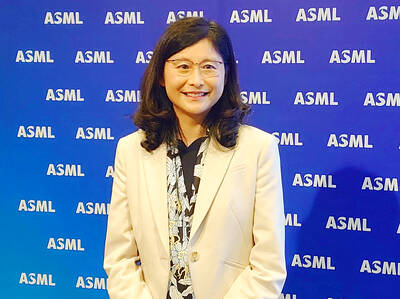
Netherlands-based semiconductor equipment supplier ASML Holding NV yesterday said that it is planning to hire an additional 1,000 people in Taiwan this year in response to growing demand from clients. ASML had previously planned to recruit 600 people this year, but that the plan has been adjusted upward, ASML vice president and ASML Taiwan general manager Grace Wang (汪佳慧) told reporters. ASML has a workforce of more than 4,500 in Taiwan, accounting for about 10 percent of its global total, Wang said. This year’s recruitment campaign would focus on adding people in the customer support, manufacturing and supply chain domains to assist ASML
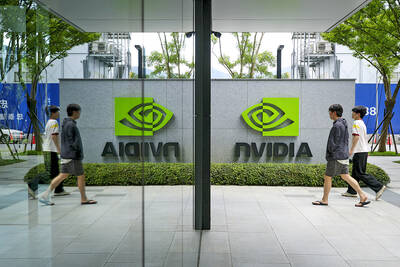
UNDER MICROSCOPE: Taiwan detained three people who allegedly conspired to buy servers in Taiwan and export them using fraudulent documentation, prosecutors said Nvidia Corp chief executive officer Jensen Huang (黃仁勳) on Saturday urged Super Micro Computer Inc to tighten up on compliance after Taiwan detained three people this week for allegedly making fraudulent declarations about artificial intelligence (AI) servers made by its US partner. The development marked the nation’s first crackdown on semiconductor smuggling, which grew after the US slapped restrictions on exports of high-end chips such as Nvidia AI accelerators to China. Nvidia is “rigorous” in explaining regulations to all of its partners, Huang told reporters after arriving in Taipei. “Ultimately Super Micro has to run their own company,” he said in response to

Nvidia Corp yesterday announced that CEO Jensen Huang (黃仁勳) would attend an employee meeting in Taipei tomorrow to celebrate the launch of the company’s Taiwan headquarters project. Huang would attend a gathering at the site of Nvidia’s planned headquarters in Beitou Shilin Technology Park (北投士林科技園區), the company said in a statement. After arriving in Taiwan on Saturday last week, Huang told reporters that he plans to meet with Quanta Computer Inc (廣達) chairman Barry Lam (林百里) and Taiwan Semiconductor Manufacturing Co (TSMC, 台積電) chairman C.C. Wei (魏哲家), and would attend the groundbreaking ceremony for Nvidia’s Taiwan headquarters tomorrow. Nvidia has not yet applied
Huawei Technologies Co (華為) said it has come up with a new pathway to shorten its gap with industry leader Taiwan Semiconductor Manufacturing Co (TSMC, 台積電), potentially achieving a breakthrough in making advanced semiconductors without cutting-edge equipment. Right now there is about a five-year gap between what TSMC is capable of and what Huawei, together with its manufacturing partner Semiconductor Manufacturing International Corp (中芯), can produce. Huawei is to start making 1.4-nanometer chips by 2031 with its own “LogicFolding” technology, Huawei semiconductor chief He Tingbo (何庭波) said in a rare public appearance during a chip conference yesterday, while TSMC has


 RSS
RSS