


Amazon’s smart doorbell maker Ring has terminated a partnership with police surveillance tech company Flock Safety.
The announcement follows a backlash that erupted after a 30-second Ring ad that aired during the Super Bowl featuring a lost dog that is found through a network of cameras, sparking fears of a dystopian surveillance society.
But that feature, called Search Party, was not related to Flock. And Ring’s announcement does not cite the ad as a reason for the “joint decision” for the cancellation.
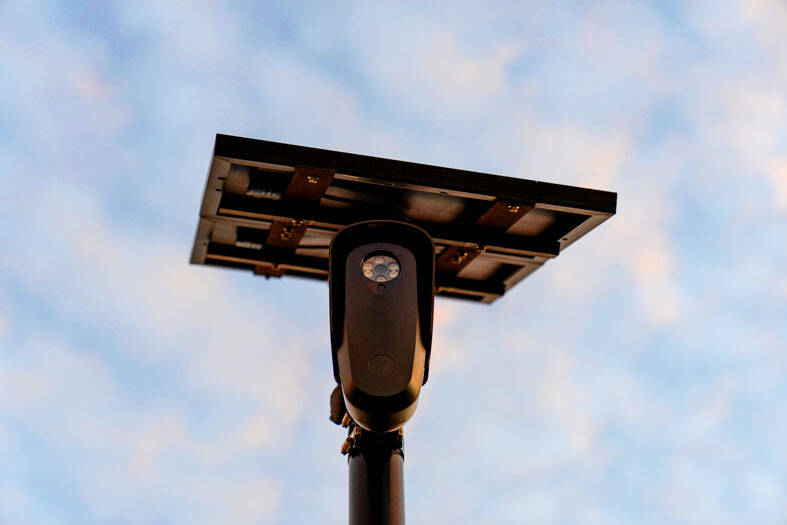
hoto: AP
Ring and Flock said last year they were planning on working together to give Ring camera owners the option to share their video footage in response to law enforcement requests made through a Ring feature known as Community Requests.
“Following a comprehensive review, we determined the planned Flock Safety integration would require significantly more time and resources than anticipated,” Ring’s statement said. “The integration never launched, so no Ring customer videos were ever sent to Flock Safety.”
Flock reiterated that it never received Ring customer videos — and that ending the planned integration was a mutual decision that allows both companies to “best serve their respective customers.”
In a statement, Flock added that it “remains dedicated to supporting law enforcement agencies with tools that are fully configurable to local laws and policies.”
Flock is one of the nation’s biggest operators of automated license-plate reading systems. Its cameras are mounted in thousands of communities across the US, capturing billions of photos of license plates each month. The company has faced public outcry amid the Trump administration’s aggressive immigration enforcement crackdown.
However, Flock maintains that it does not partner with Immigration and Customs Enforcement (ICE), or contract out with any subagency of the Department of Homeland Security for direct access to its cameras. The company paused pilot programs with Customs and Border Protection and Homeland Security Investigations last year.
Still, Flock says it does not own the data captured by its cameras, its customers do. So if a police department, for example, chooses to collaborate with a federal agency like ICE, “Flock has no ability to override that decision,” the company notes on its Web site.
Beyond the Flock partnership, Amazon has faced other surveillance concerns over its Ring doorbell cameras.
In the Super Bowl ad, a lost dog is found with Ring’s Search Party feature, which the company says can “reunite lost dogs with their families and track wildfires threatening your community.” The clip depicts the dog being tracked by cameras throughout a neighborhood using artificial intelligence.
Viewers took to social media to criticize it for being sinister, leaving many wondering if it would be used to track humans and saying they would turn the feature off.
The Electronic Frontier Foundation, a nonprofit that focus on civil liberties related to digital technology, said this week that Americans should feel unsettled over the potential loss of privacy.
“Amazon Ring already integrates biometric identification, like face recognition, into its products via features like ‘Familiar Faces’ which depends on scanning the faces of those in sight of the camera and matching it against a list of pre-saved, pre-approved faces,” the Foundation wrote on Tuesday. “It doesn’t take much to imagine Ring eventually combining these two features: face recognition and neighborhood searches.”
Democratic Senator Edward Markey of Massachusetts also urged Amazon to discontinue its “Familiar Faces” technology.
In a published letter addressed to Amazon CEO Andrew Jassy, Markey wrote that the backlash to the Super Bowl commercial “confirmed public opposition to Ring’s constant monitoring and invasive image recognition algorithms.”

After several years flying high as Asia’s best Nvidia Corp proxy, Taiwan Semiconductor Manufacturing Co (TSMC, 台積電) is increasingly vying with other artificial intelligence (AI) stocks for investor attention. Stock traders are chasing a wider array of beneficiaries as mainstream usage of AI creates demand for hardware beyond the most-advanced chips TSMC makes for Nvidia. Subthemes from the deepening memory crunch to advances in robotics are also luring bids. At the same time, investment caps on single stocks are pushing funds to diversify, while retail investors long familiar with TSMC through its US depositary receipts are being offered a broader set of

Netherlands-based semiconductor equipment supplier ASML Holding NV yesterday said that it is planning to hire an additional 1,000 people in Taiwan this year in response to growing demand from clients. ASML had previously planned to recruit 600 people this year, but that the plan has been adjusted upward, ASML vice president and ASML Taiwan general manager Grace Wang (汪佳慧) told reporters. ASML has a workforce of more than 4,500 in Taiwan, accounting for about 10 percent of its global total, Wang said. This year’s recruitment campaign would focus on adding people in the customer support, manufacturing and supply chain domains to assist ASML
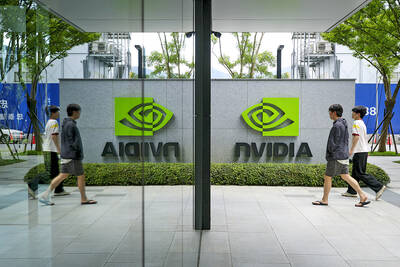
UNDER MICROSCOPE: Taiwan detained three people who allegedly conspired to buy servers in Taiwan and export them using fraudulent documentation, prosecutors said Nvidia Corp chief executive officer Jensen Huang (黃仁勳) on Saturday urged Super Micro Computer Inc to tighten up on compliance after Taiwan detained three people this week for allegedly making fraudulent declarations about artificial intelligence (AI) servers made by its US partner. The development marked the nation’s first crackdown on semiconductor smuggling, which grew after the US slapped restrictions on exports of high-end chips such as Nvidia AI accelerators to China. Nvidia is “rigorous” in explaining regulations to all of its partners, Huang told reporters after arriving in Taipei. “Ultimately Super Micro has to run their own company,” he said in response to

Nvidia Corp yesterday announced that CEO Jensen Huang (黃仁勳) would attend an employee meeting in Taipei tomorrow to celebrate the launch of the company’s Taiwan headquarters project. Huang would attend a gathering at the site of Nvidia’s planned headquarters in Beitou Shilin Technology Park (北投士林科技園區), the company said in a statement. After arriving in Taiwan on Saturday last week, Huang told reporters that he plans to meet with Quanta Computer Inc (廣達) chairman Barry Lam (林百里) and Taiwan Semiconductor Manufacturing Co (TSMC, 台積電) chairman C.C. Wei (魏哲家), and would attend the groundbreaking ceremony for Nvidia’s Taiwan headquarters tomorrow. Nvidia has not yet applied


 RSS
RSS