


Australian singer Kylie Minogue says “nothing compares” to performing live, but becoming an international wine magnate in under six years has been quite a thrill for the Spinning Around star.
Minogue launched her first own-label wine in 2020 in partnership with celebrity drinks expert Paul Schaafsma, starting with a basic rose but quickly expanding to include sparkling, no-alcohol and premium rose offerings.
The actress and singer has since wracked up sales of around 25 million bottles, with her carefully branded products pitched at low-to mid-range prices in dozens of countries.
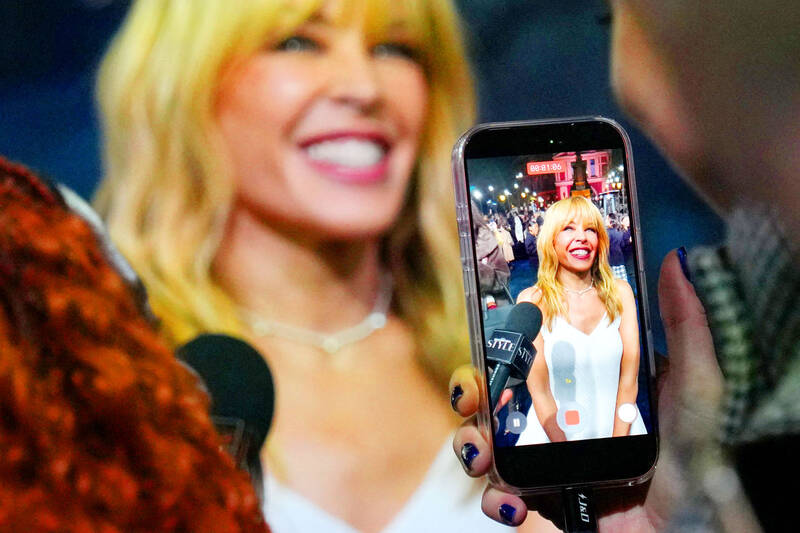
Photo: AFP
Britain, Australia and the United States are the biggest markets.
“Nothing compares to performing because that, in the moment, is like the summation of what I do,” the 57-year-old told AFP in Paris when asked if the joy of her wine venture compared to the buzz of stepping out on stage. “But there are definitely parallels.”
In Britain, wine sales data regularly show her rose, prosecco and no-alcohol sparkling among the best-sellers in their categories — uncorking a major new revenue stream for the performer-entrepreneur.
Not bad for someone who confessed this week at the Wine Paris trade show that she knew very little about the industry when she started out.
“I entered the space really genuinely, hand ups, ‘I don’t know anything about anything, every step is a baby step,’” Minogue told a promotional event on Monday. “And now I find myself with the terminology and the lingo and the understanding, and I’m like, ‘who am I? How did this happen?’” she joked.
-’Growth areas — Minogue cut an incongruous sight at the fair — the princess of pop with 11 million monthly listeners on Spotify, mixing with wine merchants and aristocratic vineyard owners.
She stayed for two days, holding meetings in a backroom of her stand, which was decked out with flowers and ribbons in the brand’s pale pink color.
Though she played down her wine knowledge, Minogue’s business acumen — in conjunction with the hugely experienced Schaafsma — is not in doubt.
“All her products are in the growth areas of the market, so she’s in the right place,” said Patrick Schmitt, editor-in-chief of The Drinks Business industry Web site.
He lists them: affordable rose, Prosecco, pink Prosecco and no-alcohol. She hasn’t bothered with an unfashionable red in her 10-bottle range. “Her brand is built around pink products and pink wines,” Schmitt added.
The business model involves buying grapes from wholesale producers in France and Italy, assembling and labeling the wine as her own brand, then selling through mass-market retailers. Her no-alcohol range — something she says she drinks while touring and is popular among her women friends — is made in Germany and uses grape juice fermented with bacteria which do not produce alcohol.
Chinese green tea is added to give it flavor.
British wine writer Nina Caplan described Minogue’s wines as “part of brand Kylie, and as bouncy and approachable as her music, and her persona.”
“She goes to wine fairs, she meets wine press, she knows what she is selling and why and who she is selling to,” she added.
Minogue is far from the only celebrity in the wine business.
Brad Pitt and Angelina Jolie famously invested in Chateau Miraval in Provence in 2012 before their divorce, while George Clooney and John Malkovich are among other Hollywood stars-turned-vineyard owners in the south of France.
Rapper Jay-Z bought the Armand de Brignac Champagne brand, while former NBA player Tony Parker was also at Wine Paris this week, promoting a Champagne venture.
However, Minogue has followed the route of British singers such as Elton John or Gary Barlow from 1990s boy band Take That in developing an own-label wine without growing the grapes.
Celebrity ventures are easy to sneer at, Schmitt said, but he gave Kylie’s Provence rose a gold medal in a blind tasting and her basic rose is “best-in-class” at around £10 (US$13.50).
Her top-sellers have a ranking of 3.6-3.8 out of 5 stars on the Vivino wine-rating app and serious wine publications such as Decanter have given them upbeat reviews.
“I think it’s a positive,” Schmitt concluded. “Wine is struggling to keep its market share. It’s challenged by a younger generation that maybe drink less, and if they do drink, they drink other more affordable products. So something that raises the profile of wine, particularly at an affordable price, as long as the product is good, has got to be a positive.”

Until US President Donald Trump’s return a year ago, when the EU talked about cutting economic dependency on foreign powers — it was understood to mean China, but now Brussels has US tech in its sights. As Trump ramps up his threats — from strong-arming Europe on trade to pushing to seize Greenland — concern has grown that the unpredictable leader could, should he so wish, plunge the bloc into digital darkness. Since Trump’s Greenland climbdown, top officials have stepped up warnings that the EU is dangerously exposed to geopolitical shocks and must work toward strategic independence — in defense, energy and
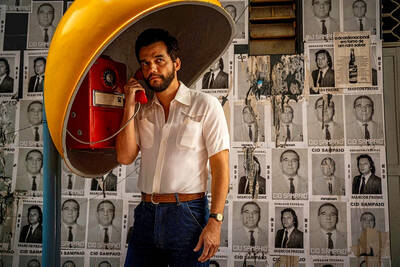
For the second year in a row, a Brazilian movie has wowed international audiences and critics, securing multiple Oscar nominations and drawing fresh interest in the Latin American giant’s film industry. Experts say the success of The Secret Agent, which has won four Oscar nominations, a year after I Am Still Here won Brazil its first Oscar, is no fluke, with a bit of a push from the country’s political climate. “This is neither a coincidence nor a miracle. It is the result of a lot of work, consistent policies, and, of course, talent,” Ilda Santiago, director of the Rio International Film

AI SPLURGE: The four major US tech companies have lost more than US$950 billion in value since releasing earnings and outlooks, while equipment makers were gaining Four of the biggest US technology companies together have forecast capital expenditures that would reach about US$650 billion this year — a flood of cash earmarked for new data centers and all the gear within them. The spending planned by Alphabet Inc, Amazon.com Inc, Meta Platforms Inc and Microsoft Corp, all in pursuit of dominance in the still-nascent market for artificial intelligence (AI) tools, is a boom without a parallel this century. Each of the companies’ estimates for this year is expected either near or surpass their budgets for the past three years combined. They would set a high-watermark for capital spending

IShowSpeed, a 21-year-old African-American influencer, has raced a cheetah, leapt with Maasai warriors and drawn huge crowds in a month-long tour of Africa that has also busted cliches about the continent. The YouTube and Twitch star’s tour, which started on Dec. 29 last year, took him to 20 countries, showing his tens of millions of followers a different side of Africa as he visited a diamond mine in Botswana, discovered Ethiopia’s rich cuisine and attended the Africa Cup of Nations football final in Morocco. IShowSpeed — born in Cincinnati, Ohio as Darren Jason Watkins Jr. — is one of the most followed


 RSS
RSS