


Three government incentive programs launched in 2019 to encourage Taiwanese and foreign firms to invest in Taiwan have attracted NT$2.62 trillion (US$83.65 billion) in combined pledged investment from 1,712 companies and created more than 164,500 jobs as of Friday last week, the Ministry of Economic Affairs said yesterday.
The Executive Yuan in July last year approved an extension of the three programs — the Action Plan for Welcoming Overseas Taiwanese Businesses to Return to Invest in Taiwan, the Action Plan for Accelerated Investment by Domestic Corporations, and the Action Plan for Accelerated Investment by Small and Medium-sized Enterprises — through next year.
The extension is expected to attract an additional NT$1.2 trillion in investment and create about 80,000 more jobs, bringing the total accumulated investment under the programs to at least NT$3.6 trillion, Department of Investment Promotion Deputy Director Rio Lu (呂貞慧) told a news conference in Taipei.
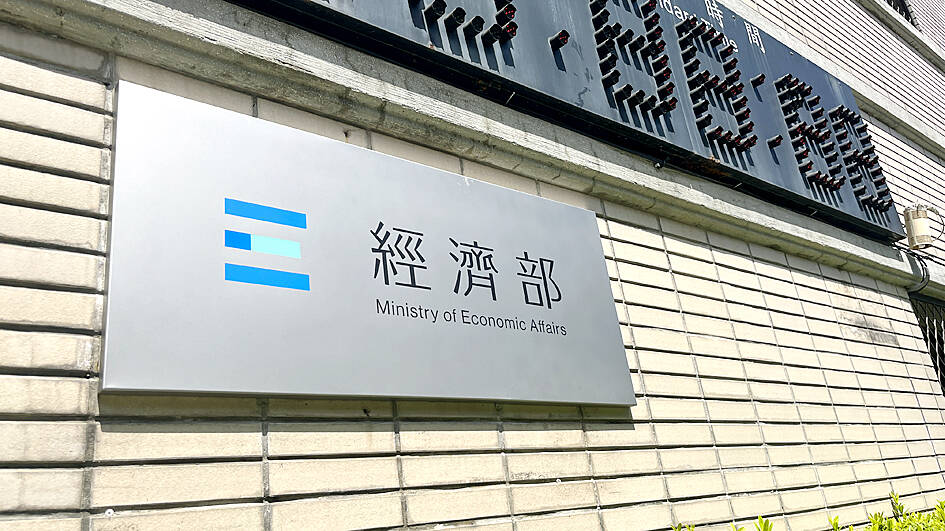
Photo: Liao Chia-ning, Taipei Times
Among the three programs, the Action Plan for Welcoming Overseas Taiwanese Businesses to Return to Invest in Taiwan has attracted the largest amount, totaling more than NT$1.4 trillion, Lu said.
The program has drawn several major electronics manufacturers back to Taiwan, helping accelerate the return of advanced artificial intelligence (AI) and semiconductor supply chains, she said.
Regarding international investment promotion, the ministry secured 25 foreign investment cases in Taiwan last year, with the companies involved expected to invest about NT$160 billion over the next three to five years, she said.
The ministry aims to raise the number of investment cases and the total investment value further this year, Lu said.
The ministry has signed letters of intent with 11 of the 25 companies, including four from the US, four from Japan, two from Europe and one from South Korea, she said.
The investments cover areas ranging from advanced materials and power systems to semiconductors, AI, circular economy development and public services, she added.
About 80 percent of those cases involve companies expanding their operations and production capacity in Taiwan, while 12 percent are first-time investors in the country, and another 8 percent plan to establish research-and-development (R&D) centers here, Lu said.
Representative foreign investment cases include South Korean firm KoMiCo Ltd, which has established manufacturing operations and an R&D center in Taiwan to support local semiconductor makers’ demand for precision equipment components and refurbishment services, she said.
US-based power management company Eaton Corp has also expanded production of high-end uninterruptible power supply systems and power modules in Taiwan to meet rising electricity demand driven by the AI industry, she said.
In terms of investment by the information and communications technology sector, representative cases include chip packaging service provider Powertech Technology Inc’s (力成科技) two projects last year, the ministry said.
The investments, totaling NT$44.3 billion, were used to build fan-out panel-level packaging and advanced wafer-level packaging production lines, Powertech CEO Boris Hsieh (謝永達) said.
Powertech subsidiary TeraPower Technology Inc (晶兆成科技) also submitted two investment projects, committing an additional NT$24.5 billion to expand its highly automated wafer testing capacity, Hsieh said.
Meanwhile, reclaimed wafers supplier Phoenix Silicon International Corp (昇陽半導體) proposed four projects involving a total investment of NT$5.6 billion to add fully automated production lines and warehouse systems at its Taichung plants, Phoenix president Tony Tsai (蔡幸川) said.
The ministry will continue to help shape industry advantages this year through the three programs to build a more competitive investment environment, Lu said.
Taiwan Semiconductor Manufacturing Co (TSMC, 台積電) has approved a capital budget of US$31.28 billion for production expansion to meet long-term development needs during the artificial intelligence (AI) boom. The company’s board meeting yesterday approved the capital appropriation plan for purposes such as the installation of advanced technology capacity and fab construction, the world’s largest contract chipmaker said in a statement. At an earnings conference last month, TSMC forecast that its capital expenditure for this year would be at the higher end of the US$52 billion to US$56 billion range it forecast in January in response to robust demand for 5G, AI and
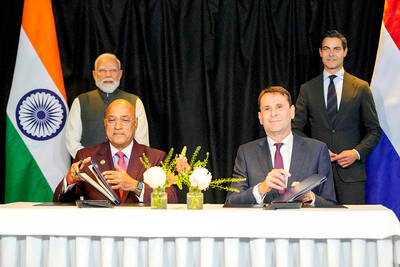
NEW MARKET: The partnership opens up India to the Dutch company, which already has a strong hold in the semiconductor market of South Korea, Taiwan and China ASML Holding NV entered into a partnership agreement with Tata Electronics Pvt Ltd aimed at ramping up India’s goal to develop domestic chip-manufacturing capabilities. The Dutch company’s technology would help power Tata Electronics’ planned 300 millimeter (mm) semiconductor foundry in Gujarat, according to a joint statement from the two companies on Saturday. The signing of a memorandum of understanding coincides with a visit by Indian Prime Minister Narendra Modi to the Netherlands, which is looking to deepen bilateral relations with New Delhi. ASML, whose top customers include Taiwan Semiconductor Manufacturing Co (台積電) and Samsung Electronics Co, makes lithography machines that can print
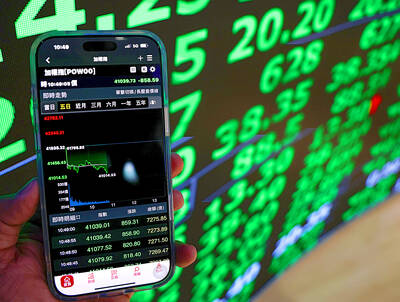
PORTFOLIO REBALANCING: The adjustments in three global equity indices reflect rising investor appetite for semiconductor and artificial intelligence-related stocks Taiwan’s weighting in major global equity indices compiled by MSCI Inc is to rise modestly following the latest quarterly review, underscoring the market’s expanding role in emerging-market portfolios, as global investors continue to favor the nation’s technology sector. Taiwan’s weighting in the MSCI Emerging Markets Index is to increase by 0.30 percentage points to 23.76 percent, after the changes take effect at the close of the May 29 session. Its weighting in the MSCI All-Country Asia ex-Japan Index is to rise 0.37 percentage points to 27.16 percent, while that in the MSCI All Country World Index is to edge up slightly to
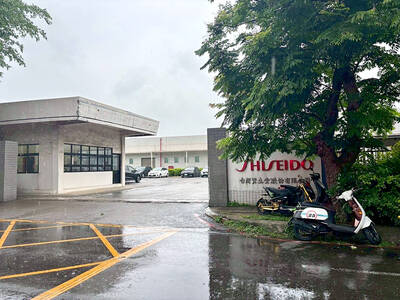
The Hsinchu County Government’s Labor Affairs Department yesterday said that it has received a plan from cosmetics brand Taiwan Shiseido Co (台灣資生堂) detailing mass layoffs at its plant in Hukou Township (湖口). While the labor authorities did not disclose the number of employees to be laid off, Japanese news media earlier in the day reported that the closure of the company’s factory in Hukou would result in 170 employees losing their jobs. Shiseido followed the law by reporting its layoff plan, the department said, adding that authorities would closely monitor negotiations between the management and affected employees and step in if any


 RSS
RSS