


Relaxations of the Industrial Innovation Statute (產業創新發展條例) are expected to boost private investment in start-ups to about NT$3 billion (US$95.33 million) this year, a sixfold increase, the Ministry of Economic Affairs said yesterday.
In addition, new amendments to the statute are expected to boost angel investment to about NT$2.2 billion on local start-ups this year, while raising corporate equipment investment tax credits to more than NT$170 billion this year, Industrial Development Administration Deputy Director-General Tsou Yu-hsin (鄒宇新) told a news conference in Taipei.
Angel investors are wealthy people who support start-ups at the initial stages, when risks of failing are relatively high and when most investors are not prepared to back them.
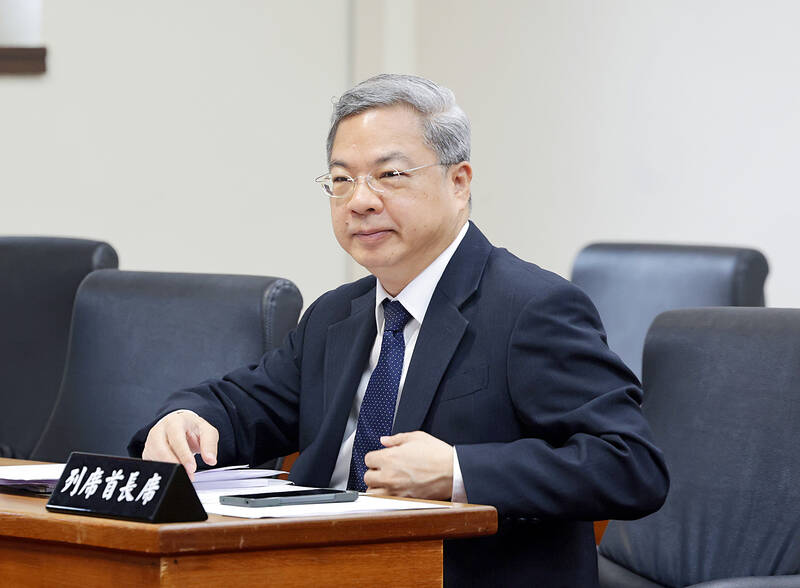
Photo: CNA
The ministry said it is to extend the tax incentives for investments in smart machinery and 5G applications as regulated in the amendment to the statute for another five years to the end of 2029.
The scope is expanded to include artificial intelligence and carbon-reduction technologies, it said.
Eligibility requirements under articles 23-1 and 23-2 have also been relaxed to broaden participation, the ministry said.
Amendments to Article 23-1 introduce a “pass-through taxation” mechanism for limited partnership venture capital funds investing in start-ups, and under the revised rules, such funds would no longer be subject to corporate income tax, Tsou said.
Instead, profits would be taxed directly at the partner level based on their share of earnings, preventing what Tsou described as “double taxation.”
The amendments also lower the minimum paid-in capital requirement to NT$150 million from NT$300 million, while raising the minimum ratio of investment in start-ups to 50 percent from 30 percent, he said.
The government expects the number of eligible venture capital firms to rise this year to six from an average of two per year, with annual investment increasing to NT$3 billion from about NT$500 million, he said.
The eligibility period for start-ups has also been extended from less than two years after establishment to less than five years, a move aimed at encouraging investment in more mature early-stage companies, Tsou said.
The ministry extended investor’s locking period to three years from two years, but halved the minimum investment threshold to NT$500,000 from NT$1 million, he said.
To minimize investment risks, the ministry relaxed the definition of a start-up, he said.
A company can be considered a start-up within five years of its launch, compared with two years before, he said.
The number of angel investment cases is projected to rise to about 100 this year from about 40 last year, while total investment value is expected to jump to NT$2.2 billion from about NT$600 million after the new rules take effect, he added.
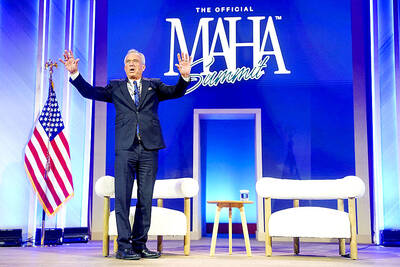
Sweeping policy changes under US Secretary of Health and Human Services Robert F. Kennedy Jr are having a chilling effect on vaccine makers as anti-vaccine rhetoric has turned into concrete changes in inoculation schedules and recommendations, investors and executives said. The administration of US President Donald Trump has in the past year upended vaccine recommendations, with the country last month ending its longstanding guidance that all children receive inoculations against flu, hepatitis A and other diseases. The unprecedented changes have led to diminished vaccine usage, hurt the investment case for some biotechs, and created a drag that would likely dent revenues and
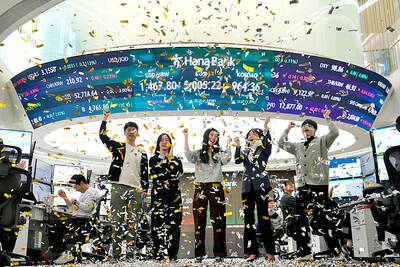
Global semiconductor stocks advanced yesterday, as comments by Nvidia Corp chief executive officer Jensen Huang (黃仁勳) at Davos, Switzerland, helped reinforce investor enthusiasm for artificial intelligence (AI). Samsung Electronics Co gained as much as 5 percent to an all-time high, helping drive South Korea’s benchmark KOSPI above 5,000 for the first time. That came after the Philadelphia Semiconductor Index rose more than 3 percent to a fresh record on Wednesday, with a boost from Nvidia. The gains came amid broad risk-on trade after US President Donald Trump withdrew his threat of tariffs on some European nations over backing for Greenland. Huang further

CULPRITS: Factors that affected the slip included falling global crude oil prices, wait-and-see consumer attitudes due to US tariffs and a different Lunar New Year holiday schedule Taiwan’s retail sales ended a nine-year growth streak last year, slipping 0.2 percent from a year earlier as uncertainty over US tariff policies affected demand for durable goods, data released on Friday by the Ministry of Economic Affairs showed. Last year’s retail sales totaled NT$4.84 trillion (US$153.27 billion), down about NT$9.5 billion, or 0.2 percent, from 2024. Despite the decline, the figure was still the second-highest annual sales total on record. Ministry statistics department deputy head Chen Yu-fang (陳玉芳) said sales of cars, motorcycles and related products, which accounted for 17.4 percent of total retail rales last year, fell NT$68.1 billion, or

MediaTek Inc (聯發科) shares yesterday notched their best two-day rally on record, as investors flock to the Taiwanese chip designer on excitement over its tie-up with Google. The Taipei-listed stock jumped 8.59 percent, capping a two-session surge of 19 percent and closing at a fresh all-time high of NT$1,770. That extended a two-month rally on growing awareness of MediaTek’s work on Google’s tensor processing units (TPUs), which are chips used in artificial intelligence (AI) applications. It also highlights how fund managers faced with single-stock limits on their holding of market titan Taiwan Semiconductor Manufacturing Co (TSMC, 台積電) are diversifying into other AI-related firms.


 RSS
RSS