


Electronics manufacturing service provider Pegatron Corp (和碩) yesterday said revenue from its artificial intelligence (AI) server business is expected to grow by a triple-digit percentage this year, following a surge last year of those proportions driven by demand for AI applications.
Pegatron’s AI server business has entered a phase of rapid expansion, company co-chief executive officer Gary Cheng (鄭光志) told reporters at a company event.
In addition to its graphics processing unit-based server shipments, such as Nvidia Corp’s GB200 and GB300 models, Pegatron is also expanding into the design and production of inference servers and application-specific integrated circuit (ASIC)-based systems, Cheng said.
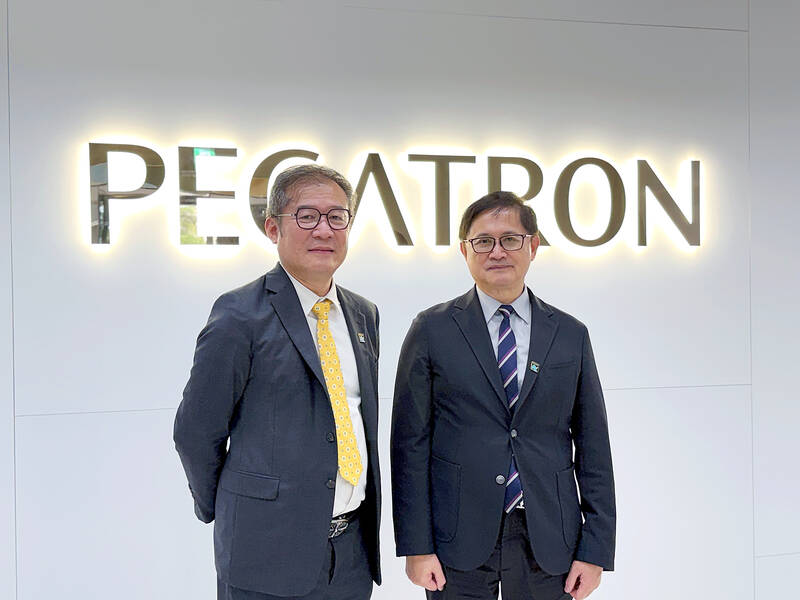
Photo: CNA
The firm is cooperating with several major customers in the inference area, with contributions expected to begin materializing in the second half of this year, he said.
Pegatron’s AI server customer base includes major cloud service providers (CSPs), small and mid-sized data centers, as well as enterprise customers, he said.
Training-focused projects typically generate greater revenue and are better suited to its capabilities, Cheng said, adding that the firm plans to step up deployments with large CSPs this year.
While the company has secured orders to make ASIC-powered servers, with shipments expected to begin this year, the projects would mainly focus on transformer-based training and inference applications, Pegatron co-chief executive officer Johnson Teng (鄧國彥) said.
ASIC projects differ from traditional server business, as some customers design their own AI chips and act as system solution providers, Teng said.
As a result, Pegatron’s role extends beyond board-level manufacturing to full system integration, including high-end “Level 10” and “Level 11” servers, as well as thermal and liquid-cooling solutions, which places greater demands on supply-chain coordination, Cheng said.
In the small and medium-sized enterprise and enterprise segments, Pegatron early last year secured a major Taiwanese customer and has seen steady progress in related projects, he said.
Pegatron’s new facility in Mexico, which is to focus on AI server production, entered trial production at the end of last year and is ready for mass production, he said.
Construction of a company plant in Texas is expected to be completed by the end of March, with trial production to begin soon, he said.
In Taiwan, the company last year built two new plants in Taoyuan, which are to begin production this year, Cheng said.
As local production in the electric vehicle (EV) sector becomes more pronounced across North America, as well as China and the rest of Asia, Pegatron has allocated most of its local EV product production to Mexico and North America to avoid high tariff requirements, Cheng said.
The company aims to maintain double-digit growth in its EV business this year, he said.
Shares of contract chipmaker Taiwan Semiconductor Manufacturing Co (TSMC, 台積電) came under pressure yesterday after a report that Apple Inc is looking to shift some orders from the Taiwanese company to Intel Corp. TSMC shares fell NT$55, or 2.4 percent, to close at NT$2,235 on the local main board, Taiwan Stock Exchange data showed. Despite the losses, TSMC is expected to continue to benefit from sound fundamentals, as it maintains a lead over its peers in high-end process development, analysts said. “The selling was a knee-jerk reaction to an Intel-Apple report over the weekend,” Mega International Investment Services Corp (兆豐國際投顧) analyst Alex Huang
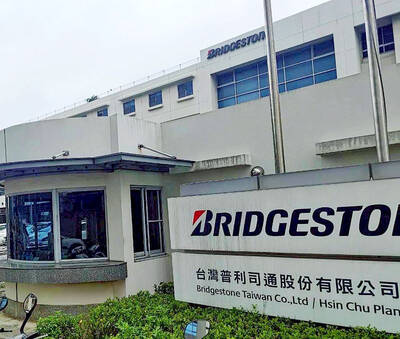
TRANSITION: With the closure, the company would reorganize its Taiwanese unit to a sales and service-focused model, Bridgestone said Bridgestone Corp yesterday announced it would cease manufacturing operations at its tire plant in Hsinchu County’s Hukou Township (湖口), affecting more than 500 workers. Bridgestone Taiwan Co (台灣普利司通) said in a statement that the decision was based on the Tokyo-based tire maker’s adjustments to its global operational strategy and long-term market development considerations. The Taiwanese unit would be reorganized as part of the closure, effective yesterday, and all related production activities would be concluded, the statement said. Under the plan, Bridgestone would continue to deepen its presence in the Taiwanese market, while transitioning to a sales and service-focused business model, it added. The Hsinchu
Taiwan Semiconductor Manufacturing Co (TSMC, 台積電) has approved a capital budget of US$31.28 billion for production expansion to meet long-term development needs during the artificial intelligence (AI) boom. The company’s board meeting yesterday approved the capital appropriation plan for purposes such as the installation of advanced technology capacity and fab construction, the world’s largest contract chipmaker said in a statement. At an earnings conference last month, TSMC forecast that its capital expenditure for this year would be at the higher end of the US$52 billion to US$56 billion range it forecast in January in response to robust demand for 5G, AI and
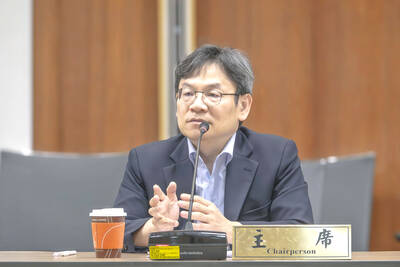
Taiwan Semiconductor Manufacturing Co’s (TSMC, 台積電) investment project in Arizona has progressed better than expected, but it still faces challenges such as water and labor shortages, National Development Council (NDC) Minister Yeh Chun-hsien (葉俊顯) said yesterday. Speaking with reporters after visiting TSMC’s Arizona hub and attending the SelectUSA Investment Summit in Maryland last week, Yeh said TSMC’s Arizona site turned a profit of NT$16.14 billion (US$514 million) last year in its first full year of mass production. “TSMC told me it was surprised by the smooth trial run of the first fab, which has left the company optimistic about the project’s outlook,”


 RSS
RSS