


Citigroup Inc posted record client revenue in Taiwan last year, fueled by a surge in fundraising from technology companies despite intensifying competition from rival investment banks.
The “eye-catching” performance of the bank’s investment banking division helped propel its Taiwan operations, while activity in other sectors such as stock trading also strengthened, Citigroup’s Taiwan country officer Christie Chang (張聖心) said.
“The current trend of local companies seeking funding from foreign investors is the strongest we’ve seen in a decade,” Chang said in an interview on Monday in Taipei.
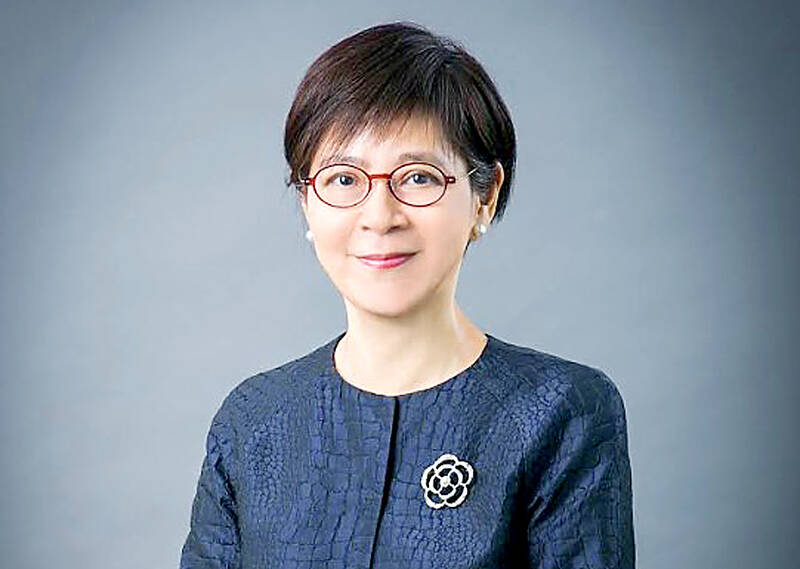
Photo courtesy of Citibank Taiwan Ltd
The capital markets activity is driving bank expansion in Taiwan even amid heightening geopolitical tensions with China. Local chipmakers and hardware providers are aggressively tapping overseas markets as global demand for artificial intelligence (AI) components surges.
Share sales by Taiwanese tech firms to foreign investors have jumped over the past two years. Equity-linked offerings, including convertible bonds and global depositary receipts, raised more than US$5 billion last year following a US$6.6 billion haul a year earlier, according to data from Dealogic and the Taiwan Stock Exchange.
Almost every deal from Taiwan has been oversubscribed by foreign investors — primarily large global funds and some hedge funds seeking long positions — as they look to build exposure to the nation’s technology champions, Citigroup said.
“Foreign investors previously had limited allocation to Taiwan names, but the recent jump in deal activities provides a rare entry point to add Taiwan to their books,” Chang said.
The push is drawing intense competition in the financial industry. Global banks that once paid limited attention to Taiwan have rushed in, often undercutting rivals with aggressive pricing to win deals and increase their market share, she said.
Citigroup helped arrange some of the biggest Taiwan deals last year, including two convertible bond sales worth about US$1 billion for leading AI server suppliers Quanta Computer Inc (廣達) and Wistron Corp (緯創).
Beyond technology, the need for local insurers to raise debt to meet a more stringent regulatory regime has created new opportunities.
Citigroup has raised more than US$30 billion for Taiwanese clients since 2020 from global capital markets to support their growth.
Geopolitical uncertainty has driven further overseas expansion for Taiwanese firms, as other countries grow wary of semiconductor production being overly concentrated in the nation.
“Many companies are already pursuing overseas M&A [mergers and acquisitions] to strengthen their AI capabilities,” Citigroup Global Markets Taiwan Securities Co (花旗環球證券) chairman Laura Chen (陳詩韻) said in the same interview.
The US lender has not lowered its internal targets for Taiwan despite geopolitical risks often mentioned by others, Chang said.
Massive AI-related data center investments continue to flow into Taiwan, driving demand for foreign exchange services and access to local liquidity, she said.
“From a business perspective, the demand remains very real and I don’t feel it being impacted by geopolitical risks at all,” Chang said.
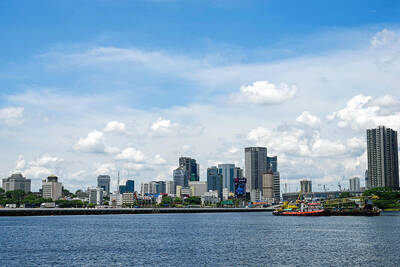
Vincent Wei led fellow Singaporean farmers around an empty Malaysian plot, laying out plans for a greenhouse and rows of leafy vegetables. What he pitched was not just space for crops, but a lifeline for growers struggling to make ends meet in a city-state with high prices and little vacant land. The future agriculture hub is part of a joint special economic zone launched last year by the two neighbors, expected to cost US$123 million and produce 10,000 tonnes of fresh produce annually. It is attracting Singaporean farmers with promises of cheaper land, labor and energy just over the border.

US actor Matthew McConaughey has filed recordings of his image and voice with US patent authorities to protect them from unauthorized usage by artificial intelligence (AI) platforms, a representative said earlier this week. Several video clips and audio recordings were registered by the commercial arm of the Just Keep Livin’ Foundation, a non-profit created by the Oscar-winning actor and his wife, Camila, according to the US Patent and Trademark Office database. Many artists are increasingly concerned about the uncontrolled use of their image via generative AI since the rollout of ChatGPT and other AI-powered tools. Several US states have adopted

KEEPING UP: The acquisition of a cleanroom in Taiwan would enable Micron to increase production in a market where demand continues to outpace supply, a Micron official said Micron Technology Inc has signed a letter of intent to buy a fabrication site in Taiwan from Powerchip Semiconductor Manufacturing Corp (力積電) for US$1.8 billion to expand its production of memory chips. Micron would take control of the P5 site in Miaoli County’s Tongluo Township (銅鑼) and plans to ramp up DRAM production in phases after the transaction closes in the second quarter, the company said in a statement on Saturday. The acquisition includes an existing 12 inch fab cleanroom of 27,871m2 and would further position Micron to address growing global demand for memory solutions, the company said. Micron expects the transaction to

A proposed billionaires’ tax in California has ignited a political uproar in Silicon Valley, with tech titans threatening to leave the state while California Governor Gavin Newsom of the Democratic Party maneuvers to defeat a levy that he fears would lead to an exodus of wealth. A technology mecca, California has more billionaires than any other US state — a few hundred, by some estimates. About half its personal income tax revenue, a financial backbone in the nearly US$350 billion budget, comes from the top 1 percent of earners. A large healthcare union is attempting to place a proposal before


 RSS
RSS