


The economy is poised for stronger-than-expected expansion this year as the global artificial intelligence (AI) boom pours fresh momentum into the world’s most advanced chipmaking hub, Standard Chartered PLC said yesterday.
The bank has raised its forecast for Taiwan’s GDP growth this year to 3.8 percent, up from a prior estimate of 2.5 percent, citing strong demand for AI-related semiconductors and sustained capital spending by the nation’s technology champions.
Standard Chartered’s growth projection for next year was also nudged higher to 2.7 percent.
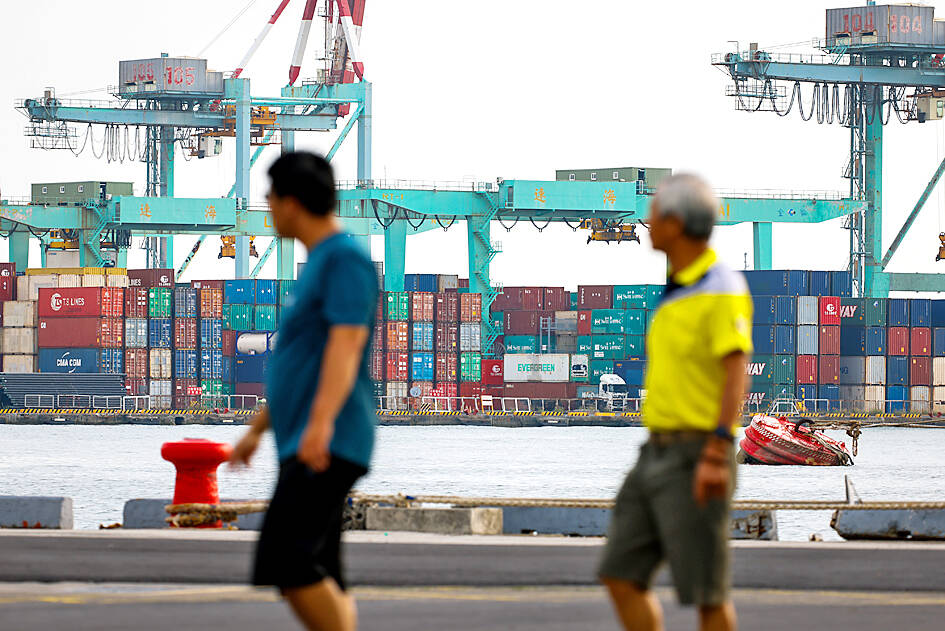
Photo: Ritchie B. Tongo, EPA
Taiwan is benefiting disproportionately from a worldwide wave of AI investment, which has lifted semiconductor exports and fueled a new round of capacity expansion, the bank’s global research unit said in a report.
The outlook was reinforced by Taiwan Semiconductor Manufacturing Co (TSMC, 台積電), which told an earnings conference in Taipei yesterday that it plans to boost capital spending to between US$52 billion and US$56 billion this year. The increase underscores the chipmaker’s commitment to accelerating mass production and capacity expansion at the 2-nanometer node, a key battleground in the race for technological leadership.
TSMC chairman C.C. Wei (魏哲家) said demand from US cloud service providers has proven to be genuine rather than speculative. The company’s customer roster also includes Nvidia Corp, Apple Inc and Broadcom Inc.
The US became Taiwan’s largest export market last year, accounting for 30.9 percent of the nation’s total outbound shipments, driven largely by demand for chips, servers and other data center equipment used in AI development, Ministry of Finance data showed.
About two-thirds of Taiwan’s exports are exempt from reciprocal US tariffs, helping shield the economy from the immediate impact of Washington’s trade measures.
Globally, Standard Chartered expects economic growth to hold steady at 3.4 percent this year, unchanged from last year.
The World Bank on Tuesday forecast that the global economy would grow 2.6 percent this year, slower than an estimated 2.7 percent for last year.
Standard Chartered warned that rising uncertainty about trade policy, geopolitical tensions and potential financial market adjustments pose elevated risks across major economies.
As global central banks approach the end of their rate-cutting cycles, policy support is expected to shift toward fiscal spending and investment-led growth, with consumer demand remaining a key stabilizing force, the bank said.
Standard Chartered raised its growth forecast for the US to 2.3 percent this year, from 1.7 percent, citing the combined impact of corporate tax cuts, intensifying competition to adopt AI technologies and an expected recovery in its labor market in the second half of the year.
However, the bank flagged potential volatility tied to the US midterm elections, US Federal Reserve leadership changes and rising political pressure on monetary policy.
China is expected to post GDP growth of 4.6 percent this year, up from an earlier estimate of 4.3 percent, on the back of Beijing’s fiscal and monetary policies, Standard Chartered said.
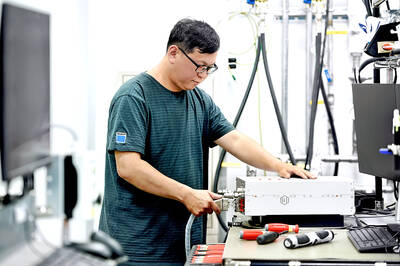
SEMICONDUCTORS: The German laser and plasma generator company will expand its local services as its specialized offerings support Taiwan’s semiconductor industries Trumpf SE + Co KG, a global leader in supplying laser technology and plasma generators used in chip production, is expanding its investments in Taiwan in an effort to deeply integrate into the global semiconductor supply chain in the pursuit of growth. The company, headquartered in Ditzingen, Germany, has invested significantly in a newly inaugurated regional technical center for plasma generators in Taoyuan, its latest expansion in Taiwan after being engaged in various industries for more than 25 years. The center, the first of its kind Trumpf built outside Germany, aims to serve customers from Taiwan, Japan, Southeast Asia and South Korea,

Gasoline and diesel prices at domestic fuel stations are to fall NT$0.2 per liter this week, down for a second consecutive week, CPC Corp, Taiwan (台灣中油) and Formosa Petrochemical Corp (台塑石化) announced yesterday. Effective today, gasoline prices at CPC and Formosa stations are to drop to NT$26.4, NT$27.9 and NT$29.9 per liter for 92, 95 and 98-octane unleaded gasoline respectively, the companies said in separate statements. The price of premium diesel is to fall to NT$24.8 per liter at CPC stations and NT$24.6 at Formosa pumps, they said. The price adjustments came even as international crude oil prices rose last week, as traders
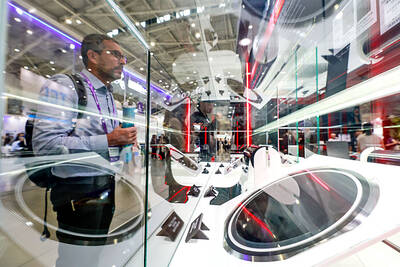
SIZE MATTERS: TSMC started phasing out 8-inch wafer production last year, while Samsung is more aggressively retiring 8-inch capacity, TrendForce said Chipmakers are expected to raise prices of 8-inch wafers by up to 20 percent this year on concern over supply constraints as major contract chipmakers Taiwan Semiconductor Manufacturing Co (TSMC, 台積電) and Samsung Electronics Co gradually retire less advanced wafer capacity, TrendForce Corp (集邦科技) said yesterday. It is the first significant across-the-board price hike since a global semiconductor correction in 2023, the Taipei-based market researcher said in a report. Global 8-inch wafer capacity slid 0.3 percent year-on-year last year, although 8-inch wafer prices still hovered at relatively stable levels throughout the year, TrendForce said. The downward trend is expected to continue this year,
Taiwan Semiconductor Manufacturing Co (TSMC, 台積電), which supplies advanced chips to Nvidia Corp and Apple Inc, yesterday reported NT$1.046 trillion (US$33.1 billion) in revenue for last quarter, driven by constantly strong demand for artificial intelligence (AI) chips, falling in the upper end of its forecast. Based on TSMC’s financial guidance, revenue would expand about 22 percent sequentially to the range from US$32.2 billion to US$33.4 billion during the final quarter of 2024, it told investors in October last year. Last year in total, revenue jumped 31.61 percent to NT$3.81 trillion, compared with NT$2.89 trillion generated in the year before, according to


 RSS
RSS