


The US and Taiwan have reached a broad consensus on their trade deal and further details would be announced after a final wrap-up meeting, the Executive Yuan’s Office of Trade Negotiations said today.
The New York Times yesterday reported that the two nations are nearing a trade deal to reduce Taiwan’s tariff rate to 15 percent and commit Taiwan Semiconductor Manufacturing Co (TSMC, 台積電) to building at least five more facilities in the US.
“The agreement, which has been under negotiation for months, is being legally scrubbed and could be announced this month,” the article said, citing three people familiar with the matter.
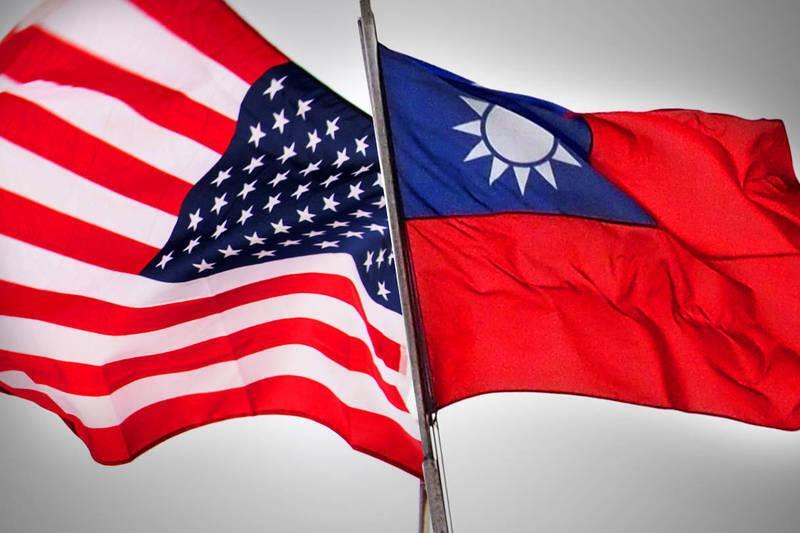
Photo: AFP
The reduced tariff rate is in line with those applied to Japan and South Korea, which struck trade deals last year, it said.
The timeline for TSMC’s further investment in the US remains unclear, it added.
The objective of trade negotiations with the US has always been to reduce reciprocal tariffs without stacking them and secure preferential treatment for semiconductors under a legal provision known as Section 232, the Office of Trade Negotiations said in a statement today.
After the fifth round of in-person Taiwan-US talks, Taiwan continued to discuss supply chain cooperation with the US Department of Commerce through video meetings and written exchanges, the office said.
Taiwan asked the US to create a more favorable investment environment for Taiwanese companies by offering support such as access to land, water, electricity, visas and simpler administrative procedures, it said.
Taiwan also continued to exchange documents with the Office of the US Trade Representative to confirm the details of a Taiwan-US trade agreement, and the two sides have reached a certain degree of consensus, it added.
Taiwan and the US are scheduling a final wrap-up meeting, after which they would publicly announce the details of the deal, the office said.
The government would brief the Legislative Yuan and the public on the agreement and submit it in full, along with an impact assessment, to the legislature for review, it said.
In the first phase of Taiwan-US trade talks from April to the end of July last year, both sides negotiated tariffs, trade barriers, economic security, procurement and supply chain issues, the office said in previous statements.
Talks then shifted to a second phase focused on supply chain cooperation under the “Taiwan model,” while Taiwan continued to seek reduced, non-stacked reciprocal tariffs and preferential treatment under Section 232 for semiconductors and related products, it said.
Taiwan earlier concluded trade discussions with the Office of the US Trade Representative, then continued to discuss Section 232 tariffs and TSMC’s investment plans with the US Department of Commerce, the New York Times said.
Officials in US President Donald Trump’s administration have said companies that invest in the US would not be subject to Section 232 tariffs, but it is unclear exactly how the arrangement would work, it said.
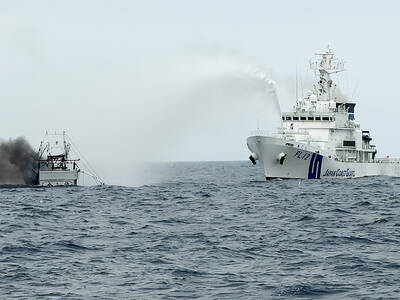
CREDIT-GRABBER: China said its coast guard rescued the crew of a fishing vessel that caught fire, who were actually rescued by a nearby Taiwanese boat and the CGA Maritime search and rescue operations do not have borders, and China should not use a shipwreck to infringe upon Taiwanese sovereignty, the Coast Guard Administration (CGA) said yesterday. The coast guard made the statement in response to the China Coast Guard (CCG) saying it saved a Taiwanese fishing boat. The Chuan Yu No. 6 (全漁6號), a fishing vessel registered in Keelung, on Thursday caught fire and sank in waters northeast of Diaoyutai Islands (釣魚台). The vessel left Keelung’s Badouzih Fishing Harbor (八斗子漁港) at 3:35pm on Sunday last week, with seven people on board — a 62-year-old Taiwanese captain surnamed Chang (張) and six
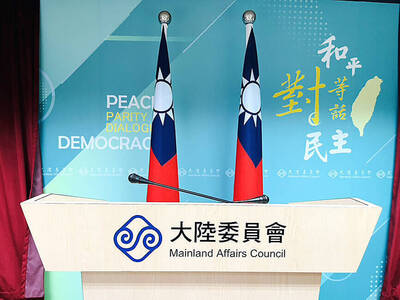
RISKY BUSINESS: The ‘incentives’ include initiatives that get suspended for no reason, creating uncertainty and resulting in considerable losses for Taiwanese, the MAC said China’s “incentives” failed to sway sentiment in Taiwan, as willingness to work in China hit a record low of 1.6 percent, a Ministry of Labor survey showed. The Directorate-General of Budget, Accounting and Statistics (DGBAS) also reported that the number of Taiwanese workers in China has nearly halved from a peak of 430,000 in 2012 to an estimated 231,000 in 2024. That marked a new low in the proportion of Taiwanese going abroad to work. The ministry’s annual survey on “Labor Life and Employment Status” includes questions respondents’ willingness to seek employment overseas. Willingness to work in China has steadily declined from

The Legislative Yuan’s Finance Committee yesterday approved proposed amendments to the Amusement Tax Act (娛樂稅法) that would abolish taxes on films, cultural activities and competitive sporting events, retaining the fee only for dance halls and golf courses. The proposed changes would set the maximum tax rate for dance halls and golf courses at 50 and 20 percent respectively, with local governments authorized to suspend the levies. Article 2 of the act says that “amusement tax shall be levied on tickets sold or fees charged by amusement places, facilities or activities” in six categories: “Cinema; professional singing, story-telling, dancing, circus, magic show, acrobatics
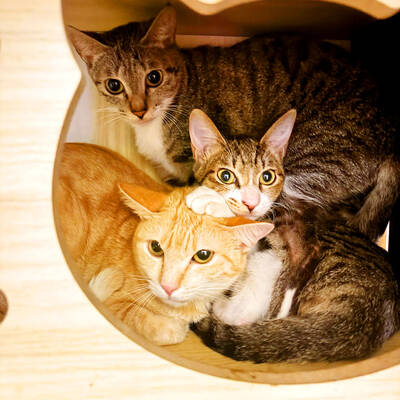
The number of pet cats in Taiwan surpassed that of pet dogs for the first time last year, reaching 1,742,033, a 32.8 percent increase from 2023, the Ministry of Agriculture said yesterday, citing a survey. By contrast, the number of pet dogs declined slightly by 1.2 percent over the same period to 1,462,528, the ministry said. Despite the shift, households with dogs still slightly outnumber those with cats by 1.2 percent. However, while the number of households with multiple dogs has remained relatively stable, households keeping more than two cats have increased, contributing to the overall rise in the feline population. The trend


 RSS
RSS