


Taiwan’s manufacturing sector wrapped up last year with its strongest expansion in more than 18 months, buoyed by a surge in production of next-generation artificial intelligence (AI) hardware and demand for customized AI chips from global cloud service providers.
The purchasing managers’ index (PMI) for Taiwan’s manufacturing sector rose 3.9 points last month to 55.3, the third straight month of expansion and the fastest pace since June 2024, the Chung-Hua Institution for Economic Research (CIER, 中經院) said yesterday.
A reading above 50 indicates expansion.
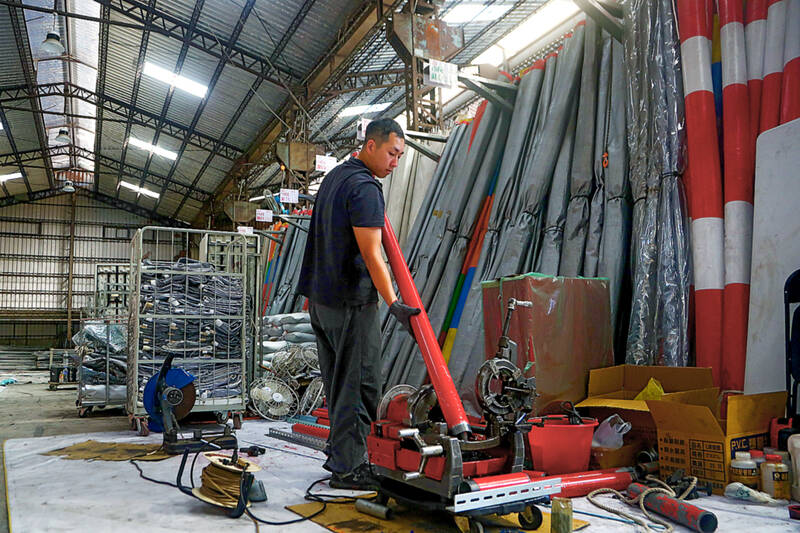
Photo: CNA
“The pickup reflects a broad-based recovery in manufacturing activity, driven primarily by Taiwan’s central role in the global AI supply chain,” CIER president Lien Hsien-ming (連賢明) told a news conference in Taipei.
The transition of next-generation AI computing products into mass production and shipment, coupled with surging demand for customized AI chips from cloud operators, has pushed Taiwan’s AI supply chain into what Lien described as a “dual-engine growth phase.”
Taiwan plays a pivotal role in global AI hardware manufacturing, supplying an estimated 80 to 90 percent of the world’s AI servers, CIER data showed.
Among the PMI’s five subindices, new orders, production and employment all showed positive cyclical movements last month. Supplier delivery times lengthened further, while inventories returned to growth, underscoring both rising demand and tightening supply conditions, it said.
The ramp-up in AI hardware production has lifted demand for advanced wafers, substrates, packaging, power management components and memory chips, CIER researcher Chen Shin-hui (陳馨蕙) said.
At the same time, shortages of conventional memory chips and rising prices have prompted customers to accelerate shipments of finished products, further boosting demand across the electronics supply chain, Chen said.
Reflecting the strain on capacity, the backlog index for electronics firms jumped 11 points to 57.8, the fastest expansion since April 2022, the monthly survey found.
Supplier delivery times in the electronics and optical industries rose to 61.8, the biggest increase since June 2022, while the raw material prices index surged to 72.1, the steepest rise since May 2022, highlighting intensifying cost pressures.
Forward-looking sentiment turned positive for the first time in eight months, the survey showed.
The six-month business outlook index climbed to 51, signaling renewed optimism among manufacturers after confidence had been weighed down since April by concerns over potential US tariff measures.
However, firms in food and textiles, basic raw materials, and machinery equipment remain more cautious, pointing to a prolonged, uneven expansion.
The non-manufacturing index edged down to 54.6 last month from 55.8 a month earlier, but stayed firmly in expansion territory, CIER said.
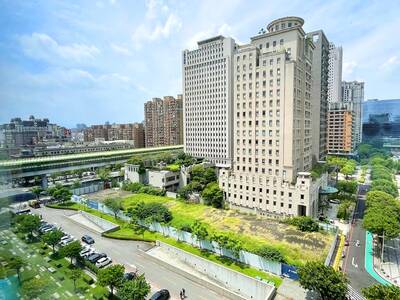
Taichung reported the steepest fall in completed home prices among the six special municipalities in the first quarter of this year, data compiled by Taiwan Realty Co (台灣房屋) showed yesterday. From January through last month, the average transaction price for completed homes in Taichung fell 8 percent from a year earlier to NT$299,000 (US$9,483) per ping (3.3m²), said Taiwan Realty, which compiled the data based on the government’s price registration platform. The decline could be attributed to many home buyers choosing relatively affordable used homes to live in themselves, instead of newly built homes in the city’s prime property market, Taiwan Realty
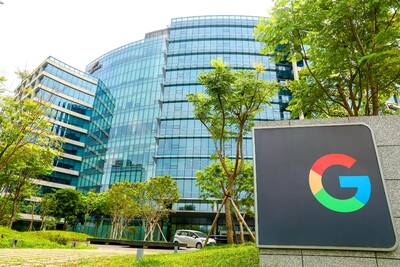
The government yesterday approved applications by Alphabet Inc’s Google to invest NT$27.08 billion (US$859.98 million) in Taiwan, the Ministry of Economic Affairs said in a statement. The Department of Investment Review approved two investments proposed by Google, with much of the funds to be used for data processing and electronic information supply services, as well as inventory procurement businesses in the semiconductor field, the ministry said. It marks the second consecutive year that Google has applied to increase its investment in Taiwan. Google plans to infuse NT$25.34 billion into Charter Investments Ltd (特許投資顧問) through its Singapore-based subsidiary Fructan Holdings Singapore Pte Ltd, and

JET JUICE: The war on Iran’s secondary effects have seen fuel prices skyrocket, knocking flight schedules down to earth in return as airlines struggle with costs Airline passengers should brace for more irritation in the next few months as carriers worldwide cancel flights and ground planes to cope with stratospheric increases in jet-fuel prices. Dutch flag carrier KLM is the latest company to cut its schedule, saying on Thursday that it would scrap 80 return flights at Amsterdam’s Schiphol Airport in the coming month. That puts it in the same league as United Airlines Holdings Inc, Deutsche Lufthansa AG and Cathay Pacific Airways Ltd, which have all pruned itineraries to mitigate costs. Global capacity for next month has been reduced by about 3 percentage points, with all

The US said it plans to help build a first-of-its-kind industrial hub in the Philippines to boost production of inputs crucial to US supply chains. The 4,000-acre hub is intended to be “a purpose-built platform for allied manufacturing” and “an investment acceleration hub where the specific industrial activities are shaped by market demand,” the US Department of State said on Thursday. The project — touted as an “economic security zone” — would be within the Luzon Economic Corridor, a flagship economic project backed by the US and Japan on the main Philippine island. The project was also described as “the first artificial intelligence


 RSS
RSS