

Taiwan’s economy is expected to undergo another year of uneven growth next year, as robust demand for artificial intelligence (AI) continues to support the technology sector, while commodity industries remain constrained by chronic overcapacity in China and rising trade barriers, Taiwan Ratings Corp (中華信評) said yesterday.
Global investment in AI infrastructure is set to sustain Taiwan’s technology exports and corporate earnings, particularly for firms involved in advanced chips, servers and related components, Taiwan Ratings corporate credit analyst Raymond Hsu (許智清) said.
Strong cash flow generation should allow most technology companies to fund higher capital expenditures, while maintaining solid balance sheets and credit buffers, he said.

Photo: Wu Hsin-tien, Taipei Times
Taiwan Ratings, the local arm of S&P Global Ratings, forecast GDP growth of 2.4 percent for next year, a sharp slowdown from this year’s expected 6.7 percent expansion.
The agency said that a potential leveling-off in global AI investment, coupled with lingering uncertainties surrounding tariffs and trade policies, could temper export and investment growth.
While AI-driven demand could underpin technology firms’ financial profiles, Taiwan Ratings warned that current investment enthusiasm might lead to overcapacity and inventory pressure.
Overseas semiconductor fabrication projects also carry execution and cost risks that could strain cash flow and delay anticipated efficiency gains, it added.
Meanwhile, Taiwan’s commodity sectors face a more challenging outlook.
Persistent overcapacity in China, weak private consumption, and a still-struggling property market could hinder earnings recovery for oil-based chemicals, steel and other basic materials producers, the agency said.
Utilization rates for commodity chemicals are likely to remain well below mid-cycle levels, keeping profitability subdued, it said.
Aggressive capacity expansion in China, combined with newer, more cost-efficient facilities, might further depress prices and test the viability of older, less-integrated plants across Asia, it said.
Taiwanese producers’ efforts to shift product portfolios away from commodity chemicals might not fully offset declining export demand, it added.
Steelmakers also face headwinds from tariffs and rising protectionism, which could shrink export markets and complicate diversification efforts, Taiwan Ratings said.
While China moves to cut crude steel output this year, it remains unclear whether further reductions next year would be enough to ease pricing pressure amid inventory gluts and weak demand, the agency said.
On the domestic front, new car sales could rebound under more favorable tax policies, supporting auto leasing firms and tire makers, which are expected to maintain stable credit profiles, it said.
Financial institutions are also likely to sustain credit strength despite macroeconomic and geopolitical uncertainties, aided by stable net interest margins, steady fee income and adequate capitalization, Taiwan Ratings said.
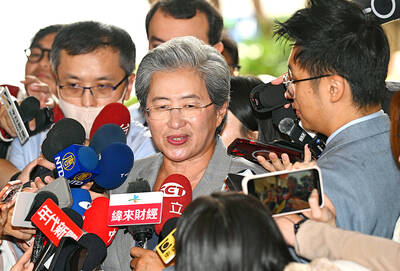
SILICON ISLAND: When asked about geopolitical tensions, Lisa Su said that ‘Taiwan is absolutely critical to the semiconductor supply chain, and very, very critical for AMD’ Advanced Micro Devices Inc (AMD) CEO Lisa Su (蘇姿丰) yesterday said the company plans to “substantially” increase manufacturing capacity next year through its Taiwanese supply chain, particularly with Taiwan Semiconductor Manufacturing Co (TSMC, 台積電), as surging demand for artificial intelligence (AI)-related processors continues to outstrip supply. “It is a very exciting time right now for all kinds of compute, and especially on the CPU [central processing unit] side,” Su said during a visit to Taiwan. “The overall market has increased a lot in 2026, and so we have also increased our own supply and capacity in 2026, but I can

INFRINGEMENT: The investigation comes after a complaint from Vicor Corp, with the company seeking a limited exclusion order as well as cease-and-desist orders, the ITA said The US International Trade Commission (USITC) has launched a Section 337 investigation naming Taiwanese technology companies, including Hon Hai Precision Industry Co (鴻海), Delta Electronics Inc (台達電) and Quanta Computer Inc (廣達), as respondents. The Ministry of Economic Affairs (MOEA) pledged assistance if needed. The USITC said on Friday in a statement that it had voted to institute an investigation under Section 337 of the US Tariff Act of 1930 into certain vertical power delivery systems, related components and computing devices incorporating such systems. The investigation covers 20 companies from Taiwan, China, Germany and the US, the commission said, adding that it
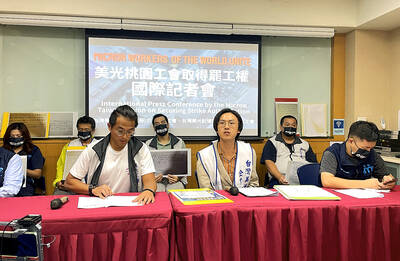
INDUSTRY STANDARD: Most global semiconductor companies have tied employee bonuses directly to corporate profits, the union said, urging Micron to do the same Micron Memory Taiwan Co’s (台灣美光) Taoyuan union secured strike authorization yesterday after a six-day vote, ramping up pressure on management to build a reasonable profit-sharing mechanism. Before the strike, the Taoyuan union “encourages” members to join a protest in Taipei on Oct. 19, union chairman Jerry Lin (林哲瑞) told a news conference in Taipei. The union did not rule out staging a snap strike, Lin said. The union has 2,258 registered members, with 88.3 percent backing the strike, he said. The vote comes as Micron’s board of directors is meeting today and tomorrow in the US. The union expects the board to respond

Elon Musk said his business empire would build and operate Terafab independently, quashing speculation about industry leader Taiwan Semiconductor Manufacturing Co (TSMC, 台積電) swooping in to run his ambitious chipmaking venture. Based in Texas, the Terafab project is Musk’s effort to break into the business of fabricating chips, in service of his companies Tesla Inc and SpaceXAI. While Musk had said that he was in discussions with TSMC, the trillionaire clarified in an X post yesterday that the only matter under consideration is for TSMC potentially leasing some part of the planned site and would not involve any operational role. “Maybe TSMC


 RSS
RSS