


Mexican lawmakers on Wednesday backed a measure to raise tariffs on goods from China and other countries that have no trade agreement with Mexico, a move Beijing said would harm its interests.
The bill was spearheaded by Mexican President Claudia Sheinbaum and approved by the Mexican Senate 76-5 on Wednesday night.
It increases tariffs on imports of automobiles, textiles, clothing, plastics, appliances and other products — primarily affecting Chinese goods. The change would also affect Taiwan, South Korea, India, Indonesia, Russia, Thailand, Turkey and Brazil.
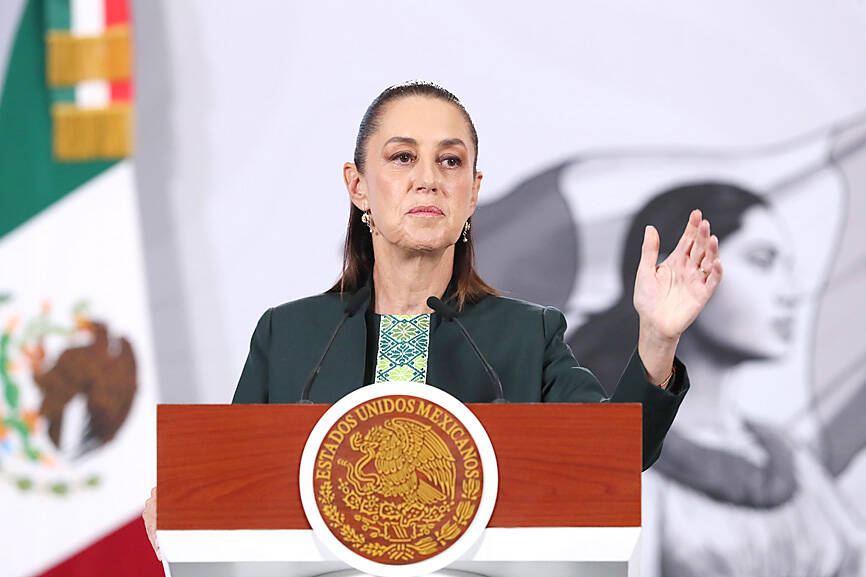
Photo: EPA
Sheinbaum must now ratify the tariffs, expected to take effect on Jan. 1 next year.
The proposed tariff rates had been lowered to 20 percent or 35 percent from an initial suggestion of 50 percent for most categories of goods. The 50 percent rate would still apply in some cases.
The Mexican Ministry of Finance estimates the new tariffs would raise nearly 52 billion pesos (US$2.9 billion) in extra revenue next year.
Sheinbaum’s embrace of the tariffs track with US concerns regarding so-called transshipment of Chinese exports through other countries, and follow action by Canada last year to emulate US levies on electric cars, steel and aluminum from China.
The legislation states Chinese cars would face among the steepest tariffs at 50 percent. The country’s massive auto sector holds 20 percent of the Mexican market, up dramatically from minimal vehicle imports just six years ago.
Mexican officials and local auto associations backed the import levies in a bid to protect national vehicle production, a major driver of Mexico’s manufacturing sector.
The move would “substantially harm the interests of relevant trading partners, including China,” Beijing said yesterday.
China “hopes Mexico will promptly rectify this erroneous practice of unilateralism and protectionism,” a Chinese Ministry of Commerce spokesperson said.
The ministry also mentioned an ongoing trade barrier investigation China launched against Mexico in September, suggesting the possibility of retaliation.
Beijing has previously said it opposes any “coercion” to impose restrictions on its exports and urged Mexico to “act with prudence.”
China runs a substantial trade surplus with Mexico.
Last year, it exported US$71 billion more than it imported, China’s customs data showed. While copper ore and concentrates could be a potential target if China decided to retaliate, Mexico would likely be able to find other customers, given strong demand for the metal essential for the renewable energy industry.
Additional reporting by Bloomberg
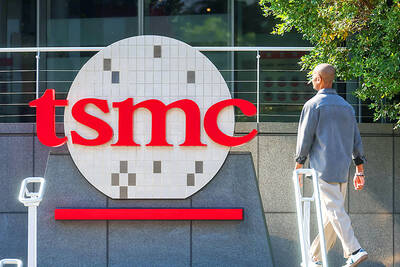
Shares of contract chipmaker Taiwan Semiconductor Manufacturing Co (TSMC, 台積電) came under pressure yesterday after a report that Apple Inc is looking to shift some orders from the Taiwanese company to Intel Corp. TSMC shares fell NT$55, or 2.4 percent, to close at NT$2,235 on the local main board, Taiwan Stock Exchange data showed. Despite the losses, TSMC is expected to continue to benefit from sound fundamentals, as it maintains a lead over its peers in high-end process development, analysts said. “The selling was a knee-jerk reaction to an Intel-Apple report over the weekend,” Mega International Investment Services Corp (兆豐國際投顧) analyst Alex Huang
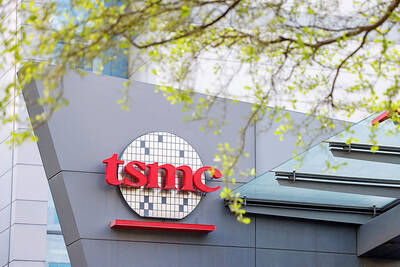
Taiwan Semiconductor Manufacturing Co (TSMC, 台積電) is expected to remain Apple Inc’s primary chip manufacturing partner despite reports that Apple could shift some orders to Intel Corp, industry experts said yesterday. The comments came after The Wall Street Journal reported on Friday that Apple and Intel had reached a preliminary agreement following more than a year of negotiations for Intel to manufacture some chips for Apple devices. Taiwan Institute of Economic Research (台灣經濟研究院) economist Arisa Liu (劉佩真) said TSMC’s advanced packaging technologies, including integrated fan-out and chip-on-wafer-on-substrate, remain critical to the performance of Apple’s A-series and M-series chips. She said Intel and Samsung
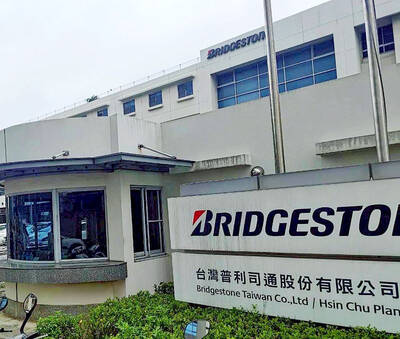
TRANSITION: With the closure, the company would reorganize its Taiwanese unit to a sales and service-focused model, Bridgestone said Bridgestone Corp yesterday announced it would cease manufacturing operations at its tire plant in Hsinchu County’s Hukou Township (湖口), affecting more than 500 workers. Bridgestone Taiwan Co (台灣普利司通) said in a statement that the decision was based on the Tokyo-based tire maker’s adjustments to its global operational strategy and long-term market development considerations. The Taiwanese unit would be reorganized as part of the closure, effective yesterday, and all related production activities would be concluded, the statement said. Under the plan, Bridgestone would continue to deepen its presence in the Taiwanese market, while transitioning to a sales and service-focused business model, it added. The Hsinchu
Taiwan Semiconductor Manufacturing Co (TSMC, 台積電) has approved a capital budget of US$31.28 billion for production expansion to meet long-term development needs during the artificial intelligence (AI) boom. The company’s board meeting yesterday approved the capital appropriation plan for purposes such as the installation of advanced technology capacity and fab construction, the world’s largest contract chipmaker said in a statement. At an earnings conference last month, TSMC forecast that its capital expenditure for this year would be at the higher end of the US$52 billion to US$56 billion range it forecast in January in response to robust demand for 5G, AI and


 RSS
RSS