


A Japanese candy-apple craftsman who went viral earlier this year after Japanese airport officers mistook his luggage full of Taiwan-made sugar for narcotics met with his supplier in Tainan yesterday to explore potential collaboration.
During the meeting, Takatoshi Ikeda, founder of Tokyo-based confectionery Pomme d’Amour, and Taiwan Sugar Corp (Taisugar, 台糖) chairman Wu Ming-chang (吳明昌) exchanged ideas on combining Taiwan’s traditional cane-sugar production techniques with Ikeda’s confectionery expertise.
Both sides would continue talks on potential partnerships to introduce Taiwan-made sugar to a wider international dessert market, Taisugar said in a statement.
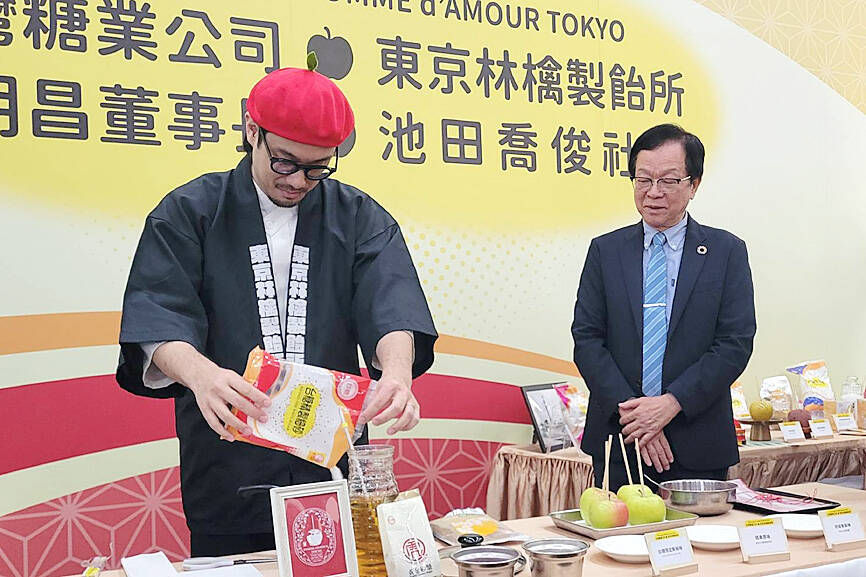
Photo: CNA
Yesterday’s meeting was the pair’s first in-person since Ikeda’s October trip to Taiwan, during which he purchased several bags of Taisugar’s fine sugar. Its powder-like appearance prompted Japanese airport officers to flag his luggage, drawing media attention in Taiwan and Japan.
Following the incident, Taisugar contacted Ikeda online. Their friendly interaction quickly went viral, leading the company to send him hand-sewn pillows designed to look like wholesale sugar bags — items Ikeda later showcased on social media.
At the meeting, Wu welcomed Ikeda with customized gifts, including a chibi-style figurine, commemorative sugar products, and an iPass designed to resemble a mini sugar packet.
Ikeda prepared candy apples on-site using Taisugar sugar, creating a batch labeled “Taisugar No. 1 Candy Apples” for Wu and Taisugar employees, who praised the flavor and texture.
“The unique aroma of cane syrup combined with the delicate sweetness of Japanese apples brings out the best of both ingredients. It is not only exceptionally delicious, but also visually stunning,” Wu said.
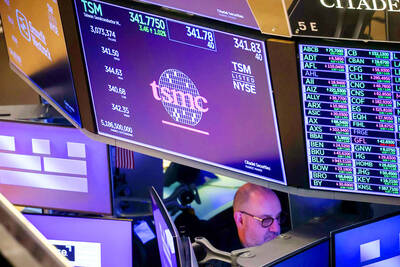
STRONG INTEREST: Analysts have pointed to optimism in TSMC’s growth prospects in the artificial intelligence era as the cause of the rising number of shareholders The number of people holding shares of chipmaker Taiwan Semiconductor Manufacturing Co (TSMC, 台積電) hit a new high last week despite a decline in its stock price, the Taiwan Depository and Clearing Corp (TDCC, 台灣集保) said. The number of TSMC shareholders rose to 2.46 million as of Friday, up 75,536 from a week earlier, TDCC data showed. The stock price fell 1.34 percent during the same week to close at NT$1,840 (US$57.55). The decline in TSMC’s share price resulted from volatility in global tech stocks, driven by rising international crude oil prices as the war against Iran continues. Dealers said
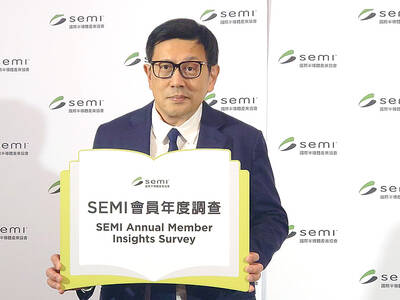
PRICE HIKES: The war in the Middle East would not significantly disrupt supply in the short term, but semiconductor companies are facing price surges for materials Taiwan’s semiconductor companies are not facing imminent supply disruptions of essential chemicals or raw materials due to the war in the Middle East, but surges in material costs loom large, industry association SEMI Taiwan said yesterday. The association’s comments came amid growing concerns that supplies of helium and other key raw materials used in semiconductor production could become a choke point after Qatar shut down its liquefied natural gas (LNG) production and helium output earlier this month due to the conflict. Qatar is the second-largest LNG supplier in the world and accounts for about 33 percent of global helium output. Helium is
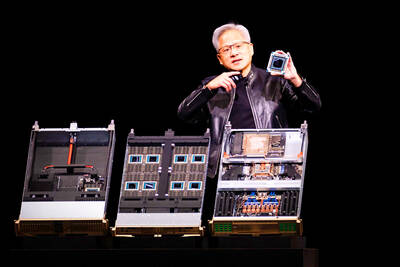
DOMESTIC COMPONENT: Huang identified several Taiwanese partners to be a key part of Nvidia’s Vera Rubin supply chain, including Asustek, Hon Hai and Wistron Nvidia Corp chief executive officer Jensen Huang (黃仁勳), addressing crowds at the company’s biggest annual event, unveiled a variety of new products while predicting that its flagship artificial intelligence (AI) processors would help generate US$1 trillion in sales through next year. During a two-and-a-half-hour keynote address, Huang announced plans to push deeper into central processing units (CPUs) — Intel Corp’s home turf — and introduced semiconductors made with technology acquired from start-up Groq Inc. The company even said it was developing chips for data centers in outer space. At the heart of Huang’s speech was the message that demand for computing power
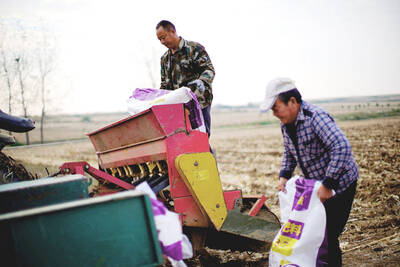
China is clamping down on fertilizer exports to protect its domestic market, industry sources said, putting an additional strain on global markets that were already grappling with shortages caused by the US-Israeli war on Iran. China is among the largest fertilizer exporters — shipping more than US$13 billion of it last year — and it has a history of controlling exports to keep prices low for farmers. Shipments through the war-blocked Strait of Hormuz account for about one-third of the sea-borne supply. This month, Beijing banned exports of nitrogen-potassium fertilizer blends and certain phosphate varieties, sources said. The ban, which has not


 RSS
RSS