


US Federal Reserve Chair Jerome Powell is expected to push through another quarter-point interest rate cut this week despite growing unease among fellow policymakers that inflation remains too high.
The Fed delivered a second straight reduction in October, driven by the sudden deterioration in the US labor market in the summer. That was followed by an outburst of hawkish concern from some officials, including five who vote on policy this year, signaling hesitancy or unwillingness to support a third move this month.
That growing division has been exacerbated by the lack of fresh economic data due to a government shutdown that spanned much of October and last month. The latest inflation number now in policymakers’ hands, released on Friday, is for September — a report that is unlikely to alter the policy debate.
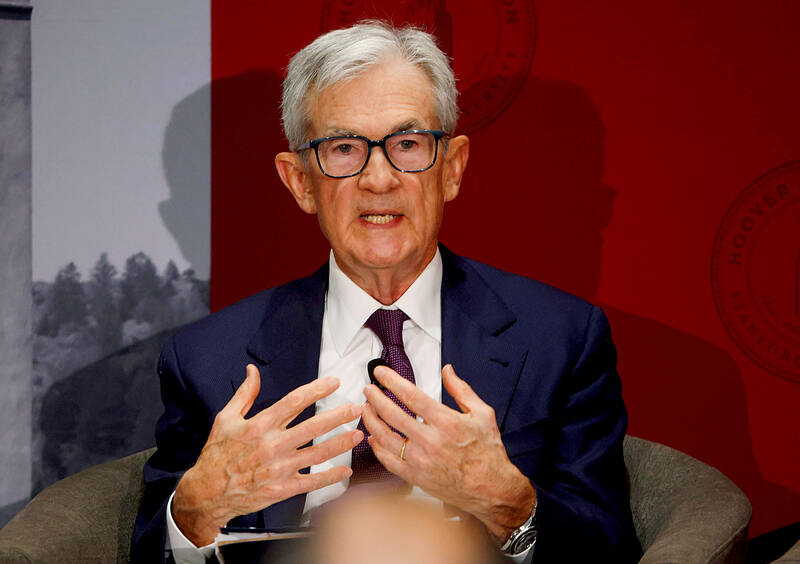
Photo: Getty Images via AFP
The US personal consumption expenditures price index showed a 2.8 percent annual increase in September, compared with 2.7 percent in August, data from the US Department of Commerce’s Bureau of Economic Analysis showed.
Meanwhile, unemployment data showed the jobless rate crept up from 4.3 percent in August to 4.4 percent in September, even as hiring beat expectations, US Department of Labor’s Bureau of Labor Statistics figures showed.
While delayed publications on September’s economic conditions have trickled out, the US government has canceled full releases of October jobs and consumer inflation figures, because the shutdown hit data collection.
Against that backdrop and for about a week in mid-November, investors signaled serious doubt over the prospect of another cut.
The unusual level of drama was resolved on Nov. 21 when New York Fed President John Williams, who is seen as closely aligned with Powell, said he saw room for a reduction in the “near term.” The market took the signal and now assigns more than a 90 percent chance to a move this week.
Economists polled by Bloomberg said they expect the Fed to take a break before two more reductions next year, in March and September. There is also some hope that a flood of new data — as statistical agencies catch up from the shutdown — will resolve the ongoing tension between the Fed’s mandates to contain inflation and maximize employment.
That said, more Fed drama lies on the horizon. US President Donald Trump is expected to soon name a successor to Powell, whose term expires in May. US National Economic Council Director Kevin Hassett, a Trump loyalist, is the frontrunner. That has prompted worries among some investors that the next chair would pursue rate cuts at Trump’s direction and risk spurring inflation.

Shares of contract chipmaker Taiwan Semiconductor Manufacturing Co (TSMC, 台積電) came under pressure yesterday after a report that Apple Inc is looking to shift some orders from the Taiwanese company to Intel Corp. TSMC shares fell NT$55, or 2.4 percent, to close at NT$2,235 on the local main board, Taiwan Stock Exchange data showed. Despite the losses, TSMC is expected to continue to benefit from sound fundamentals, as it maintains a lead over its peers in high-end process development, analysts said. “The selling was a knee-jerk reaction to an Intel-Apple report over the weekend,” Mega International Investment Services Corp (兆豐國際投顧) analyst Alex Huang
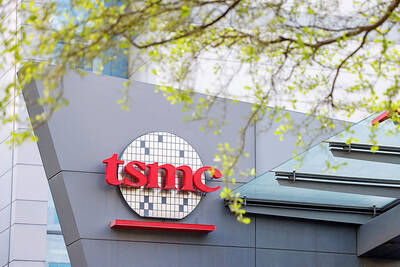
Taiwan Semiconductor Manufacturing Co (TSMC, 台積電) is expected to remain Apple Inc’s primary chip manufacturing partner despite reports that Apple could shift some orders to Intel Corp, industry experts said yesterday. The comments came after The Wall Street Journal reported on Friday that Apple and Intel had reached a preliminary agreement following more than a year of negotiations for Intel to manufacture some chips for Apple devices. Taiwan Institute of Economic Research (台灣經濟研究院) economist Arisa Liu (劉佩真) said TSMC’s advanced packaging technologies, including integrated fan-out and chip-on-wafer-on-substrate, remain critical to the performance of Apple’s A-series and M-series chips. She said Intel and Samsung
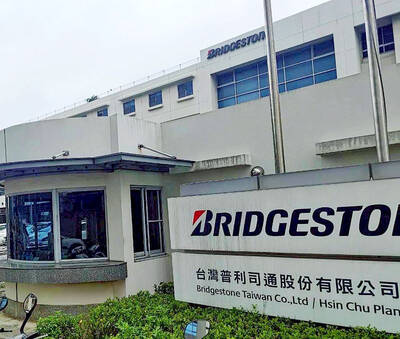
TRANSITION: With the closure, the company would reorganize its Taiwanese unit to a sales and service-focused model, Bridgestone said Bridgestone Corp yesterday announced it would cease manufacturing operations at its tire plant in Hsinchu County’s Hukou Township (湖口), affecting more than 500 workers. Bridgestone Taiwan Co (台灣普利司通) said in a statement that the decision was based on the Tokyo-based tire maker’s adjustments to its global operational strategy and long-term market development considerations. The Taiwanese unit would be reorganized as part of the closure, effective yesterday, and all related production activities would be concluded, the statement said. Under the plan, Bridgestone would continue to deepen its presence in the Taiwanese market, while transitioning to a sales and service-focused business model, it added. The Hsinchu

Taiwan Semiconductor Manufacturing Co (TSMC, 台積電) has approved a capital budget of US$31.28 billion for production expansion to meet long-term development needs during the artificial intelligence (AI) boom. The company’s board meeting yesterday approved the capital appropriation plan for purposes such as the installation of advanced technology capacity and fab construction, the world’s largest contract chipmaker said in a statement. At an earnings conference last month, TSMC forecast that its capital expenditure for this year would be at the higher end of the US$52 billion to US$56 billion range it forecast in January in response to robust demand for 5G, AI and


 RSS
RSS