


The consumer confidence index this month fell from a four-month high last month, despite five of six subindices increasing, a report released yesterday by National Central University said.
The index dropped 0.73 points month-on-month to 63.96, and is down 13.1 points on an annual basis, the report said.
The report was based on a survey of 3,245 people aged 20 or older from across Taiwan between Oct. 18 and Tuesday last week, the university said.
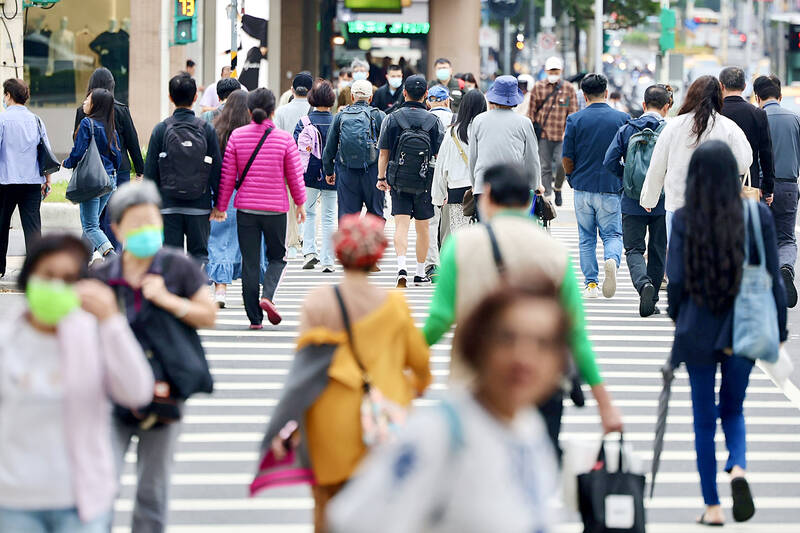
Photo: CNA
Six subindices are used to gauge the public’s sentiment concerning the next six months: consumer prices, household finances, economic climate, job opportunities, stock investments and purchases of durable goods.
This month, the subindex for job opportunities posted the largest increase, moving up 2.51 points from last month to 69.58, the report said.
Taiwan’s unemployment rate fell to 3.38 percent last month from 3.45 percent the previous month, the Directorate-General of Budget, Accounting and Statistics reported yesterday.
The subindex for consumer prices recorded the second-largest gain, climbing 2.27 points to 32.22, followed by household finances, which rose 2.17 points to 74.71, and economic outlook, which also gained 2.17 points to 78.35, the university’s report said.
The subindex on purchases of durable goods such as houses and vehicles gained the least, increasing 1.67 points to 92.37, it said.
Expectations for stock investments over the next six months were the only subindex to decline, falling 15.16 points month-on-month to 36.52, even as the TAIEX continued to hit record highs on the strength of Taiwan Semiconductor Manufacturing Co (台積電), the most heavily weighted stock on the main board, amid the ongoing artificial intelligence (AI) boom.
Among those surveyed, 17.1 percent said they plan to invest in stocks within the next six months, down from 24.9 percent last month, while 80.6 percent said they would stay on the sidelines, up from 73.2 percent, the report said.
The results suggest that many investors are reluctant to chase prices after the TAIEX’s 20.59 percent rally so far this year, with some likely to take profits as the index nears the 28,000-point threshold, it said.
The TAIEX yesterday rose 1.68 percent to close at 27,993.63.
Meanwhile, the index for the timing for home purchases increased 1.48 points month-on-month to 90.42, a survey the university conducted separately with Taiwan Realty Co (台灣房屋) showed.
Of the respondents, about 25.9 percent said it would be a good time to buy a home in the next six months, up from 25.7 percent last month, while 39.8 percent disagreed, down from 41.9 percent the previous month, the survey showed.
This indicated that people remained optimistic about property buying opportunities, the university said.

STRONG INTEREST: Analysts have pointed to optimism in TSMC’s growth prospects in the artificial intelligence era as the cause of the rising number of shareholders The number of people holding shares of chipmaker Taiwan Semiconductor Manufacturing Co (TSMC, 台積電) hit a new high last week despite a decline in its stock price, the Taiwan Depository and Clearing Corp (TDCC, 台灣集保) said. The number of TSMC shareholders rose to 2.46 million as of Friday, up 75,536 from a week earlier, TDCC data showed. The stock price fell 1.34 percent during the same week to close at NT$1,840 (US$57.55). The decline in TSMC’s share price resulted from volatility in global tech stocks, driven by rising international crude oil prices as the war against Iran continues. Dealers said
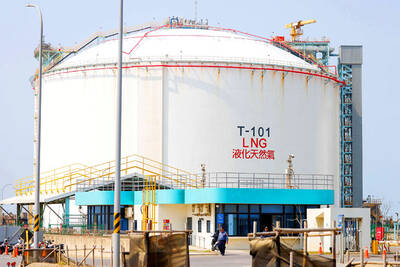
Taiwan’s natural gas supply remains stable through the end of May, despite rising concerns about potential disruptions to Qatari liquefied natural gas (LNG) supplies due to escalating conflicts in the Middle East, the Ministry of Economic Affairs said yesterday. The ministry in a statement said that Taiwan has completed preparations for natural gas supply and shipping schedules through the end of May. It has also made plans to increase natural gas imports from regions outside the Middle East in June to ensure a stable supply, it added. Taiwan sources natural gas from 14 countries and is not solely dependent on the Middle East,

China is clamping down on fertilizer exports to protect its domestic market, industry sources said, putting an additional strain on global markets that were already grappling with shortages caused by the US-Israeli war on Iran. China is among the largest fertilizer exporters — shipping more than US$13 billion of it last year — and it has a history of controlling exports to keep prices low for farmers. Shipments through the war-blocked Strait of Hormuz account for about one-third of the sea-borne supply. This month, Beijing banned exports of nitrogen-potassium fertilizer blends and certain phosphate varieties, sources said. The ban, which has not

Grab Holdings Ltd agreed to buy Delivery Hero SE’s Foodpanda operations in Taiwan for US$600 million, a deal that marks its first foray outside of its Southeast Asian base. The cash acquisition will allow Grab to expand into 21 cities across Taiwan, the Singapore-based ride-hailing and delivery company said in a statement yesterday. Grab expects the transaction to be completed in the second half, subject to regulatory approvals. The purchase will give Grab a presence on the island of about 23 million people, helping it to expand beyond its intensely competitive home market. Grab has seen growth slow dramatically as it takes


 RSS
RSS