


Hon Hai Precision Industry Co (鴻海精密) yesterday announced that it would partner with US artificial intelligence (AI) chip designer Nvidia Corp to develop AI factory infrastructure.
Hon Hai, also known globally as Foxconn Technology Group (富士康科技集團), said at the ongoing OCP Global Summit in San Jose, California, that it would introduce Nvidia’s 800 VDC data center power architecture to its K-1 AI data center project in Kaohsiung for the first time.
The installation will demonstrate Hon Hai’s efforts in AI servers, data centers and renewable energy integration.

Photo: Chiang Ying-ying, AP
According to Hon Hai, the 800 VDC power architecture is designed for high-density AI workloads, featuring a modular and scalable setup that significantly reduces current and resistive losses, minimizes conductor use, simplifies power distribution, and improves energy conversion efficiency and system safety.
The architecture will support next-generation Nvidia’s graphics processing units (GPUs), laying a foundation for highly efficient AI servers and data centers with improved power resilience to meet growing computing demand, Hon Hai said.
In addition to adopting the new architecture, Hon Hai will continue to enhance its design capabilities in AI servers, power, and cooling systems to provide rapid solutions for AI data centers, it said.
"Through continuous innovation in high-efficiency power and thermal design, Foxconn reinforces its leadership and highlights Taiwan’s pivotal role in the global AI supply chain," the company said.
Also at the OCP Global Summit, Hon Hai’s cloud solutions subsidiary, Ingrasys Technology Inc (鴻佰科技), showcased several next-generation AI platforms, including the Nvidia GB300 NVL72, Nvidia HGX B300, and Nvidia MGX servers for enterprise-grade AI applications.
Hon Hai said these Ingrasys innovations underscore its strong capabilities in AI infrastructure development and system integration.

Elon Musk’s lieutenants have reached out to chip industry suppliers, including Applied Materials Inc, Tokyo Electron Ltd and Lam Research Corp, for his envisioned Terafab, early steps in an audacious and likely arduous attempt to break into the production of cutting-edge chips. Staff working for the joint venture between Tesla Inc and Space Exploration Technologies Corp (SpaceX) have sought price quotes and delivery times for an array of chipmaking gear, people familiar with the matter said. In past weeks, they’ve contacted makers of photomasks, substrates, etchers, depositors, cleaning devices, testers and other tools, according to the people, who asked not to

The EU and US are nearing an agreement to coordinate on producing and securing critical minerals, part of a push to break reliance on Chinese supplies. The potential deal would create incentives, such as minimum prices, that could advantage non-Chinese suppliers, according to a draft of an “action plan” seen by Bloomberg. The EU and US would also cooperate on standards, investments and joint projects, as well as coordinate on any supply disruptions by countries like China. The two sides are additionally seeking other “like-minded partners” to join a multicountry accord to help create these new critical mineral supply chains, which feed into

Japan approved ¥631.5 billion (US$3.97 billion) in additional subsidies to hasten Rapidus Corp’s entry into the high-stakes artificial intelligence (AI) chipmaking arena, ramping up support for a project widely regarded as a long shot. The capital is intended to bankroll Rapidus’ work for information technology firm Fujitsu Ltd, one of the initial customers that Tokyo hopes would get the signature endeavor off the ground. The new money raises the fees and investments that the government is injecting into the start-up to ¥2.6 trillion by the end of the current fiscal year to March next year, the Japanese Ministry of Economy, Trade and
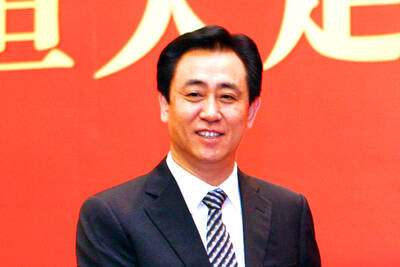
The founder of Chinese property giant Evergrande Group (恆大集團) has pleaded guilty to charges of fraud and bribery, a court said yesterday, the latest blow for what was once the country’s leading developer. Evergrande’s rise was propelled by decades of rapid urbanization and rising living standards, but in 2020, its access to credit dramatically narrowed when the government introduced curbs on excessive borrowing and speculation. The company defaulted in 2021 after struggling to repay creditors. Founder Xu Jiayin (許家印), 67, known as Hui Ka Yan in Cantonese, was reportedly held by police in 2023, with Evergrande saying he had been subjected to


 RSS
RSS