


Gourmet Master Co (美食-KY), operator of the 85°C cafe chain (85度C) in Taiwan and overseas, is undertaking its largest restructuring in five years, announcing plans to close more than 40 unprofitable stores and overhaul its supply chain in China.
The move, approved by the firm’s board on Thursday, underscores the growing challenges it faces in the world’s second-largest consumer market, where competition in the food and beverage sector has intensified amid weak consumer spending.
The company said the optimization aims to improve operating efficiency, concentrate resources in high-performing regions, and strengthen long-term profitability and shareholder returns.
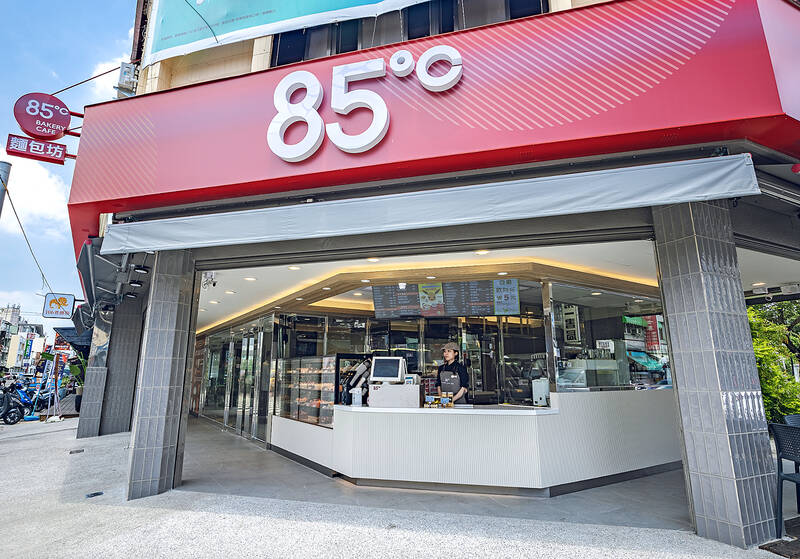
Photo courtesy of 85°C
As of the end of June, 85°C operated 441 outlets in China, down 21 from the start of the year. The number of closures planned for this year is to exceed 40 — more than 10 percent of the total — with a faster pace expected in the second half.
The planned shutdowns would mainly target underperforming regions.
Jiangsu Province hosts the largest number of 85°C stores at 134, followed by Shanghai with 119 and Fujian with 109.
The brand’s presence in Anhui, Beijing, Tianjin, Shandong, Sichuan and Chongqing remains limited to single digits, making northern and southwestern China the most likely areas for withdrawal.
Beyond store consolidation, Gourmet Master said it would also restructure its supply chain and production footprint.
Its China operations currently follow a “one major, three minor” model, with a central factory in Kunshan, Jiangsu Province, supported by satellite plants in Fujian, Guangdong and Hangzhou, Zhejiang Province.
Warehouse and logistics capacity would be adjusted in tandem with the store optimization to enhance cost controls and operational efficiency, it said in a stock market filing.
The China business has become a drag on Gourmet Master’s overall performance. The firm posted a loss of about NT$200 million (US$6.55 million) from its China operations in the first half of this year, following a nearly NT$400 million loss last year. The segment last turned a profit in 2021, but slipped into losses in the second half of 2023 as market conditions deteriorated.
Without structural changes, annual losses could surpass NT$400 million this year, the company said.
Gourmet Master operates more than 1,000 outlets globally, with Taiwan and the US serving as its key profit centers.
The group has expanded its footprint in North America and Southeast Asia to diversify revenue sources.
The firm said it would disclose further details about its China restructuring — including the progress of store closures, supply chain adjustments and its strategic plans — in its third-quarter earnings announcement early next month, followed by an investor briefing later in the month.
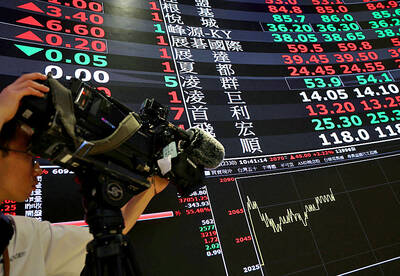
After several years flying high as Asia’s best Nvidia Corp proxy, Taiwan Semiconductor Manufacturing Co (TSMC, 台積電) is increasingly vying with other artificial intelligence (AI) stocks for investor attention. Stock traders are chasing a wider array of beneficiaries as mainstream usage of AI creates demand for hardware beyond the most-advanced chips TSMC makes for Nvidia. Subthemes from the deepening memory crunch to advances in robotics are also luring bids. At the same time, investment caps on single stocks are pushing funds to diversify, while retail investors long familiar with TSMC through its US depositary receipts are being offered a broader set of
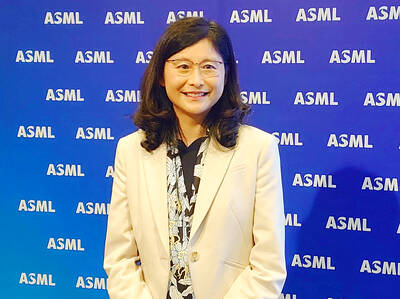
Netherlands-based semiconductor equipment supplier ASML Holding NV yesterday said that it is planning to hire an additional 1,000 people in Taiwan this year in response to growing demand from clients. ASML had previously planned to recruit 600 people this year, but that the plan has been adjusted upward, ASML vice president and ASML Taiwan general manager Grace Wang (汪佳慧) told reporters. ASML has a workforce of more than 4,500 in Taiwan, accounting for about 10 percent of its global total, Wang said. This year’s recruitment campaign would focus on adding people in the customer support, manufacturing and supply chain domains to assist ASML

UNDER MICROSCOPE: Taiwan detained three people who allegedly conspired to buy servers in Taiwan and export them using fraudulent documentation, prosecutors said Nvidia Corp chief executive officer Jensen Huang (黃仁勳) on Saturday urged Super Micro Computer Inc to tighten up on compliance after Taiwan detained three people this week for allegedly making fraudulent declarations about artificial intelligence (AI) servers made by its US partner. The development marked the nation’s first crackdown on semiconductor smuggling, which grew after the US slapped restrictions on exports of high-end chips such as Nvidia AI accelerators to China. Nvidia is “rigorous” in explaining regulations to all of its partners, Huang told reporters after arriving in Taipei. “Ultimately Super Micro has to run their own company,” he said in response to
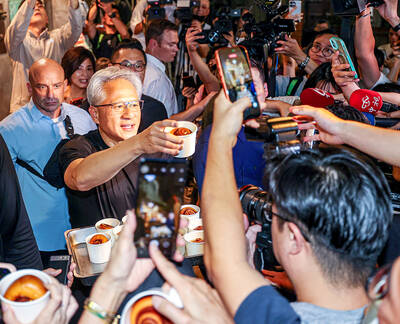
Nvidia Corp yesterday announced that CEO Jensen Huang (黃仁勳) would attend an employee meeting in Taipei tomorrow to celebrate the launch of the company’s Taiwan headquarters project. Huang would attend a gathering at the site of Nvidia’s planned headquarters in Beitou Shilin Technology Park (北投士林科技園區), the company said in a statement. After arriving in Taiwan on Saturday last week, Huang told reporters that he plans to meet with Quanta Computer Inc (廣達) chairman Barry Lam (林百里) and Taiwan Semiconductor Manufacturing Co (TSMC, 台積電) chairman C.C. Wei (魏哲家), and would attend the groundbreaking ceremony for Nvidia’s Taiwan headquarters tomorrow. Nvidia has not yet applied


 RSS
RSS