


Largan Precision Co (大立光), a major camera lens supplier for Apple Inc’s iPhones, yesterday reported that net profit last quarter increased 6.79 percent from a year earlier, while gross margin dropped 3.02 percentage points over the same period mainly due to foreign exchange fluctuations.
Net profit increased to NT$7.08 billion (US$231.79 million) compared with NT$6.63 billion in the third quarter last year, the company said.
On a quarterly basis, net profit surged 586 percent from NT$1.03 billion, it said.
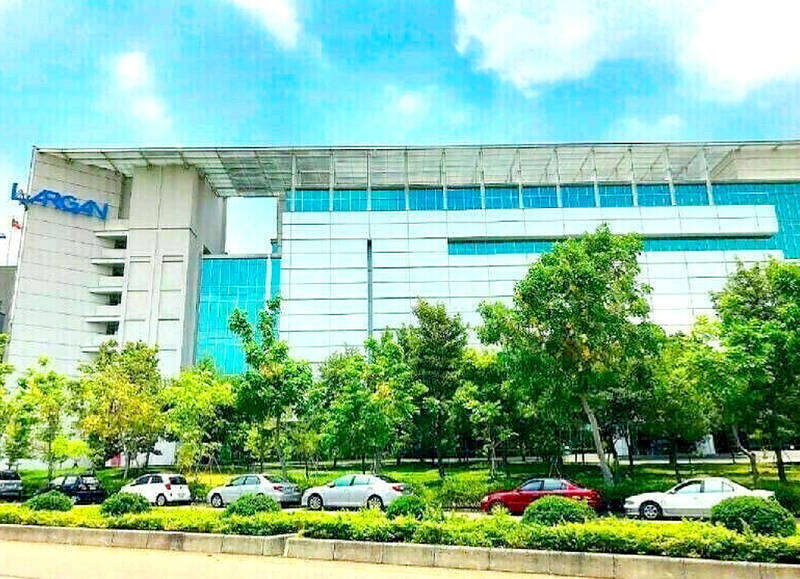
Photo: Chen Mei-ying, Taipei Times
Earnings per share rose to NT$53.05 last quarter from NT$49.67 a year earlier and NT$7.73 the previous quarter, it said.
Largan last quarter booked NT$673 million in foreign exchange gains, reversing losses of NT$4.2 billion in the second quarter.
The appreciation of the New Taiwan dollar versus the greenback shaved about 3 percentage points off the company’s gross margin last quarter, when it was 47.2 percent, down from 50.22 percent in the same period last year, Largan chairman Adam Lin (林恩平) told an online investors’ conference.
Increased revenue from bypass shipments — orders delivered directly to module or assembly partners rather than through branded customers — and lower yields also weighed on gross margin last quarter, Lin said.
Largan expects its yields to improve over the remainder of the year, he said.
A better yield would be one of key factors that improves its gross margin this quarter, as most product prices are settled, Lin added.
The scale of front-loaded orders for advanced smartphone lenses among customers, as well as foreign exchange rate fluctuations are also key factors, he said.
Revenue this month is expected to be similar to last month’s NT$6.24 billion, Lin said.
Next month’s revenue would be weaker on a sequential basis, he said.
Largan expects full factory utilization this quarter, as the manufacturing process technology is becoming more complicated, not because of an increase in demand, he said.
Regarding expansion plans, one floor of the firm’s fourth plant at the Taichung Industrial Park (台中工業區) has been set aside, and more capacity can be added if needed, Lin said.
As for progress in shipping Largan’s newly developed high-precision visual recognition products for humanoid service robots, Lin said customers have delayed shipments to next year from this year after scrapping the ultrasonic detection design.
Shipments of other visual recognition products for service robots would take place this year, but in small volumes, he said.
Regarding industry trends, Lin said that customers are continuing to move toward multiple-aperture and variable-aperture lenses, with periscope lenses widely adopted.
As customers have complained that high-end eight-piece plastic lenses are expensive, they would only be used in special applications, he said.


The domestic unit of the Chinese-owned, Dutch-headquartered chipmaker Nexperia BV will soon be able to produce semiconductors locally within China, according to two company sources. Nexperia is at the center of a global tug-of-war over critical semiconductor technology, with a Dutch court in February ordering a probe into alleged mismanagement at the company. The geopolitical tussle has disrupted supply chains, with some carmakers reportedly forced to cut production due to chip shortages. Local production would allow Nexperia’s domestic arm, Nexperia Semiconductors (China) Ltd (安世半導體中國), to bypass restrictions in place since October on the supply of silicon wafers — etched with tiny components to

Taiwan’s foreign exchange reserves fell below the US$600 billion mark at the end of last month, with the central bank reporting a total of US$596.89 billion — a decline of US$8.6 billion from February — ending a three-month streak of increases. The central bank attributed the drop to a combination of factors such as outflows by foreign institutional investors, currency fluctuations and its own market interventions. “The large-scale outflows disrupted the balance of supply and demand in the foreign exchange market, prompting the central bank to intervene repeatedly by selling US dollars to stabilize the local currency,” Department of Foreign

Taiwan is open to joining a global liquefied natural gas (LNG) program if one is created, but on the condition that countries provide delivery even in a scenario where there is a conflict with China, an energy department official said yesterday. While Taiwan’s priority is to have enough LNG at home, the nation is open to exploring potential strategic reserves in other countries such as Japan or South Korea, Energy Administration Deputy Director-General Chen Chung-hsien (陳崇憲) said. While the LNG market does not have a global reserve for emergencies like that of oil, the concept has been raised a few times —
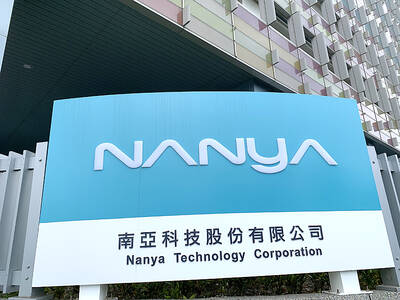
AI-FUELED DEMAND: The company has been benefiting from the skyrocketing prices for DRAM chips amid the AI frenzy, especially its core product — DDR4 DRAM chips DRAM chipmaker Nanya Technology Corp (南亞科技) yesterday reported that its revenue for the first quarter surged 582.91 percent to NT$49.09 billion (US$1.54 billion) from NT$7.19 billion a year earlier, as the supply crunch caused chip price spikes. Last quarter’s figure is the highest on record. On a quarterly basis, revenue jumped 63.14 percent from NT$30.09 billion, the company said. In January, Nanya Technology expected global DRAM supply scarcity to continue through the first half of 2028, thanks to strong demand for artificial intelligence (AI) applications. Market researcher TrendForce Corp (集邦科技) forecast prices of standard DRAM chips would rise between 58 percent and 63


 RSS
RSS