


Taiwan’s manufacturing activity continued to contract last month, with the sector’s purchasing managers’ index (PMI) registering 48.3, marking its fourth consecutive month below the neutral 50-point threshold, the Chung-Hua Institution for Economic Research (CIER, 中華經濟研究院) said yesterday.
The data underscored how US tariff uncertainty and a sluggish global backdrop are weighing on traditional industries, even as artificial intelligence (AI) demand continues to provide pockets of strength.
“For the first time in about two years, employment contracted across all major sectors,” CIER vice president Chen Shin-horng (陳信宏) told a news conference in Taipei.
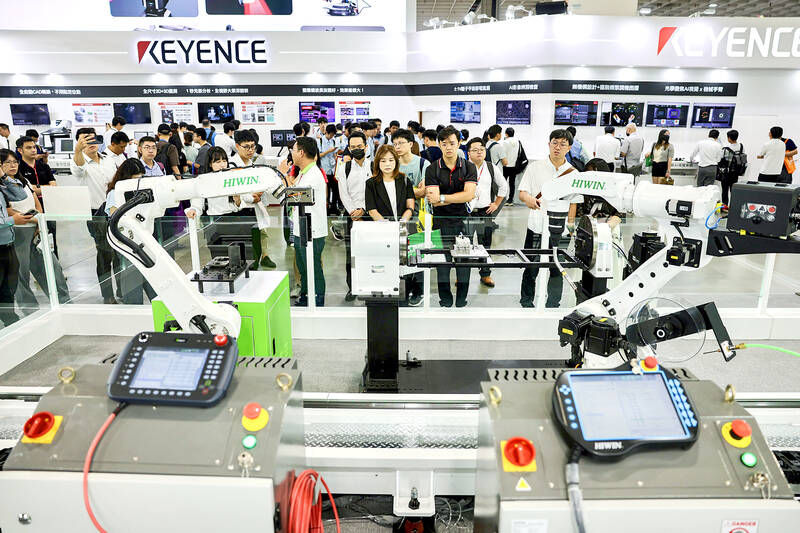
Photo: CNA
“The divergence is becoming sharper between firms riding the AI supply chain and those facing mounting pressure outside it,” Chen said.
The Ministry of Labor yesterday said that the number of employees placed on furlough or shorter hours climbed to 8,505 at the end of last month, up 2,471 from a month earlier.
The manufacturing sector accounted for 95 percent of all reported cases, with the metal and electromechanical sector bearing the brunt. Within that category, machinery and equipment makers were the most exposed, with 145 companies and 3,559 workers affected.
The latest PMI data showed order momentum remains weak. Subindices tracking new orders and the six-month outlook contracted for a sixth straight month, although the pace of decline eased slightly, Chen said.
Traditional industries such as transportation equipment, textiles and food products posted some of the steepest contractions, with PMIs of 41.
In contrast, power and machinery equipment manufacturers bucked the broader trend and stayed in expansion, lifted by stronger US demand for power systems used in building AI infrastructure.
Cable and wiring suppliers also reported a surge in orders, while machinery producers linked to energy and AI applications signaled an improved outlook.
Beyond manufacturing, Taiwan’s services sector showed greater resilience, the CIER said.
The non-manufacturing index (NMI) rose 1.4 points to 52.1, supported by robust sales of next-generation smartphones and other tech products, as well as rallies on the local bourse.
Telecoms, retailers, shippers and financial companies all reported stronger activity, the CIER said.
Hospitality and restaurants faced headwinds from heavy rainfall and flooding in eastern Taiwan, which disrupted tourism and local spending, Chen said.
Separately, the Taiwan Institute of Economic Research (TIER) released its monthly report on the nation’s manufacturing sector, which recorded the sector’s record contraction in August, as traditional industries continued to face weak demand and intense overseas competition, prompting many firms to scale back output or adjust production schedules.
The TIER said Taiwan’s outlook remains closely tied to developments in the US and China, as it urged manufacturers to stay alert to potential challenges and global uncertainties.
Tariff uncertainty is easing in the US, but duties on semiconductors remain unresolved, while the US Federal Reserve has signaled a cooling labor market and lingering inflationary pressure from tariffs, the TIER said.
In China, “anti-involution” measures and market support policies aimed at reducing competition could help ease deflation risks, although their effectiveness in boosting consumer confidence and growth remains unclear, it added.
Additional reporting by CNA
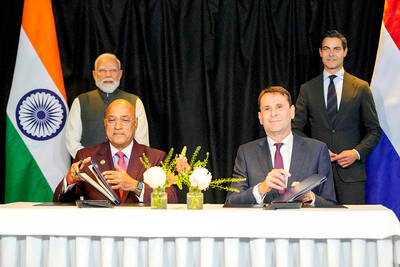
NEW MARKET: The partnership opens up India to the Dutch company, which already has a strong hold in the semiconductor market of South Korea, Taiwan and China ASML Holding NV entered into a partnership agreement with Tata Electronics Pvt Ltd aimed at ramping up India’s goal to develop domestic chip-manufacturing capabilities. The Dutch company’s technology would help power Tata Electronics’ planned 300 millimeter (mm) semiconductor foundry in Gujarat, according to a joint statement from the two companies on Saturday. The signing of a memorandum of understanding coincides with a visit by Indian Prime Minister Narendra Modi to the Netherlands, which is looking to deepen bilateral relations with New Delhi. ASML, whose top customers include Taiwan Semiconductor Manufacturing Co (台積電) and Samsung Electronics Co, makes lithography machines that can print
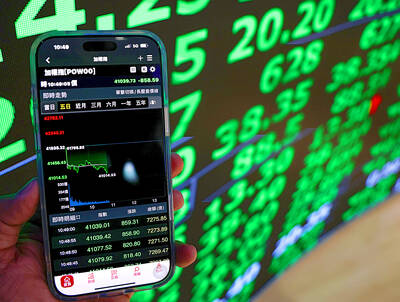
PORTFOLIO REBALANCING: The adjustments in three global equity indices reflect rising investor appetite for semiconductor and artificial intelligence-related stocks Taiwan’s weighting in major global equity indices compiled by MSCI Inc is to rise modestly following the latest quarterly review, underscoring the market’s expanding role in emerging-market portfolios, as global investors continue to favor the nation’s technology sector. Taiwan’s weighting in the MSCI Emerging Markets Index is to increase by 0.30 percentage points to 23.76 percent, after the changes take effect at the close of the May 29 session. Its weighting in the MSCI All-Country Asia ex-Japan Index is to rise 0.37 percentage points to 27.16 percent, while that in the MSCI All Country World Index is to edge up slightly to
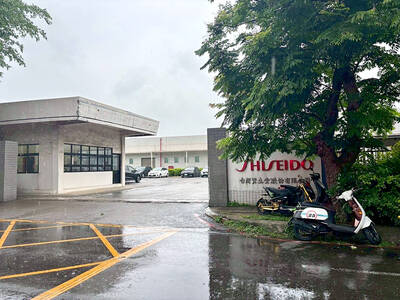
The Hsinchu County Government’s Labor Affairs Department yesterday said that it has received a plan from cosmetics brand Taiwan Shiseido Co (台灣資生堂) detailing mass layoffs at its plant in Hukou Township (湖口). While the labor authorities did not disclose the number of employees to be laid off, Japanese news media earlier in the day reported that the closure of the company’s factory in Hukou would result in 170 employees losing their jobs. Shiseido followed the law by reporting its layoff plan, the department said, adding that authorities would closely monitor negotiations between the management and affected employees and step in if any
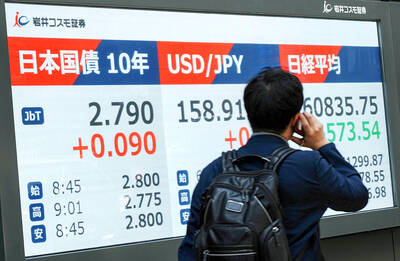
ROUGH RECORDS: Bonds in Japan, as well is in New Zealand, Australia and the US, are seeing the effects of a nervy market as stock exchanges across Asia edge down A deepening slump in Japanese government bonds added fuel to the selloff in global debt markets as rising oil prices stoked inflation fears and pushed yields to multi-decade highs. Japan’s 30-year yield yesterday surged as much as 20 basis points to the highest level since the tenor’s debut in 1999, before paring some of the move. Shorter-maturity Japanese debt was also under pressure, underscored by weak demand at a sale of five-year notes that offered a record-high coupon of 2 percent. Concerns over inflation and government spending rippling through markets including the US, Australia and New Zealand are being amplified in Japan,


 RSS
RSS