


US President Donald Trump’s administration is considering imposing tariffs on foreign electronic devices based on the number of chips in each one, as it seeks to drive companies to shift manufacturing to the US, three people familiar with the matter said.
According to the plan, which has not previously been reported and could change, the US Department of Commerce would impose a tariff equal to a percentage of the estimated value of the product’s chip content.
The US commerce department did not immediately respond to requests for comment.
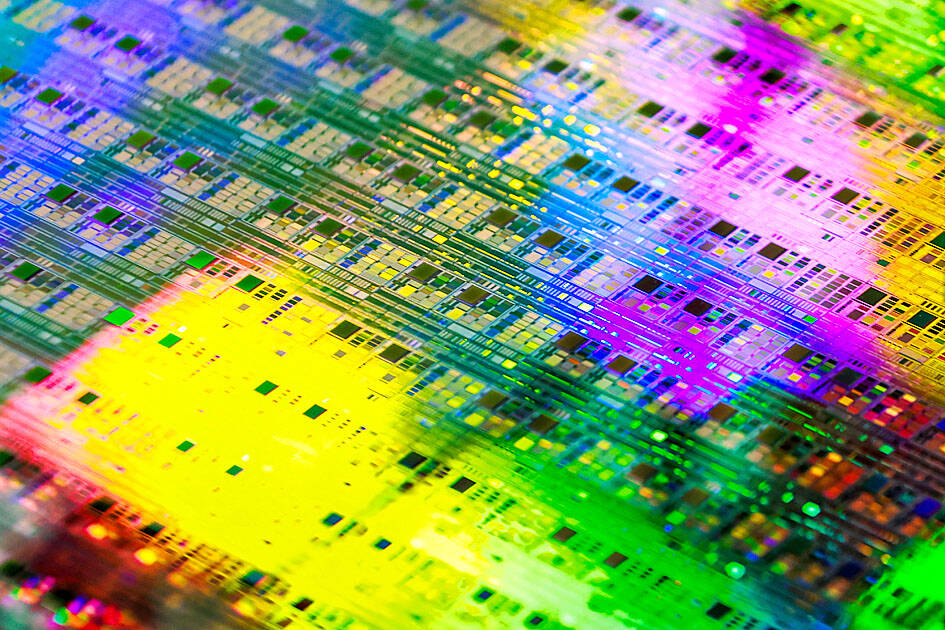
Photo: RITCHIE B. TONGO, EP
Asked about the details, White House spokesman Kush Desai said, “America cannot be reliant on foreign imports for the semiconductor products that are essential for our national and economic security.”
“The Trump administration is implementing a nuanced, multi-faceted approach to reshoring critical manufacturing back to the United States with tariffs, tax cuts, deregulation and energy abundance,” he said.
The plan could push up the cost of consumer goods “at a time when the US has an inflationary problem, with inflation clearly above the Fed’s target and accelerating,” American Enterprise Institute economist Michael Strain said.
The US Federal Reserve’s target inflation rate is 2 percent.
Even domestically produced items would likely become more expensive, due to new tariffs on key inputs needed to make those goods, Strain added.
Trump has deployed an array of tariffs aimed at bolstering US manufacturing, announcing on Thursday sweeping new import tariffs, including 100 percent duties on branded drugs and 25 percent levies on heavy-duty trucks, triggering fresh trade uncertainty after a period of relative calm.
In April, the Trump administration announced probes into imports of pharmaceuticals and semiconductors as part of a bid to impose tariffs on them, saying that extensive reliance on their foreign production poses a national security threat.
However, questions have swirled about the products containing chips that would be hit by the tariffs, the tariff rates, and whether any countries, products or companies would be exempt.
Trump said last month that the US would impose a tariff of about 100 percent on imports of semiconductors, but exempted companies that are manufacturing in the US or have committed to do so.
The biggest chipmakers outside the US include Taiwan Semiconductor Manufacturing Co (台積電) and South Korea’s Samsung Electronics Co.
One of the sources said that the US commerce department was considering a 25 percent tariff rate for chip-related content in imported devices, with 15 percent rates for electronics from Japan and the EU, stressing the figures were preliminary.
The sources added that the department has also eyed a US dollar-for-US dollar exemption based on investment in US-based manufacturing only if a company moves half its production to the US, but it was unclear how it would work or whether it would move forward.
The investment exemption was previously reported by the Wall Street Journal.
The US commerce department had previously proposed to exempt chipmaking tools from the tariffs to avoid raising the cost of producing semiconductors in the US and undermining Trump’s reshoring goals, three sources said.
However, they said the White House was displeased by the carve-out, citing Trump’s general distaste for exemptions.
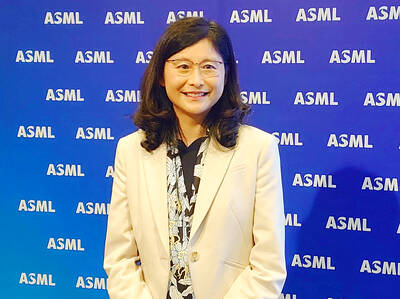
Netherlands-based semiconductor equipment supplier ASML Holding NV yesterday said that it is planning to hire an additional 1,000 people in Taiwan this year in response to growing demand from clients. ASML had previously planned to recruit 600 people this year, but that the plan has been adjusted upward, ASML vice president and ASML Taiwan general manager Grace Wang (汪佳慧) told reporters. ASML has a workforce of more than 4,500 in Taiwan, accounting for about 10 percent of its global total, Wang said. This year’s recruitment campaign would focus on adding people in the customer support, manufacturing and supply chain domains to assist ASML
UNDER MICROSCOPE: Taiwan detained three people who allegedly conspired to buy servers in Taiwan and export them using fraudulent documentation, prosecutors said Nvidia Corp chief executive officer Jensen Huang (黃仁勳) on Saturday urged Super Micro Computer Inc to tighten up on compliance after Taiwan detained three people this week for allegedly making fraudulent declarations about artificial intelligence (AI) servers made by its US partner. The development marked the nation’s first crackdown on semiconductor smuggling, which grew after the US slapped restrictions on exports of high-end chips such as Nvidia AI accelerators to China. Nvidia is “rigorous” in explaining regulations to all of its partners, Huang told reporters after arriving in Taipei. “Ultimately Super Micro has to run their own company,” he said in response to

Nvidia Corp yesterday announced that CEO Jensen Huang (黃仁勳) would attend an employee meeting in Taipei tomorrow to celebrate the launch of the company’s Taiwan headquarters project. Huang would attend a gathering at the site of Nvidia’s planned headquarters in Beitou Shilin Technology Park (北投士林科技園區), the company said in a statement. After arriving in Taiwan on Saturday last week, Huang told reporters that he plans to meet with Quanta Computer Inc (廣達) chairman Barry Lam (林百里) and Taiwan Semiconductor Manufacturing Co (TSMC, 台積電) chairman C.C. Wei (魏哲家), and would attend the groundbreaking ceremony for Nvidia’s Taiwan headquarters tomorrow. Nvidia has not yet applied
Huawei Technologies Co (華為) said it has come up with a new pathway to shorten its gap with industry leader Taiwan Semiconductor Manufacturing Co (TSMC, 台積電), potentially achieving a breakthrough in making advanced semiconductors without cutting-edge equipment. Right now there is about a five-year gap between what TSMC is capable of and what Huawei, together with its manufacturing partner Semiconductor Manufacturing International Corp (中芯), can produce. Huawei is to start making 1.4-nanometer chips by 2031 with its own “LogicFolding” technology, Huawei semiconductor chief He Tingbo (何庭波) said in a rare public appearance during a chip conference yesterday, while TSMC has


 RSS
RSS