


Taiwan’s 14 financial holding companies collectively earned NT$60.2 billion (US$2.06 billion) last month, bouncing back from a NT$6.8 billion loss in May, on the back of regulatory easing and a rebound in market-related income.
Aggregate first-half earnings reached NT$219.2 billion, representing a 35 percent retreat from a year earlier, as companies grappled with volatile markets and a strengthening New Taiwan dollar.
Only four of the 14 posted year-on-year growth, while one — Shin Kong Financial Holding Co (新光金控) — remained in the red.

Photo: CNA
Fubon Financial Holding Co (富邦金控) retained its lead, with net income of NT$51.3 billion in the first half, or earnings per share of NT$3.49 — the highest among its peers, company data showed.
Net income last month reached NT$11.85 billion, the data showed.
Cathay Financial Holding Co (國泰金控) followed with NT$45.8 billion in first-half profit and NT$7.1 billion last month, its financial statement showed.
However, CTBC Financial Holding Co (中信金控) outpaced Cathay in monthly earnings, with NT$11.2 billion last month, but trailed in first-half income at NT$35.8 billion, it said.
The industry rebound was largely supported by relief measures from the Financial Supervisory Commission, which allowed insurers to calculate foreign-
exchange losses using a six-month average rate instead of the end-June spot rate, helping soften the impact of the NT dollar’s rapid appreciation.
Life insurers also tapped into the newly permitted foreign-
exchange volatility buffer by reclassifying liabilities and other reserves, easing the pressure on foreign currency-based bond portfolios. Dividend payouts from local firms and a recovery in investment income further lifted results.
Shin Kong Financial stood out as the sole money-loser, reporting a first-half loss of NT$29.5 billion even after a profit of NT$1.67 billion last month.
The company allocated NT$61.1 billion to foreign-exchange reserves to guard against continued currency volatility, it said.
Yuanta Financial Holding Co (元大金控), with a strong presence in securities, saw profits last month rise nearly eightfold to NT$6.54 billion, aided by a NT$2.68 billion gain at its life insurance arm from recovering liability reserves.
It posted NT$1.25 in earnings per share for the first half, company data showed.
Bank-oriented firms with lower exposure to foreign assets — such as E.Sun Financial Holding Co (玉山金控), First Financial Holding Co (第一金控), SinoPac Financial Holding Co (永豐金控) and Hua Nan Financial Holding Co (華南金控) — were among the few to record annual profit growth, their financial statements showed.
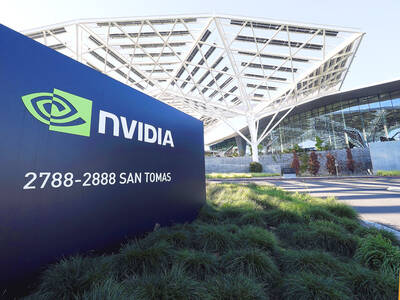
CHIP RACE: Three years of overbroad export controls drove foreign competitors to pursue their own AI chips, and ‘cost US taxpayers billions of dollars,’ Nvidia said China has figured out the US strategy for allowing it to buy Nvidia Corp’s H200s and is rejecting the artificial intelligence (AI) chip in favor of domestically developed semiconductors, White House AI adviser David Sacks said, citing news reports. US President Donald Trump on Monday said that he would allow shipments of Nvidia’s H200 chips to China, part of an administration effort backed by Sacks to challenge Chinese tech champions such as Huawei Technologies Co (華為) by bringing US competition to their home market. On Friday, Sacks signaled that he was uncertain about whether that approach would work. “They’re rejecting our chips,” Sacks
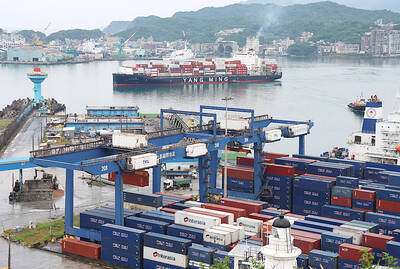
Taiwan’s exports soared 56 percent year-on-year to an all-time high of US$64.05 billion last month, propelled by surging global demand for artificial intelligence (AI), high-performance computing and cloud service infrastructure, the Ministry of Finance said yesterday. Department of Statistics Director-General Beatrice Tsai (蔡美娜) called the figure an unexpected upside surprise, citing a wave of technology orders from overseas customers alongside the usual year-end shopping season for technology products. Growth is likely to remain strong this month, she said, projecting a 40 percent to 45 percent expansion on an annual basis. The outperformance could prompt the Directorate-General of Budget, Accounting and

NATIONAL SECURITY: Intel’s testing of ACM tools despite US government control ‘highlights egregious gaps in US technology protection policies,’ a former official said Chipmaker Intel Corp has tested chipmaking tools this year from a toolmaker with deep roots in China and two overseas units that were targeted by US sanctions, according to two sources with direct knowledge of the matter. Intel, which fended off calls for its CEO’s resignation from US President Donald Trump in August over his alleged ties to China, got the tools from ACM Research Inc, a Fremont, California-based producer of chipmaking equipment. Two of ACM’s units, based in Shanghai and South Korea, were among a number of firms barred last year from receiving US technology over claims they have
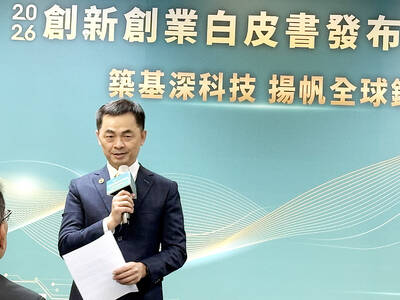
BARRIERS: Gudeng’s chairman said it was unlikely that the US could replicate Taiwan’s science parks in Arizona, given its strict immigration policies and cultural differences Gudeng Precision Industrial Co (家登), which supplies wafer pods to the world’s major semiconductor firms, yesterday said it is in no rush to set up production in the US due to high costs. The company supplies its customers through a warehouse in Arizona jointly operated by TSS Holdings Ltd (德鑫控股), a joint holding of Gudeng and 17 Taiwanese firms in the semiconductor supply chain, including specialty plastic compounds producer Nytex Composites Co (耐特) and automated material handling system supplier Symtek Automation Asia Co (迅得). While the company has long been exploring the feasibility of setting up production in the US to address


 RSS
RSS