


Intel Corp shares on Thursday gained on a report that the company has tentatively agreed to a joint venture with Taiwan Semiconductor Manufacturing Co (TSMC, 台積電), a sign the beleaguered US chipmaker is moving ahead with a plan that has been highly anticipated by investors.
TSMC, the world’s largest contract chipmaker, is to take a 20 percent stake in the new company, the report said.
The shares on Thursday climbed more than 2 percent after the Information Web site reported the news, erasing a decline of more than 5 percent earlier in the session. The shares had been up about 10 percent this year through Wednesday, fueled in part by hopes that Intel would pursue such a move.
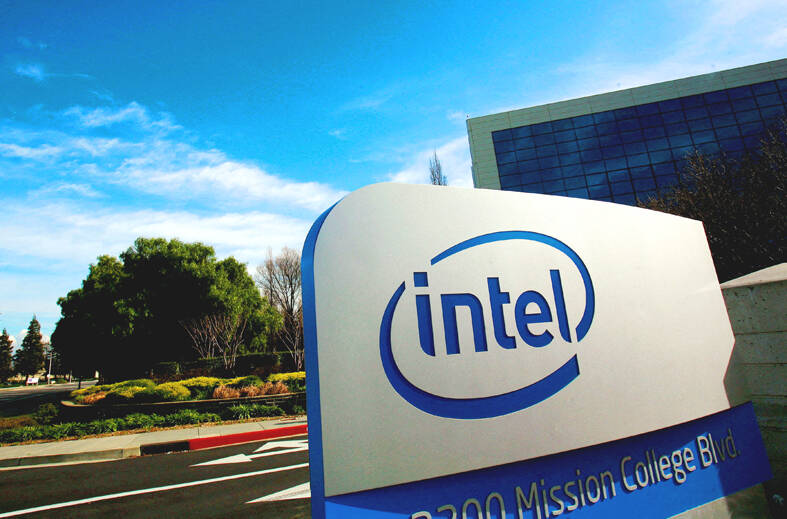
Photo: Reuters
Executives from both companies reached a preliminary agreement to form a joint venture that would run Intel’s manufacturing plants, the Information reported.
Intel and other US chipmakers would hold the majority of shares in the initiative, which would include at least some of the US company’s factories, said the news site, which cited unnamed people familiar with the situation.
TSMC yesterday said it has “no comment on market rumors” when responding to an inquiry about the matter from the Taipei Times.
Premier Cho Jung-tai (卓榮泰) yesterday downplayed the potential combination between TSMC and Intel when he was asked about whether the TSMC-Intel deal would be one of the nation’s bargaining chips in its negotiations to reduce the 32 percent “reciprocal” tariff imposed on Taiwanese imports to the US.
“The principle is that for any ongoing cooperation or negotiations, we will put the country’s interest first,” Cho said. “As for new speculation or news, we have not received any reports yet.”
United Microelectronics Co (UMC, 聯電), Taiwan’s second-largest contract chipmaker, was reportedly in merger talks with US chipmaker GlobalFoundries Inc in another push by Washington to secure more less-advanced chip capacity in the US.
UMC denied the report.
Bloomberg News in February reported that TSMC and Intel were discussing the idea at the request of the administration of US President Donald Trump. The scenario is meant to help address Intel’s deteriorating financial state, which has forced the company to cut thousands of jobs and curb its expansion plans.
If the plan goes ahead, it would be a dramatic early step for Intel chief executive officer Lip-Bu Tan (陳立武), who took the job last month.
During an appearance at the Intel Vision conference in Las Vegas on Monday, he said the chipmaker would spin off assets that are not central to its mission.
TSMC has already been stepping up its investments in the US. TSMC chief executive officer C.C. Wei (魏哲家) joined Trump at an event last month and pledged to spend an additional US$100 billion on chipmaking plants in the US.
Additional reporting by Lisa Wang
Shares of contract chipmaker Taiwan Semiconductor Manufacturing Co (TSMC, 台積電) came under pressure yesterday after a report that Apple Inc is looking to shift some orders from the Taiwanese company to Intel Corp. TSMC shares fell NT$55, or 2.4 percent, to close at NT$2,235 on the local main board, Taiwan Stock Exchange data showed. Despite the losses, TSMC is expected to continue to benefit from sound fundamentals, as it maintains a lead over its peers in high-end process development, analysts said. “The selling was a knee-jerk reaction to an Intel-Apple report over the weekend,” Mega International Investment Services Corp (兆豐國際投顧) analyst Alex Huang
Taiwan Semiconductor Manufacturing Co (TSMC, 台積電) is expected to remain Apple Inc’s primary chip manufacturing partner despite reports that Apple could shift some orders to Intel Corp, industry experts said yesterday. The comments came after The Wall Street Journal reported on Friday that Apple and Intel had reached a preliminary agreement following more than a year of negotiations for Intel to manufacture some chips for Apple devices. Taiwan Institute of Economic Research (台灣經濟研究院) economist Arisa Liu (劉佩真) said TSMC’s advanced packaging technologies, including integrated fan-out and chip-on-wafer-on-substrate, remain critical to the performance of Apple’s A-series and M-series chips. She said Intel and Samsung
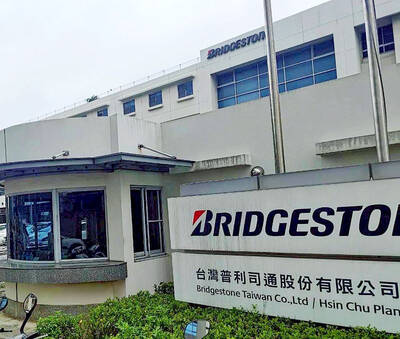
TRANSITION: With the closure, the company would reorganize its Taiwanese unit to a sales and service-focused model, Bridgestone said Bridgestone Corp yesterday announced it would cease manufacturing operations at its tire plant in Hsinchu County’s Hukou Township (湖口), affecting more than 500 workers. Bridgestone Taiwan Co (台灣普利司通) said in a statement that the decision was based on the Tokyo-based tire maker’s adjustments to its global operational strategy and long-term market development considerations. The Taiwanese unit would be reorganized as part of the closure, effective yesterday, and all related production activities would be concluded, the statement said. Under the plan, Bridgestone would continue to deepen its presence in the Taiwanese market, while transitioning to a sales and service-focused business model, it added. The Hsinchu
Taiwan Semiconductor Manufacturing Co (TSMC, 台積電) has approved a capital budget of US$31.28 billion for production expansion to meet long-term development needs during the artificial intelligence (AI) boom. The company’s board meeting yesterday approved the capital appropriation plan for purposes such as the installation of advanced technology capacity and fab construction, the world’s largest contract chipmaker said in a statement. At an earnings conference last month, TSMC forecast that its capital expenditure for this year would be at the higher end of the US$52 billion to US$56 billion range it forecast in January in response to robust demand for 5G, AI and


 RSS
RSS