

Bitcoin rallied past US$80,000 for the first time, boosted by US president-elect Donald Trump’s embrace of digital assets and the prospect of a Congress featuring pro-crypto lawmakers.
The cryptocurrency climbed as much as 4.7 percent to an unprecedented US$80,092 on yesterday.
Trump vowed on the campaign trail to put the US at the center of the digital asset industry, including creating a strategic bitcoin stockpile and appointing regulators enamored with digital assets. He emerged from Tuesday’s election in a stronger position than expected — his Republican Party has control of the US Senate and is on the verge of holding a narrow majority in the US House of Representatives.

Photo: Kevin Wurm, Reuters
“With the dust from Trump’s victory still settling down, it was only a matter of time before a run-up of some sort occurred, given the perception of Trump being pro-crypto, and that’s what we’re seeing now,” Auros Hong Kong managing director Le Shi said.
Bitcoin has added about 90 percent so far this year, helped by robust demand for dedicated US exchange-traded funds (ETFs) and interest rate cuts by the US Federal Reserve. The rise in the largest digital token, which scaled fresh records after the US vote, exceeds the returns from investments such as stocks and gold.
The ETFs, powered by BlackRock Inc’s US$35 billion iShares Bitcoin Trust, posted a record daily net inflow of almost US$1.4 billion on Thursday, data compiled by Bloomberg showed. A day earlier, the iShares ETF’s trading volume jumped to an all-time peak — all signs of how Trump’s victory is reshaping crypto.
Trump’s stance contrasts with a crackdown on digital assets under US President Joe Biden. US Securities and Exchange Commission Chair Gary Gensler repeatedly labeled the sector as rife with fraud and misconduct.
The agency turned the screws on crypto following a 2022 market rout and a litany of collapses, notably the bankruptcy of Sam Bankman-Fried’s fraudulent FTX exchange.
Digital asset companies and executives spent heavily during the US election campaign to promote candidates viewed as favorable toward their interests.
“Trump has promised supportive regulation, and the sweep of the House and the Senate makes the passage of crypto bills much more likely,” wrote Noelle Acheson, author of the Crypto Is Macro Now newsletter.

IN GOOD FAITH: Lai said he appreciates Micron’s commitment to Taiwan and that it would continue expanding its investment in the country, while also working with labor President William Lai (賴清德) yesterday called for US memory maker Micron Technology Inc and its workers to negotiate “sincerely” ahead of a possible strike by the company’s union in Taiwan. Last week, a Taiwanese union representing workers at Micron said it had secured authorization from its members to strike over a dispute concerning the company’s bonus scheme, escalating a labor conflict at the chipmaker’s largest manufacturing hub. Micron employs about 15,000 people in Taiwan and has said it invested more than NT$1.6 trillion (US$49.6 billion) in the country. Speaking in Taichung at the opening of a new Micron advanced assembly and testing facility,

China proposed adding advanced artificial intelligence (AI) technologies to its export-control list, potentially restricting overseas transfers of AI models and chip designs in an effort to keep closer control over homegrown advancements in a strategically important sector. The draft proposal covers 23 AI technologies, including large language models, agents, chip designs and computing clusters. Restricted technologies would include model weights and source code for products exceeding certain performance thresholds. Chinese AI startups have this summer made significant progress in closing the gap on US industry leaders. Models such as Moonshot (月之暗面) AI’s Kimi K3 and DeepSeek’s (深度求索) latest editions offer better pricing,
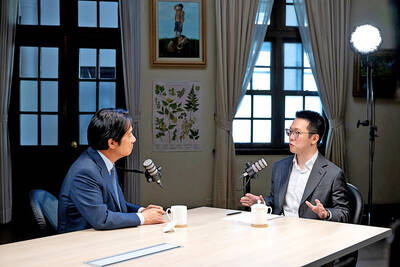
Taiwan should not rule out any energy source or abandon environmental sustainability in favor of ideology and short-term benefits, President William Lai (賴清德) said in an interview, calling for a “professional assessment” of whether nuclear power should be reintroduced into Taiwan’s energy mix. In an online interview with influencer Yu Ting-hao (游庭皓) that aired yesterday, Lai reiterated his position on nuclear power. SHIFT Lai’s remarks marked a shift from the Democratic Progressive Party’s (DPP’s) longstanding opposition to nuclear power. As premier from 2017 to 2019, Lai pushed for more gas-fired power capacity while sticking to the DPP’s nuclear free homeland ideology and rejected the
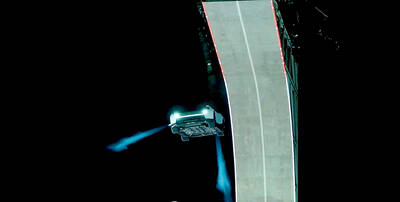
JUST FOR SHOW: The new-generation sports car, which would not begin production until 2028, finally gives Tesla a showpiece after years of missed Roadster deadlines Tesla unveiled a redesigned Roadster powered with rocket-style thrusters on Thursday and said it would start production in 2028, more than a decade after it first showed a next-generation version of its electric sports car. The white two-seater vehicle, developed in collaboration with CEO Elon Musk’s rocket company SpaceX, drove upside down on a ramp using a suction system, turned in the air and landed using built-in thrusters. Later in the event it used the thrusters to jump over a truck and other vehicles, twisting in the air during the maneuver. Some watchers saw the collaboration as Musk drumming up interest in


 RSS