


The government’s business climate monitor last month changed to “yellow-red” from “red” the previous month, as firms in old economy industries reported a lackluster export recovery, but the overall economy still maintains positive growth momentum, the National Development Council said yesterday.
The council measures the nation’s economic health using a five-color system, with “blue” signaling a recession, “green” suggesting steady growth and “red” indicating a boom. “Yellow-red” reflects a slight boom, while “yellow-blue” shows sluggishness.
The total score of the monitor’s composite index dropped five points from the previous month to 34, the lowest in the past six months, the council said in a report.

Photo: EPA-EFE
That came as the growth momentum among local industries was uneven, with the semiconductor and information technology industries continuing to benefit from an artificial intelligence (AI) boom, while traditional industries such as steel, petrochemicals, textiles and machinery still performed relatively weak, it said.
Among the composite index’s nine components, the readings on custom-cleared exports, and retail and wholesale trade turned from red to green, while the reading on the manufacturing sector’s business climate shifted from green to yellow-blue, the report said.
The remaining six readings — the M1B money supply, the TAIEX, the industrial production index, the average monthly overtime hours of industry and service employees, imports of machinery and electrical equipment, and the index of manufacturing sector sales — remained unchanged, it showed.
Meanwhile, the index of leading indicators, which gauges the economy’s direction in the next six months, rose 0.07 percent month-on-month to 103.35, rising for the 11th consecutive month, and the index of coincident indicators, which tracks the pace of economic activity, climbed 0.77 percent to 105.9, increasing for the 17th consecutive month, it said.
As both the leading and coincident indicators continue rising, the local economy has “undoubtedly” held on to its path of recovery, the council said.
The council said it expects exports to continue growing steadily, as AI-related exports would support domestic tech firms, coupled with restocking demand ahead of the year-end shopping sprees in Europe and the US.
It expects domestic investment to continue gathering speed thanks to the expansion of high-end production capacity by semiconductor firms, and the establishment of research bases and data centers by major global tech giants, as well as investments related to digital transformation and net zero carbon emissions, the council said.
Meanwhile, private consumption is expected to retain strong momentum on the back of stable wage hikes and government subsidies for housing and tax exemptions, it said.
However, the upcoming US presidential election, continued geopolitical risks and more trade barriers set by governments still pose uncertainties ahead, and their effects on Taiwan’s economy deserve close observation, it added.
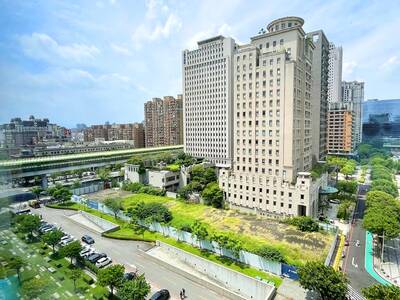
Taichung reported the steepest fall in completed home prices among the six special municipalities in the first quarter of this year, data compiled by Taiwan Realty Co (台灣房屋) showed yesterday. From January through last month, the average transaction price for completed homes in Taichung fell 8 percent from a year earlier to NT$299,000 (US$9,483) per ping (3.3m²), said Taiwan Realty, which compiled the data based on the government’s price registration platform. The decline could be attributed to many home buyers choosing relatively affordable used homes to live in themselves, instead of newly built homes in the city’s prime property market, Taiwan Realty
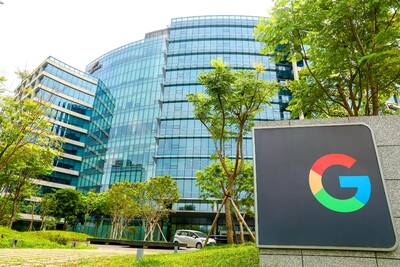
The government yesterday approved applications by Alphabet Inc’s Google to invest NT$27.08 billion (US$859.98 million) in Taiwan, the Ministry of Economic Affairs said in a statement. The Department of Investment Review approved two investments proposed by Google, with much of the funds to be used for data processing and electronic information supply services, as well as inventory procurement businesses in the semiconductor field, the ministry said. It marks the second consecutive year that Google has applied to increase its investment in Taiwan. Google plans to infuse NT$25.34 billion into Charter Investments Ltd (特許投資顧問) through its Singapore-based subsidiary Fructan Holdings Singapore Pte Ltd, and

JET JUICE: The war on Iran’s secondary effects have seen fuel prices skyrocket, knocking flight schedules down to earth in return as airlines struggle with costs Airline passengers should brace for more irritation in the next few months as carriers worldwide cancel flights and ground planes to cope with stratospheric increases in jet-fuel prices. Dutch flag carrier KLM is the latest company to cut its schedule, saying on Thursday that it would scrap 80 return flights at Amsterdam’s Schiphol Airport in the coming month. That puts it in the same league as United Airlines Holdings Inc, Deutsche Lufthansa AG and Cathay Pacific Airways Ltd, which have all pruned itineraries to mitigate costs. Global capacity for next month has been reduced by about 3 percentage points, with all

FORESEEABLE CONSEQUENCES: New technology always comes with new innovations by the iniquitous in exploiting users for financial gain or more nefarious ends Artificial intelligence (AI) “agents” say they can save users time and energy by automating tasks, but the growing power of systems such as OpenClaw is putting cybersecurity experts on edge. Powered by a wave of hype, OpenClaw today says it has more than three million users worldwide. The system allows users to create so-called agents, tools based on a large language model (LLM) such as OpenAI’s ChatGPT or Anthropic PBC’s Claude, that can carry out online tasks. “We’ve moved from an AI you could talk with via a chatbot to an agentic AI, which can take action... the threat and the risks are


 RSS
RSS