


A US judge on Monday ordered Alphabet Inc’s Google to overhaul its mobile app business to give Android users more options to download apps and to pay for transactions within them, following a jury verdict last year for Fortnite maker Epic Games Inc.
The injunction by US District Court Judge James Donato in San Francisco outlined the changes Google must undertake to open up its lucrative app store, Play, to greater competition, including making Android apps available from rival sources.
Donato’s order said that for three years Google cannot prohibit the use of in-app payment methods and must allow users to download competing third-party Android app platforms or stores.

Photo: AP
The order restricts Google from making payments to device makers to preinstall its app store and from sharing revenue generated from the Play store with other app distributors.
Google in a statement said it would appeal the verdict that led to the injunction to the San Francisco-based 9th US Circuit Court of Appeals, and would ask the US courts to pause Donato’s order pending appeal.
“Ultimately, while these changes presumably satisfy Epic [Games Inc], they will cause a range of unintended consequences that will harm American consumers, developers and device makers,” Google said.
Epic CEO Tim Sweeney said on X that Donato’s order was “big news” and said his Epic Games Store and other app stores would come to Google Play next year.
App developers, store makers and others have three years “to build a vibrant and competitive Android ecosystem with such critical mass that Google can’t stop it,” Sweeney said.
In his ruling, Donato said Epic and Google must establish a three-person technical committee to implement and monitor the injunction. Epic and Google each get a pick, and those two members would select the third person.
Donato said his injunction would go into effect on Nov. 1, which he said would give Google time to “bring its current agreements and practices into compliance.”
Epic’s lawsuit, filed in 2020, accused Google of monopolizing how consumers access apps on Android devices and how they pay for in-app transactions. The Cary, North Carolina-based company persuaded a jury in December last year that Google unlawfully stifled competition through its controls over app distribution and payments, paving the way for Donato’s injunction.
Google had urged Donato to reject Epic’s proposed reforms, arguing they were costly, overly restrictive and could harm consumer privacy and security.
The judge mostly dismissed those arguments during an August hearing.
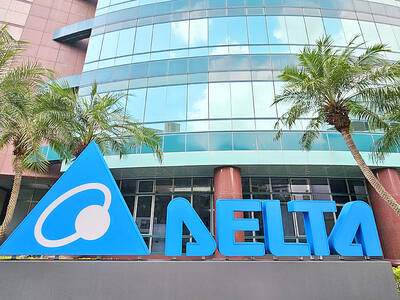
POWERING UP: PSUs for AI servers made up about 50% of Delta’s total server PSU revenue during the first three quarters of last year, the company said Power supply and electronic components maker Delta Electronics Inc (台達電) reported record-high revenue of NT$161.61 billion (US$5.11 billion) for last quarter and said it remains positive about this quarter. Last quarter’s figure was up 7.6 percent from the previous quarter and 41.51 percent higher than a year earlier, and largely in line with Yuanta Securities Investment Consulting Co’s (元大投顧) forecast of NT$160 billion. Delta’s annual revenue last year rose 31.76 percent year-on-year to NT$554.89 billion, also a record high for the company. Its strong performance reflected continued demand for high-performance power solutions and advanced liquid-cooling products used in artificial intelligence (AI) data centers,

SIZE MATTERS: TSMC started phasing out 8-inch wafer production last year, while Samsung is more aggressively retiring 8-inch capacity, TrendForce said Chipmakers are expected to raise prices of 8-inch wafers by up to 20 percent this year on concern over supply constraints as major contract chipmakers Taiwan Semiconductor Manufacturing Co (TSMC, 台積電) and Samsung Electronics Co gradually retire less advanced wafer capacity, TrendForce Corp (集邦科技) said yesterday. It is the first significant across-the-board price hike since a global semiconductor correction in 2023, the Taipei-based market researcher said in a report. Global 8-inch wafer capacity slid 0.3 percent year-on-year last year, although 8-inch wafer prices still hovered at relatively stable levels throughout the year, TrendForce said. The downward trend is expected to continue this year,

‘BASICALLY A BAN’: Sources said the wording governing H200 imports from officials was severe, but added that the regulations might change if the situation evolves Chinese customs authorities told customs agents this week that Nvidia Corp’s H200 artificial intelligence (AI) chips are not permitted to enter China, three people briefed on the matter said. Chinese government officials also summoned domestic technology companies to meetings on Tuesday, at which they were explicitly instructed not to purchase the chips unless necessary, two of the people and a third source said. “The wording from the officials is so severe that it is basically a ban for now, though this might change in the future should things evolve,” one of the people said. The H200, Nvidia’s second-most powerful AI chip, is one

STRONG SALES: The company said that revenue growth momentum would remain strong this year and next year as major customers continue to buy new equipment Semiconductor equipment supplier Gallant Precision Machining Co (均豪) yesterday reported its best annual profit in 19 years last year, as booming artificial intelligence (AI) chip demand boosted sales of its advanced packaging equipment. Net profit surged about 40 percent to NT$415 million (US$13.12 million), compared with NT$297 million in 2024, the company said in a regulatory filing. Earnings per share rose to NT$2.58 from NT$1.82. Revenue grew 5.18 percent annually to NT$4.67 billion from NT$4.44 billion in 2024. Gallant Precision said revenue growth momentum would remain strong this year and next year as major customers continue to spend heavily on new equipment to boost


 RSS
RSS