


Almost all of the central bank’s board members favored a rate hike of 0.125 percentage points to rein in inflation expectations that might run wayward after scheduled electricity tariff increases last month, the minutes of the quarterly board meeting in March showed yesterday.
One board member who supported the rate hike said that inflation expectation plays a dominant role in monetary policymaking because such expectations are difficult to contain.
Given that Taiwan’s consumer price index (CPI) has climbed above 2 percent for several years, the issue of inflation expectations must not be taken lightly, the member said.
Photo: Reuters
“There needs to be countermeasures in place because the April electricity tariff hikes could lead businesses to follow suit and feed inflation expectations,” the member said.
A rate hike of 0.125 percentage points would send the market a message that the central bank takes its mandate of maintaining price stability seriously and further rate hikes would be necessary,= if inflation remains elevated, the member said.
Another board member voiced similar views, saying that the electricity tariff adjustments would push CPI growth this year above the 2 percent alert level.
Against this backdrop, a rate hike of 0.125 percentage points would reaffirm the central bank’s resolve to contain inflation expectations.
Another board member also supported the proposition, saying that a rate hike would be a good policy move if it helps pre-empt or tame price upswings.
Another board director said that Taiwan’s CPI has remained above the 2 percent level for some time and the increases in rent and eating out costs are to blame.
The two consumption categories have risen by 4 percent every month since February 2022, the member said, voting in favor of a rate hike.
Still another board member said that Taiwan’s real interest rate remains in negative territory, suggesting room for monetary tightening and a rate hike of 0.125 percentage points would help keep inflation expectations anchored.
One board member preferred a faster rate hike of 0.25 percentage points, saying that insufficient monetary tightening previously likely explained why inflation pressures remain elevated today.
The situation could worsen in April when the electricity rates rise across the board to keep lossmaking Taiwan Power Co (台電) afloat, the member said at the time.
The nation’s low and stable unemployment rate should give the central bank comfort to tighten interest rates, the member said.
One board member disagreed, saying that only a few firms in Taiwan have benefited from strong global demand for artificial intelligence devices and most other sectors continue to struggle with a business slowdown.
A rate hike is inappropriate at this juncture because it would drive up corporate borrowing costs and cause further hardship for companies, which have to bear extra product costs due to the electricity rate increases, the member said.
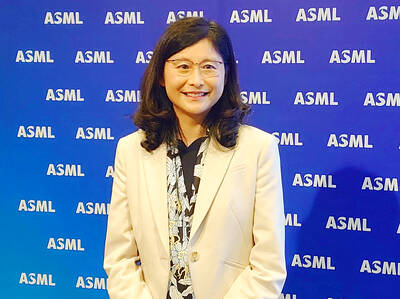
Netherlands-based semiconductor equipment supplier ASML Holding NV yesterday said that it is planning to hire an additional 1,000 people in Taiwan this year in response to growing demand from clients. ASML had previously planned to recruit 600 people this year, but that the plan has been adjusted upward, ASML vice president and ASML Taiwan general manager Grace Wang (汪佳慧) told reporters. ASML has a workforce of more than 4,500 in Taiwan, accounting for about 10 percent of its global total, Wang said. This year’s recruitment campaign would focus on adding people in the customer support, manufacturing and supply chain domains to assist ASML
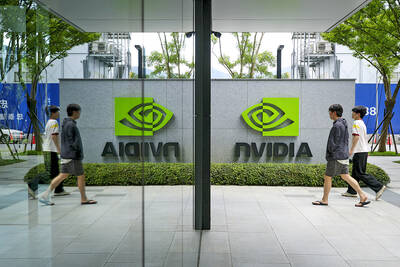
UNDER MICROSCOPE: Taiwan detained three people who allegedly conspired to buy servers in Taiwan and export them using fraudulent documentation, prosecutors said Nvidia Corp chief executive officer Jensen Huang (黃仁勳) on Saturday urged Super Micro Computer Inc to tighten up on compliance after Taiwan detained three people this week for allegedly making fraudulent declarations about artificial intelligence (AI) servers made by its US partner. The development marked the nation’s first crackdown on semiconductor smuggling, which grew after the US slapped restrictions on exports of high-end chips such as Nvidia AI accelerators to China. Nvidia is “rigorous” in explaining regulations to all of its partners, Huang told reporters after arriving in Taipei. “Ultimately Super Micro has to run their own company,” he said in response to

Nvidia Corp yesterday announced that CEO Jensen Huang (黃仁勳) would attend an employee meeting in Taipei tomorrow to celebrate the launch of the company’s Taiwan headquarters project. Huang would attend a gathering at the site of Nvidia’s planned headquarters in Beitou Shilin Technology Park (北投士林科技園區), the company said in a statement. After arriving in Taiwan on Saturday last week, Huang told reporters that he plans to meet with Quanta Computer Inc (廣達) chairman Barry Lam (林百里) and Taiwan Semiconductor Manufacturing Co (TSMC, 台積電) chairman C.C. Wei (魏哲家), and would attend the groundbreaking ceremony for Nvidia’s Taiwan headquarters tomorrow. Nvidia has not yet applied

Huawei Technologies Co (華為) said it has come up with a new pathway to shorten its gap with industry leader Taiwan Semiconductor Manufacturing Co (TSMC, 台積電), potentially achieving a breakthrough in making advanced semiconductors without cutting-edge equipment. Right now there is about a five-year gap between what TSMC is capable of and what Huawei, together with its manufacturing partner Semiconductor Manufacturing International Corp (中芯), can produce. Huawei is to start making 1.4-nanometer chips by 2031 with its own “LogicFolding” technology, Huawei semiconductor chief He Tingbo (何庭波) said in a rare public appearance during a chip conference yesterday, while TSMC has


 RSS
RSS