


Hong Kong investment bankers could face more job cuts as the slowdown in China deals persists and employers look to trim highly compensated staff, Bloomberg Intelligence senior analyst Francis Chan (陳永富) said.
An estimated 200 Hong Kong bankers lost their jobs in the past year, Chan wrote in a report published yesterday. With pay for senior bankers being 40-70 percent higher than peers receive in Singapore, Hong Kong bankers may find their compensation becomes a “curse” as employers cut back, Chan wrote.
“More global banks may further trim workforces in the city to achieve bigger cost savings, especially during China’s slowdown,” Chan said.
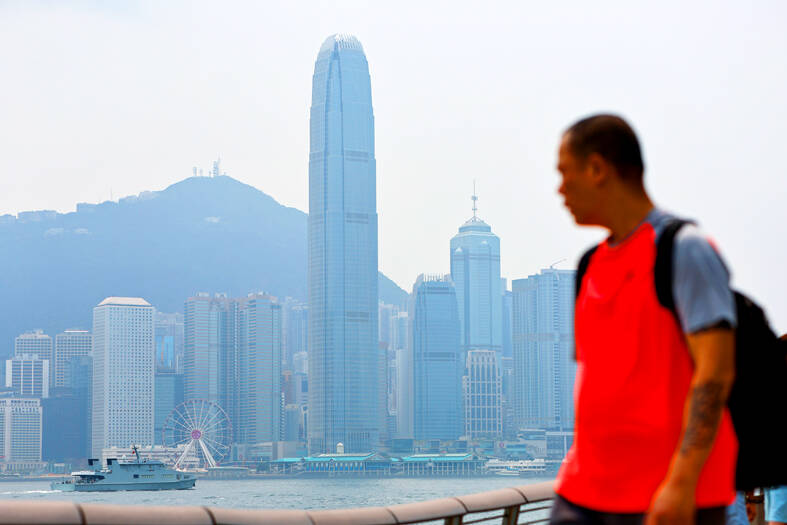
Photo: EPA-EFE
Global financial firms have been cutting investment banking staff in Asia due to a deal drought amid deteriorating US-China relations, a crackdown on private enterprise and a property crisis. Morgan Stanley and HSBC Holdings PLC are among banks that have made cuts to their investment bank this month, with Hong Kong and China bearing the brunt.
Initial public offerings (IPOs) have been depressed in Hong Kong, with proceeds slumping to the lowest in more than two decades last year. The money raised from IPOs fell another 29 percent in the first quarter to about US$605 million, the worst three-month period since the 2008 global financial crisis.
While there are a higher number IPO applications in Hong Kong, IPO prospects for the city “may remain dire,” the report said.
Investment banking analysts and associates in Hong Kong made 30-100 percent more than in Singapore, mainland China and Japan, while directors and managing directors made 40-70 percent more, according to a Hays Asia survey in late last year.
In comparison to investment banking, the job market in wealth and private banking remains stable, with mainland wealth funds flowing to Hong Kong, benefiting banks including HSBC, Standard Chartered PLC and Bank of China (Hong Kong).
“Hong Kong’s finance professionals could face diverging fates due to different prospects for its capital markets and wealth management sectors,” Chan wrote.
John Mullally, managing director for Hong Kong at recruiting firm Robert Walters told Bloomberg Television that a lot of clients are saying they are “at the bottom” in terms of cuts.
“The sense we’re getting is that there’s probably going to be a little bit more trimming over the next kind of quarter, quarter and a half, but that as we go into the second half of the year, there will be some improvement,” he said. “But that isn’t going to necessarily result in hiring anywhere near the levels of 2021.”
Shares of contract chipmaker Taiwan Semiconductor Manufacturing Co (TSMC, 台積電) came under pressure yesterday after a report that Apple Inc is looking to shift some orders from the Taiwanese company to Intel Corp. TSMC shares fell NT$55, or 2.4 percent, to close at NT$2,235 on the local main board, Taiwan Stock Exchange data showed. Despite the losses, TSMC is expected to continue to benefit from sound fundamentals, as it maintains a lead over its peers in high-end process development, analysts said. “The selling was a knee-jerk reaction to an Intel-Apple report over the weekend,” Mega International Investment Services Corp (兆豐國際投顧) analyst Alex Huang
Taiwan Semiconductor Manufacturing Co (TSMC, 台積電) is expected to remain Apple Inc’s primary chip manufacturing partner despite reports that Apple could shift some orders to Intel Corp, industry experts said yesterday. The comments came after The Wall Street Journal reported on Friday that Apple and Intel had reached a preliminary agreement following more than a year of negotiations for Intel to manufacture some chips for Apple devices. Taiwan Institute of Economic Research (台灣經濟研究院) economist Arisa Liu (劉佩真) said TSMC’s advanced packaging technologies, including integrated fan-out and chip-on-wafer-on-substrate, remain critical to the performance of Apple’s A-series and M-series chips. She said Intel and Samsung
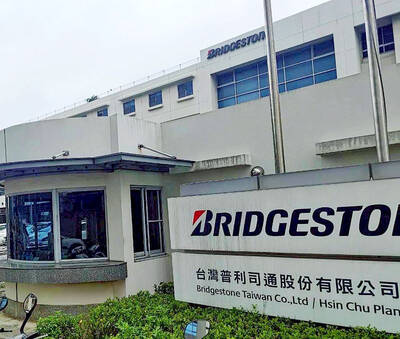
TRANSITION: With the closure, the company would reorganize its Taiwanese unit to a sales and service-focused model, Bridgestone said Bridgestone Corp yesterday announced it would cease manufacturing operations at its tire plant in Hsinchu County’s Hukou Township (湖口), affecting more than 500 workers. Bridgestone Taiwan Co (台灣普利司通) said in a statement that the decision was based on the Tokyo-based tire maker’s adjustments to its global operational strategy and long-term market development considerations. The Taiwanese unit would be reorganized as part of the closure, effective yesterday, and all related production activities would be concluded, the statement said. Under the plan, Bridgestone would continue to deepen its presence in the Taiwanese market, while transitioning to a sales and service-focused business model, it added. The Hsinchu
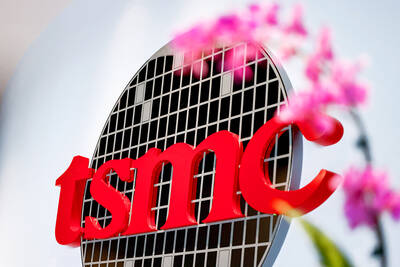
Taiwan Semiconductor Manufacturing Co (TSMC, 台積電) has approved a capital budget of US$31.28 billion for production expansion to meet long-term development needs during the artificial intelligence (AI) boom. The company’s board meeting yesterday approved the capital appropriation plan for purposes such as the installation of advanced technology capacity and fab construction, the world’s largest contract chipmaker said in a statement. At an earnings conference last month, TSMC forecast that its capital expenditure for this year would be at the higher end of the US$52 billion to US$56 billion range it forecast in January in response to robust demand for 5G, AI and


 RSS
RSS