


J.W. Kuo (郭智輝), minister of economic affairs-designate and chairman of semiconductor raw materials and equipment supplier Topco Group (崇越集團), yesterday said he would prioritize a sufficient supply of electricity to businesses and supply chains that face urgent power needs after taking office on May 20.
Asked whether the government should extend the services of existing nuclear power plants or reactivate suspended power plants, Kuo said he could not make a judgement now, adding that the issue — if it has to be addressed — must be determined by all Taiwanese.
“The goal is to communicate with all users. Only after communicating and making sure everything is safe can we make a decision. Now there is no way to say what we would do,” the Chinese-language Liberty Times (the sister newspaper of the Taipei Times) quoted Kuo as saying on its Web site yesterday.
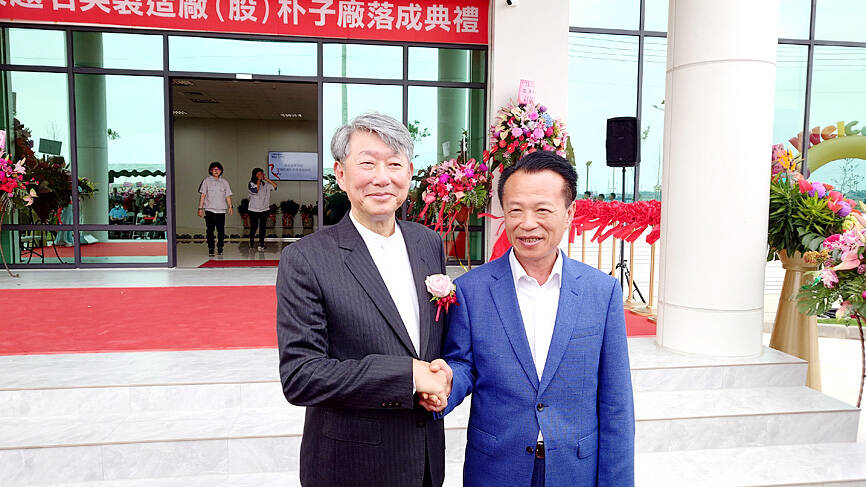
Photo: CNA
The minister-designate made the remarks on the sidelines of a launch ceremony in Chiayi County’s Puzih City (朴子), where Topco Quartz Products Co (崇越石英) is launching a NT$1.5 billion (US$46.3 million) investment project to support increasing demand from semiconductor companies and to bolster its revenue.
Kuo was named by premier-designate Cho Jung-tai (卓榮泰) on Tuesday as his choice for minister of economic affairs. Since then, Kuo has been visiting various industries, especially those with urgent need for water and electricity, as well as spending time with business owners, supply-chain firms and academics to get first-hand information on power consumption, the Liberty Times reported.
Kuo is to evaluate whether Taiwan is short of electricity and how much electricity is needed to meet the needs of industry, hoping to provide a complete report to the public after taking office next month.
Topco Quartz Products is a joint venture between Topco Group and Japan’s Shin-Etsu Quartz Products Co, which supplies quartz products used in chipmaking and electronic devices.
The Puzih factory is Topco Quartz Products’ third factory in Taiwan in addition to facilities in Hsinchu County’s Hukou Township (湖口) and Chiayi County’s Minsyong Township (民雄), as the company expands production capacity to meet increasing demand.
“The demand for high-purity quartz required for high-end processes has increased significantly in recent years, as semiconductor firms in various countries continue to expand production amid rising interest in artificial intelligence applications and growing geopolitical considerations,” the Liberty Times quoted Topco Group chief executive officer Daniel Wu (吳玉敏) as saying.
The company started the construction of the new factory in the Chiayi Machouhou Industrial Park (嘉義馬稠後產業園區) in 2021.
With an estimated annual production value of NT$2 billion, it would be the largest of its kind in Taiwan and one of the leading quartz suppliers in the world, the Chiayi County Government said in a statement yesterday.
The Puzih plant is expected to supply products to Taiwan Semiconductor Manufacturing Co’s (台積電) 3-nanometer and 5-nanometer fabs in the Southern Taiwan Science Park’s (南部科學園區) Tainan campus and support advanced chip packaging facilities in the science park’s Chiayi campus, while looking to export to overseas markets through Topco Group’s global network, the statement said.

Taiwanese firms have increased investment in the Philippines in recent years as Manila’s ties with Washington deepen and global supply chains continue to shift away from China, an expert at the Chung-Hua Institution for Economic Research (CIER, 中華經濟研究院) said yesterday. The Philippines had not been among Taiwanese investors’ top choices in Southeast Asia, CIER Taiwan ASEAN Studies Center director Kristy Hsu (徐遵慈) said at a seminar in Taipei. However, Taiwan’s investment in the country has grown significantly since the COVID-19 pandemic, reaching US $257 million last year, a high in recent years, she said. Although Taiwan’s total investment in the Philippines still lags
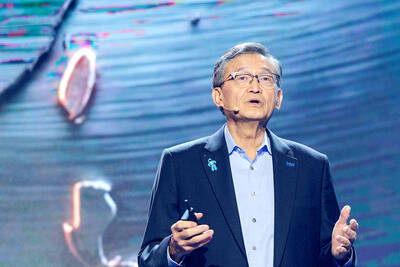
Intel Corp regards Taiwan Semiconductor Manufacturing Co (TSMC, 台積電) as a longstanding partner, as the US chipmaker would continue outsourcing production of advanced chips to TSMC, Intel chief executive officer Lip-Bu Tan (陳立武) said yesterday. “I don’t look at people as competitors. I look at the collaboration... Nvidia is also, you know, a good friend,” Tan told a news conference following his keynote speech at the Computex trade show in Taipei. “It’s a very trusted partnership for us... We are a big, top customer for them, and we’re going to continue doing that,” he said, referring to TSMC, the world’s largest foundry
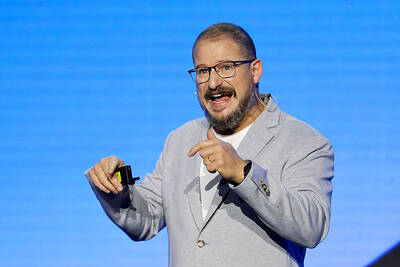
Artificial intelligence (AI) agents would supplant smartphones as the center of people’s digital lives, fundamentally reshaping personal devices and driving a major computing upgrade cycle, Qualcomm Inc CEO Cristiano Amon said yesterday. In his keynote speech for this year’s Computex trade show in Taipei, Amon said that the rise of "agentic AI" — AI systems capable of reasoning, planning and carrying out tasks autonomously — would transform how people interact with technology across phones, PCs, vehicles and wearable devices. Describing the technology as the next major evolution in computing, Amon said that "2026 is the year of agents.” For decades, smartphones have sat
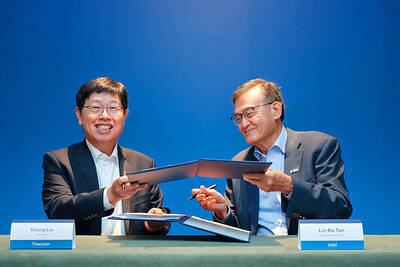
Hon Hai Precision Industry Co (鴻海精密) yesterday said it would work with US chipmaker Intel Corp to jointly develop and deploy next-generation artificial intelligence (AI) infrastructure and intelligent computing platforms in a move to capture booming demand for AI computing systems. Hon Hai, also known as Foxconn Technology Group (富士康), said in a statement that the partnership would combine its global manufacturing scale, system integration expertise and AI data center deployment capabilities with Intel’s strengths in processor architecture, silicon technologies and software ecosystem. The companies said they plan to work on equipment used in AI data centers, including server racks powered by


 RSS
RSS