


China needs to “reinvent itself” with economic policies to speed resolution of its property market crisis and boost domestic consumption, IMF managing director Kristalina Georgieva said yesterday.
“China faces a fork in the road — rely on the policies that have worked in the past, or reinvent itself for a new era of high-quality growth,” Georgieva said in remarks to a meeting of senior Chinese officials and company executives.
Officials who spoke at the opening of the China Development Forum expressed confidence China would hit its economic targets, including growth of about 5 percent this year, and pledged further support for companies.

Photo: AP
However, those commitments stopped short of the more sweeping changes urged by the IMF. Georgieva said an analysis by the IMF showed that a more consumer-centered policy mix could add US$3.5 trillion to China’s economy over the next 15 years.
To do that China would need to take “decisive” steps to complete unfinished housing stranded by bankrupt developers and to reduce risks from local government debt, the IMF chief said.
“A key feature of high-quality growth will need to be higher reliance on domestic consumption,” Georgieva said. “Doing so depends on boosting the spending power of individuals and families.”
Other economists have also urged a new growth model for China. However, the IMF remarks were significant in coming at the outset of a two-day meeting where Beijing is looking to push the message China is open for business.
Foreign investment flows into China shrank about 20 percent in the first two months of the year, data released on Friday showed, and officials have been stepping up efforts to attract investors.
Last year, foreign direct investment into China contracted by 8 percent, reflecting a shaky economic recovery and tensions with the US and its allies.
China’s Cabinet last week unveiled steps intended to win investment, including expanded market access and pilot programs to encourage investment in science and technology.
Chinese Premier Li Qiang (李強) yesterday said China’s previously announced US$140billion plan to issue ultra-long bonds would create a fund to spur investment and stabilize growth.

Apple Inc has closed in on an agreement with OpenAI to use the start-up’s technology on the iPhone, part of a broader push to bring artificial intelligence (AI) features to its devices, people familiar with the matter said. The two sides have been finalizing terms for a pact to use ChatGPT features in Apple’s iOS 18, the next iPhone operating system, said the people, who asked not to be identified because the situation is private. Apple also has held talks with Alphabet Inc’s Google about licensing its Gemini chatbot. Those discussions have not led to an agreement, but are ongoing. An OpenAI
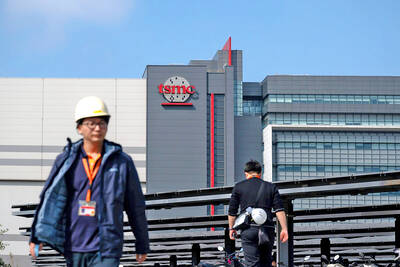
INSATIABLE: Almost all AI innovators are working with the chipmaker to address the rapidly growing AI-related demand for energy-efficient computing power, the CEO said Taiwan Semiconductor Manufacturing Co (TSMC, 台積電) yesterday reported about 60 percent annual growth in revenue for last month, benefiting from rapidly growing demand for artificial intelligence (AI) and high-performance computing applications. Revenue last month expanded to NT$236.02 billion (US$7.28 billion), compared with NT$147.9 billion in April last year, the second-highest level in company history, TSMC said in a statement. On a monthly basis, revenue surged 20.9 percent, from NT$195.21 billion in March. As AI-related applications continue to show strong growth, TSMC expects revenue to expand about 27.6 percent year-on-year during the current quarter to between US$19.6 billion and US$20.4 billion. That would

‘FULL SUPPORT’: Kumamoto Governor Takashi Kimura said he hopes more companies would settle in the prefecture to create an area similar to Taiwan’s Hsinchu Science Park The newly elected governor of Japan’s Kumamoto Prefecture said he is ready to ensure wide-ranging support to woo Taiwan Semiconductor Manufacturing Co (TSMC, 台積電) to build its third Japanese chip factory there. Concerns of groundwater shortages when TSMC’s two plants begin operations in the prefecture’s Kikuyo have spurred discussions about the possibility of tapping unused dam water, Kumamoto Governor Takashi Kimura said in an interview on Saturday. While Kimura said talks about a third plant have yet to occur, Bloomberg had reported TSMC is already considering its third Japanese fab — also in Kumamoto — which would make more advanced chips. “We are
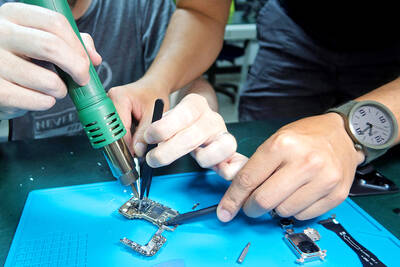
Huawei Technologies Co’s (華為) latest high-end smartphone features more Chinese suppliers, including a new flash memory chip and an improved chip processor, a teardown analysis showed, pointing to the progress China is making toward technology self-sufficiency. The inside of Huawei’s Pura 70 Pro was examined by online tech repair company iFixit and consultancy TechSearch International, finding components made by Chinese suppliers. The firms also found that the Pura 70 phones run on an advanced processing chipset made by Chinese chip foundry Semiconductor Manufacturing International Corp (SMIC, 中芯) called the Kirin 9010, which is likely a slightly improved version of the advanced chip


 RSS
RSS