


Central Huijin Investment Ltd (中央匯金) yesterday said it will continue to increase holdings of exchange-traded funds, adding to signs that China’s authorities are stepping up efforts to revive the struggling stock market.
Stocks rallied, offering a reprieve to investors who have had to grapple with wild market swings over the past two sessions. The onshore benchmark CSI 300 Index climbed more than 2 percent. Small-cap stocks, which have led the recent selloff, also rebounded, with the CSI 1000 Index up 2 percent.
The China Securities Regulatory Commission said soon after Huijin’s announcement that it will continue to guide other long-term funds to enter the market with greater intensity, while supporting listed companies to increase repurchases. These efforts come after the CSI 300 sank to a five-year low in chaotic trading on Friday.

Photo: Bloomberg
The securities watchdog also vowed this week to punish those behind ‘malicious short selling’ and to stop illegal behavior that hinders stable stock market operations and hurts investors. Authorities are also seeking to address risks stemming from margin calls and share pledges.
A more proactive stance from regulators is drawing comparisons with the steps taken during the 2015 rout, when they curbed speculative trading, targeted market manipulation and guided some investors to avoid stock sales.?
“Huijin’s announcement will guide and encourage more funds to buy and also confirms the market speculation on more state buying recently,” Long Hui Fund Management investment director Zhou Nan said. “There’s very limited room for further slide but the market may continue to fluctuate before the bottom can be solidified.”
Buying by state-backed funds had been keenly watched by investors as the selloff deepened this year. The total amount of inflows into a handful of ETFs tracking key gauges rose to a record last month and was more than five times the aggregate amount seen in July 2015, when the so-called “national team” jumped in to stem a rout.
This is the first time since October that Central Huijin, a unit of the US$1.4 trillion wealth fund China Investment Corp (中國投資公司), said it is buying more ETFs. The most-purchased ETFs year to date include large-cap focused ones such as the Huatai-Pinebridge CSI 300 and E Fund CSI 300, as well as the E Fund ChiNext Price Index ETF and the ChinaAMC CSI Science and Technology Innovation Board 50 ETF.
China is also tightening trading restrictions on domestic institutional investors as well as some offshore units, Bloomberg News reported, as policymakers look to stem a rout that has seen the CSI 300 Index tumble more than 40 percent from a February 2021 peak.
The so-called National Team has bought roughly 70 billion yuan (US$9.7 billion) of onshore Chinese shares in the past month, according to estimates by Goldman Sachs Group Inc, which did not give details on how it arrived at the numbers.
Shares of contract chipmaker Taiwan Semiconductor Manufacturing Co (TSMC, 台積電) came under pressure yesterday after a report that Apple Inc is looking to shift some orders from the Taiwanese company to Intel Corp. TSMC shares fell NT$55, or 2.4 percent, to close at NT$2,235 on the local main board, Taiwan Stock Exchange data showed. Despite the losses, TSMC is expected to continue to benefit from sound fundamentals, as it maintains a lead over its peers in high-end process development, analysts said. “The selling was a knee-jerk reaction to an Intel-Apple report over the weekend,” Mega International Investment Services Corp (兆豐國際投顧) analyst Alex Huang
Taiwan Semiconductor Manufacturing Co (TSMC, 台積電) is expected to remain Apple Inc’s primary chip manufacturing partner despite reports that Apple could shift some orders to Intel Corp, industry experts said yesterday. The comments came after The Wall Street Journal reported on Friday that Apple and Intel had reached a preliminary agreement following more than a year of negotiations for Intel to manufacture some chips for Apple devices. Taiwan Institute of Economic Research (台灣經濟研究院) economist Arisa Liu (劉佩真) said TSMC’s advanced packaging technologies, including integrated fan-out and chip-on-wafer-on-substrate, remain critical to the performance of Apple’s A-series and M-series chips. She said Intel and Samsung
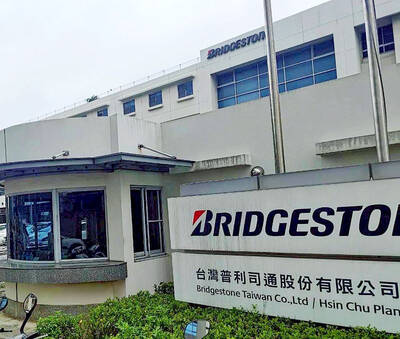
TRANSITION: With the closure, the company would reorganize its Taiwanese unit to a sales and service-focused model, Bridgestone said Bridgestone Corp yesterday announced it would cease manufacturing operations at its tire plant in Hsinchu County’s Hukou Township (湖口), affecting more than 500 workers. Bridgestone Taiwan Co (台灣普利司通) said in a statement that the decision was based on the Tokyo-based tire maker’s adjustments to its global operational strategy and long-term market development considerations. The Taiwanese unit would be reorganized as part of the closure, effective yesterday, and all related production activities would be concluded, the statement said. Under the plan, Bridgestone would continue to deepen its presence in the Taiwanese market, while transitioning to a sales and service-focused business model, it added. The Hsinchu
Taiwan Semiconductor Manufacturing Co (TSMC, 台積電) has approved a capital budget of US$31.28 billion for production expansion to meet long-term development needs during the artificial intelligence (AI) boom. The company’s board meeting yesterday approved the capital appropriation plan for purposes such as the installation of advanced technology capacity and fab construction, the world’s largest contract chipmaker said in a statement. At an earnings conference last month, TSMC forecast that its capital expenditure for this year would be at the higher end of the US$52 billion to US$56 billion range it forecast in January in response to robust demand for 5G, AI and


 RSS
RSS