


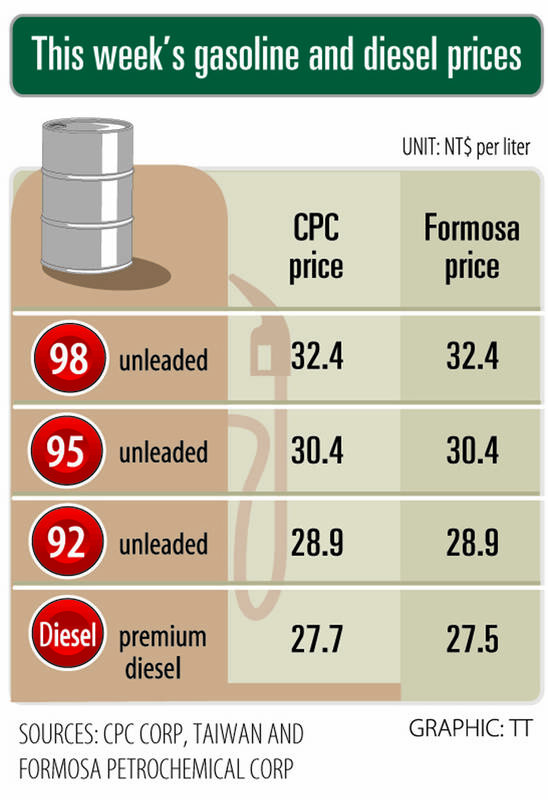
CPC Corp, Taiwan (CPC, 台灣中油) and Formosa Petrochemical Corp (台塑石化) yesterday said that gasoline and diesel prices this week would drop by NT$0.1 per liter, effective today.
Following the adjustments, gasoline prices at CPC and Formosa stations are to fall to NT$28.9, NT$30.4 and NT$32.4 per liter for 92, 95 and 98-octane unleaded gasoline respectively, while premium diesel is to cost at NT$27.7 per liter at CPC stations and NT$27.5 at Formosa pumps, the companies said in separate statements.
State-run CPC said its crude oil price last week increased 1.36 percent from a week earlier due to geopolitical tensions in the Middle East.
“Following British and US airstrikes on rebel-held Yemen and Houthi organizations’ missile attacks on a US-owned cargo vessel in the Gulf of Aden, international oil prices rose last week,” CPC said in the statement.
CPC said its gasoline and diesel prices should have increased by NT$1.2 per liter respectively, but the company would absorb part of the cost increases and used a price stabilization mechanism to comply with a government policy of keeping domestic fuel prices lower than in neighboring markets such as Japan, South Korea, Hong Kong and Singapore, it said.
Formosa said global crude oil prices fluctuated within a narrow range last week, after the market dealt with severe cold weather in the US, affecting some crude oil production and the US dollar index rising to a nearly one-month high.
The company decided to match CPC’s price adjustments after accounting for factors such as global oil market trends and fierce domestic market competition, it said.
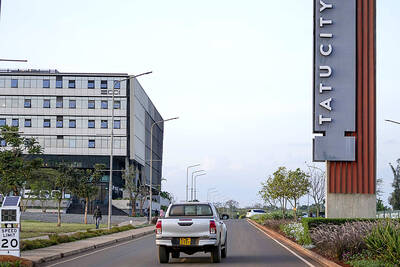
To many, Tatu City on the outskirts of Nairobi looks like a success. The first city entirely built by a private company to be operational in east Africa, with about 25,000 people living and working there, it accounts for about two-thirds of all foreign investment in Kenya. Its low-tax status has attracted more than 100 businesses including Heineken, coffee brand Dormans, and the biggest call-center and cold-chain transport firms in the region. However, to some local politicians, Tatu City has looked more like a target for extortion. A parade of governors have demanded land worth millions of dollars in exchange
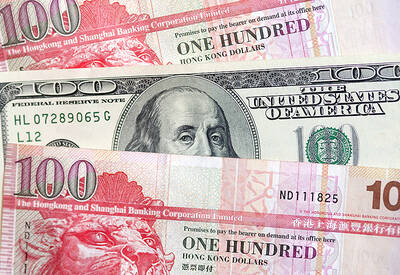
Hong Kong authorities ramped up sales of the local dollar as the greenback’s slide threatened the foreign-exchange peg. The Hong Kong Monetary Authority (HKMA) sold a record HK$60.5 billion (US$7.8 billion) of the city’s currency, according to an alert sent on its Bloomberg page yesterday in Asia, after it tested the upper end of its trading band. That added to the HK$56.1 billion of sales versus the greenback since Friday. The rapid intervention signals efforts from the city’s authorities to limit the local currency’s moves within its HK$7.75 to HK$7.85 per US dollar trading band. Heavy sales of the local dollar by

Taiwan Semiconductor Manufacturing Co’s (TSMC, 台積電) revenue jumped 48 percent last month, underscoring how electronics firms scrambled to acquire essential components before global tariffs took effect. The main chipmaker for Apple Inc and Nvidia Corp reported monthly sales of NT$349.6 billion (US$11.6 billion). That compares with the average analysts’ estimate for a 38 percent rise in second-quarter revenue. US President Donald Trump’s trade war is prompting economists to retool GDP forecasts worldwide, casting doubt over the outlook for everything from iPhone demand to computing and datacenter construction. However, TSMC — a barometer for global tech spending given its central role in the

An Indonesian animated movie is smashing regional box office records and could be set for wider success as it prepares to open beyond the Southeast Asian archipelago’s silver screens. Jumbo — a film based on the adventures of main character, Don, a large orphaned Indonesian boy facing bullying at school — last month became the highest-grossing Southeast Asian animated film, raking in more than US$8 million. Released at the end of March to coincide with the Eid holidays after the Islamic fasting month of Ramadan, the movie has hit 8 million ticket sales, the third-highest in Indonesian cinema history, Film


 RSS
RSS