


The American Chamber of Commerce (AmCham) in Taiwan on Saturday said it looks forward to collaborating closely with president-elect William Lai’s (賴清德) administration, after the vice president won the presidential election.
AmCham also aims to work toward eliminating trade barriers between the US and Taiwan, as well as improving regulatory and supervisory environments to enhance Taiwan’s competitiveness, the chamber said in a statement.
Faced with global geopolitical changes, Taiwan should seize this golden moment of international goodwill to bolster its economy and firmly establish itself on the international stage, it said.
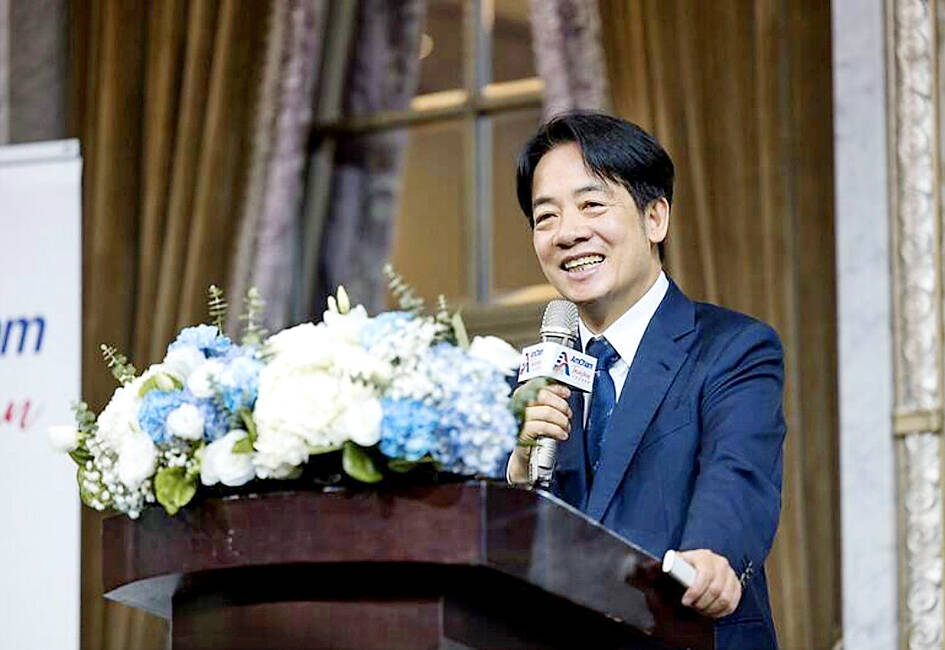
Photo courtesy of the American Chamber of Commerce in Taiwan
The victory of Lai and his running mate, Hsiao Bi-Khim (蕭美琴) gives the Democratic Progressive Party a mandate to lead Taiwan for the next four years.
“We have confidence in the crucial relationship between the American and Taiwanese people, believing that under the new government’s leadership, this relationship will continue to thrive,” the statement quoted AmCham chairman Dan Silver as saying.
“This not only marks Taiwan’s eighth direct presidential election, but also heralds the fourth decade for Taiwan’s democracy. It reminds us that shared values are the driving force behind the lasting relationship between the people of the United States and Taiwan,” Silver said.
Following the progress made in negotiations under the US-Taiwan Initiative on 21st-Century Trade framework last year, the chamber looks forward to the two sides reaching a swift agreement on the remaining areas being negotiated, it said.
“It is our hope that the implementation of the agreements will have a lasting impact, leading to discussions on a comprehensive bilateral trade agreement between Taiwan and the United States,” AmCham said.
It also supports Taiwan and the US signing a double taxation avoidance agreement to facilitate trade and bilateral investment, it said.
AmCham expressed its gratitude to President Tsai Ing-wen (蔡英文) and her administration for maintaining an open attitude toward industry and issues raised by the chamber over the past eight years.
It encourages the incoming administration to continue robust communication with AmCham, to ensure that international businesses maintain confidence in continuing and expanding their operations and investments in Taiwan, it said.

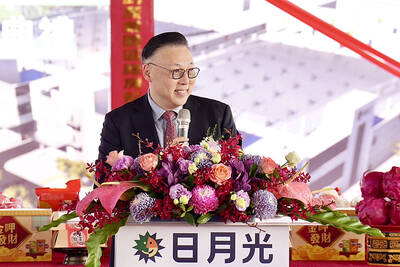
ENERGY ISSUES: The TSIA urged the government to increase natural gas and helium reserves to reduce the impact of the Middle East war on semiconductor supply stability Chip testing and packaging service provider ASE Technology Holding Co (日月光投控) yesterday said it planned to invest more than NT$100 billion (US$3.15 billion) in building a new advanced chip testing facility in Kaohsiung to keep up with customer demand driven by the artificial intelligence (AI) boom. That would be included in the company’s capital expenditure budget next year, ASE said. There is also room to raise this year’s capital spending budget from a record-high US$7 billion estimated three months ago, it added. ASE would have six factories under construction this year, another record-breaking number, ASE chief operating officer Tien Wu
The EU and US are nearing an agreement to coordinate on producing and securing critical minerals, part of a push to break reliance on Chinese supplies. The potential deal would create incentives, such as minimum prices, that could advantage non-Chinese suppliers, according to a draft of an “action plan” seen by Bloomberg. The EU and US would also cooperate on standards, investments and joint projects, as well as coordinate on any supply disruptions by countries like China. The two sides are additionally seeking other “like-minded partners” to join a multicountry accord to help create these new critical mineral supply chains, which feed into

For weeks now, the global tech industry has been waiting for a major artificial intelligence (AI) launch from DeepSeek (深度求索), seen as a benchmark for China’s progress in the fast-moving field. More than a year has passed since the start-up put Chinese AI on the map in early last year with a low-cost chatbot that performed at a similar level to US rivals. However, despite reports and rumors about its imminent release, DeepSeek’s next-generation “V4” model is nowhere in sight. Speculation is also swirling over the geopolitical implications of which computer chips were chosen to train and power the new
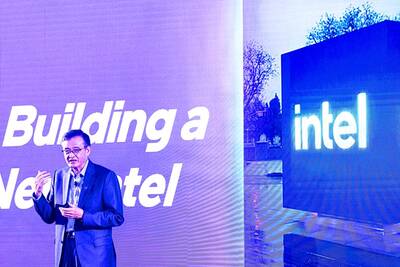
Intel Corp is joining Elon Musk’s long-shot effort to develop semiconductors for Tesla Inc, Space Exploration Technologies Corp and xAI, marking a surprising twist in the chipmaker’s comeback bid. Intel would help the Terafab project “refactor” the technology in a chip factory, the company said on Tuesday in a post on X, Musk’s social media platform. That is a stage in the development process that typically helps make chips more powerful or reliable. The chipmaker’s shares jumped 4.2 percent to US$52.91 in New York trading on Tuesday. The Terafab project is a grand plan by Musk to eventually manufacture his own chips for


 RSS
RSS