

Taiwan’s housing market might stage a mild recovery of 2.5 percent next year, as the economy is coming out of the woods and buying interest is picking up, Evertrust Rehouse Co (永慶房屋) said yesterday.
The prediction suggests property deals next year would total 304,000 units to 313,000 units, from an expected decline of 3 to 5 percent this year, Evertrust general manager Yeh Ling-chi (葉凌棋) said.
“The market next year would see a modest growth in transactions and house prices would climb higher,” Yeh told a quarterly news conference.
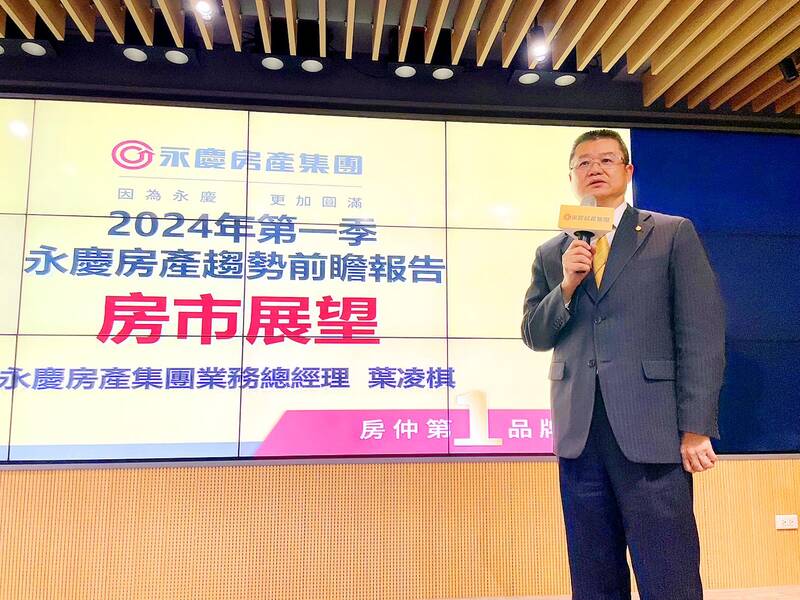
Photo: Hsu Yi-ping, Taipei Times
The money tightening cycle at home and abroad is approaching an end, allowing the market to breathe a sigh of relief, he said.
The much anticipated price corrections have not been realized thus far, despite a spate of unfavorable policy measures Yeh said, adding that house prices gained 4.1 to 14.7 percent in Taipei, New Taipei City, Taoyuan, Hsinchu City, Taichung, Tainan and Kaohsiung.
Furthemorer, deals of pre-sale projects soared by double-digit percentage points in most special municipalities in the first 10 months of this year after the government spared existing projects from a ban on purchase agreement transfers, Yeh said.
Evertrust’s quarterly survey lent support to the sanguine views, Evertrust research manager Daniel Chen (陳賜傑) said.
A total of 40 percent of respondents are looking at house price hikes in the coming three months, while people with negative views shed 8 percentage points to 23 percent, Chen said.
“After two quarters of standoff, people with optimistic views apparently gained the upper hand, judging by the survey,” Chen said.
Fifty-eight percent believe it is wise to buy houses next year and 44 percent think it is right to sell, he said.
The government’s introduction on Aug. 1 of favorable lending terms for first-home purchases helped sustain the market in the second half of this year and beyond, Chen said.
A majority --- 51 percent --- voiced plans to speed up home purchases next year with the ratio above 55 percent in New Taipei City, Taichung and Tainan, where house prices are relatively affordable, he said.
As for house prices, 71 percent said they rose more than 5 percent in the past 12 months, with the uptrend most evident in Hsinchu City, Taichung, and Tainan, Chen said.
Developers and builders refused to make price concessions, citing sharp labor and building material cost hikes.
Yeh said the volume of unsold houses looks healthy as the supply side has generally adopted a cautious approach in recent years. The price increase would sustain next year on the back of wage hikes and an economic recovery, he said.
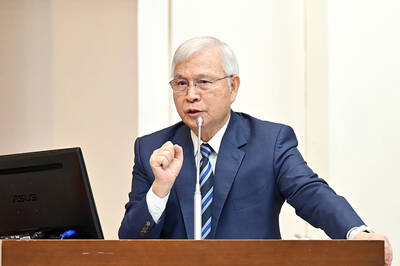
RESERVES ADEQUATE: The central bank governor rejected claims that Taiwan was facing a cash shortage, saying that its financial system had ample savings The New Taiwan dollar’s 3 percent fall this year despite record exports and a widening trade surplus stems from foreign investors cashing in on the local stock market’s technology-driven rally and moving funds overseas, central bank Governor Yang Chin-long (楊金龍) told lawmakers yesterday. The NT dollar has become one of Asia’s weakest-performing major currencies this year. Foreign investors have reaped substantial gains from Taiwan’s surging stock market, prompting them to sell shares and rebalance their portfolios, Yang told a meeting of the legislature’s Finance Committee in Taipei. Their withdrawals have added to downward pressure on the NT dollar, offsetting support

‘ON SCHEDULE’: Chief executive officer Rick Tsai said that TSMC ‘remains our most important partner’ as MediaTek seeks to meet robust customer demand Chip designer MediaTek Inc (聯發科) yesterday said it has secured a second customer for its customized artificial intelligence (AI) accelerator for data centers, while volume production of a second-generation chip for an existing customer is on track for early 2028, potentially easing market concerns about possible delays. This is a new customer and, crucially, not from China, MediaTek said. The remarks were meant to dismiss speculation that ByteDance Ltd (字節跳動), the parent company of TikTok, was the second customer for MediaTek’s new customized AI application-specific integrated circuit (ASIC) business. “It is on track, on schedule. We understand there is some noise about the
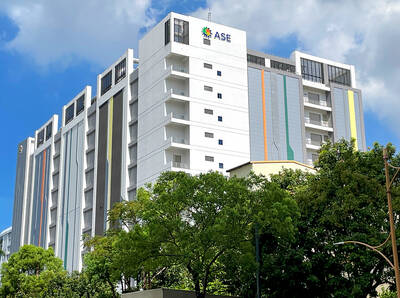
ROOM TO GROW: The company’s biggest bottleneck is still space, chief financial officer Joseph Tung said, adding that it was scouting existing factories to acquire ASE Technology Holding Co (日月光投控) yesterday raised its annual capital expenditure budget for the third time to US$11.5 billion, driven by expectations that customer demand next year would continue to outpace capacity, particularly for its leading-edge advanced packaging (LEAP) technologies used in artificial intelligence (AI) chips. ASE, the world’s biggest chip packaging and testing service provider, plans to add US$1 billion to its US$10.5 billion outlay on capacity expansion. About 60 percent of the US$500 million equipment budget would be allocated for LEAP and 40 percent for mainstream packaging technology capacity, ASE chief financial officer Joseph Tung (董宏思) told an online investors’
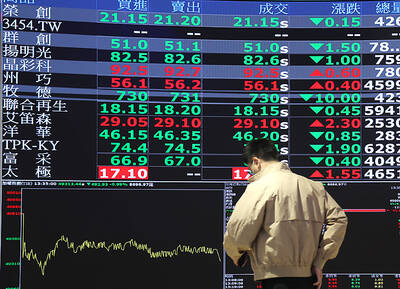
OUTLOOK: Tech stocks worldwide have come under selling pressure ever since last month, and Taiwan’s stock market is not expected to be spared, an analyst said The TAIEX is expected to face heavy downward pressure today after American depositary receipts of contract chipmaker Taiwan Semiconductor Manufacturing Co (TSMC, 台積電) on Friday plunged 5.95 percent, tracking a broader sell-off in US tech stocks on Wall Street amid concerns over massive artificial intelligence (AI) spending. Disappointing sales at some US technology companies spurred the worst drop for stocks since June, with the tech-heavy NASDAQ Composite Index falling 2.86 percent on Friday, while the Philadelphia Semiconductor Index plunged 7.20 percent and the S&P 500 fell 1.8 percent, breaching its 100-day moving average. Chipmaker Intel Corp and social media firm


 RSS