

Chinese President Xi Jinping’s (習近平) military purge has reduced the risks of a planned war against Taiwan, yet increased the danger of a conflict sparked by a miscalculation or accident, Taiwanese experts said yesterday.
They made the comments at a seminar on the Fifth Plenary Session of the Chinese Communist Party’s (CCP) 20th Central Committee held by the research group Secure Taiwan Associate Corp (STA) in Taipei.
The wholesale sacking of Chinese People’s Liberation Army (PLA) officers and managers of the aerospace and defense industry is sure to set back Xi’s timetable to prepare the PLA to launch an invasion of Taiwan by next year, they said.
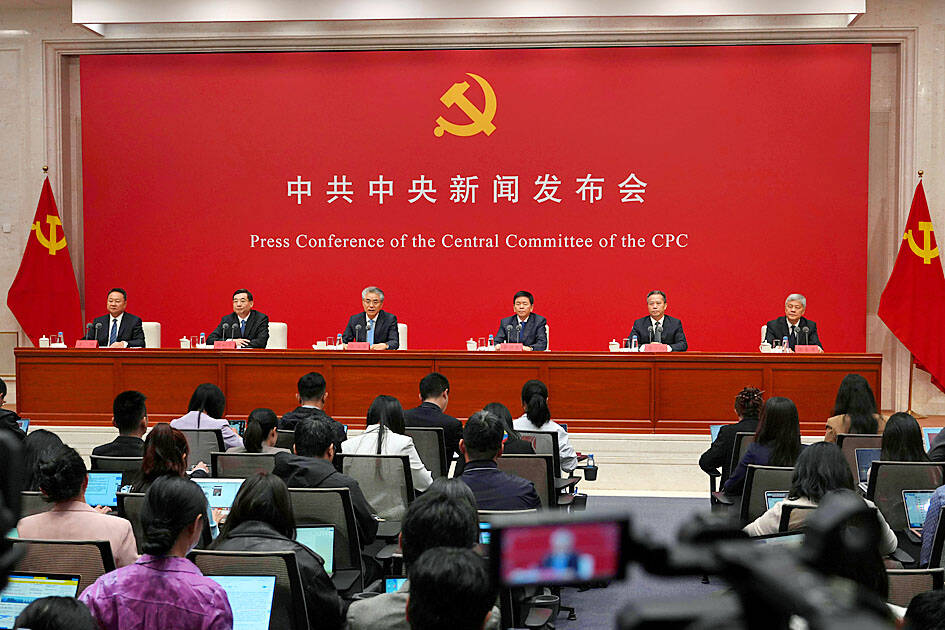
Photo: AP
The Chinese armed forces’ attention would most likely be fully absorbed by efforts to rebuild their organization and leadership in the next one to four years in a welcome development for Taiwan, they said.
Yet the lack of experience in the Chinese military’s most senior command levels is also a warning sign, as amateurs and sycophants are far more likely to make missteps that inadvertently lead to war, they added.
Association for Strategic Foresight researcher Chieh Chung (揭仲) said that 96 CCP Central Committee members, or 26 percent of the total membership, have departed under a cloud.
This figure is more than double the number of Central Committee officials ousted for corruption or improprieties in the 18th iteration of the Central Committee, he said.
The dismissal of Ma Xingrui (馬興瑞), Jin Zhuanglong (金壯龍), Zhao Xiaozhe (趙曉哲) and Lei Fanpei (雷凡培), among 28 formerly high-ranking defense and aerospace industry officials, would force a comprehensive re-examination of China’s defense procurement plans, he said.
The drastic changes would derail the military reform targets Xi originally planned to achieve by the 100th anniversary of the PLA’s founding next year, he said.
Xi had rolled back the theater commands’ autonomy and ability to conduct operations independently, which runs contrary to recognized principles of modern joint warfare, he said.
The disruption to PLA leadership and its cumbersome command arrangements are likely to cripple the capability of the Chinese military to project force or respond to a contingency for the next three to four years, he said.
Yet, Xi’s willingness to put ideology and politics over professionalism also means Chinese generals would be fearful of voicing disagreements or appearing weak, he said.
These flaws would make it significantly more difficult for Beijing to exercise sound judgement or de-escalate dangerous situations, increasing the risks of sparking an unwanted conflict, he said.
The most recently dismissed members and alternate members of the Central Committee included 16 PLA brass and seven high-ranking managers of China’s defense industry, National Taiwan University political science professor Chen Shih-min (陳世民) said.
The PLA’s organizational table calls for more than 40 full generals and admirals to staff the armed forces, but only six such officers are left at the helm, he said.
The arrest of former vice chairman and PLA general Zhang Youxia (張又俠) nine months ago has all but eliminated the Central Military Commission, where he previously served as one of its two vice chairmen, Chen said.
The only members left in the Chinese military’s high command are Xi and General Zhang Shengmin (張升民), a commissar with no professional training in commanding troops, he said.
National Defense University Chinese military studies professor Ma Chen-kun (馬振坤) said the PLA would be absorbed by efforts to recuperate and reorganize its internal organization for up to two years.
The Central Committee meeting elevated Zhang Shengmin, the Central Military Commission’s last remaining general, to the Politburo, without filling vacancies in the high command, he said.
The prominence of Zhang Shengmin contravened the PLA’s long-standing policy of maintaining separate tracks for commissars and professional soldiers, he said.
Zhang Shengmin’s lack of qualifications have compromised the Chinese military’s crisis management, increasing the chances of dangerous miscalculations and mishaps, Ma said.

Starbucks Taiwan’s decision to charge for drink customization, which had been free, has sparked consumer backlash, highlighting the challenge of raising prices without making customers feel they are losing value, experts said. Since Oct. 12, customers who order drinks with less or no ice and ask to have the volume topped up with milk or other liquid have been charged an additional NT$15. Topping off drinks without ice was previously free, and disgruntled customers posted photos on social media showing that iced drinks ordered without ice were only half full if the extra NT$15 was not paid. The posts drew tens of thousands
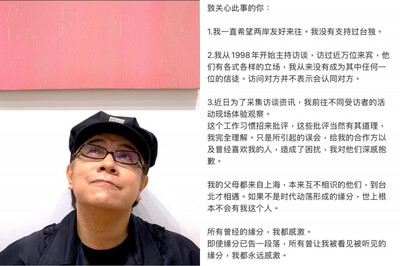
EXPLANATION: Tsai said he attended events featuring various interviewees to observe them firsthand as part of his interview research Television host Kevin Tsai (蔡康永) last night broke his silence over a controversy surrounding his appearance at a campaign event for Democratic Progressive Party Taipei mayoral candidate Puma Shen (沈伯洋), saying he had never supported Taiwan independence. “I have always hoped for friendly cross-strait relations. I have never supported Taiwan independence,” Tsai wrote in a post on the Chinese social media platform Sina Weibo. Tsai, who has hosted television shows in China, attended the opening of Shen’s campaign headquarters on Oct. 4, drawing criticism from Chinese social media users and prompting some Chinese companies to distance themselves from him. China’s Taiwan Affairs Office
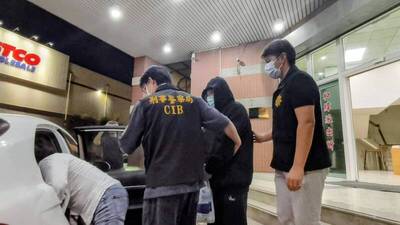
The husband of a Taiwanese woman stabbed to death at a hotel in Japan has been detained on suspicion of entering into a sham marriage and taking out high-value insurance policies in her name, Tainan prosecutors said today. A woman surnamed Ching (井), 38, was killed on Monday last week at a tourist hotel in Fujikawaguchiko, Japan. A Taiwanese woman surnamed Yang (楊) was arrested by Japanese police on suspicion of murder, Tainan District Prosecutors’ Office deputy chief prosecutor Wang Sheng-hao (王聖豪) said. Investigators suspect that Ching's new husband, surnamed Lee (李), 29, arranged a sham marriage, encouraged her to travel to Japan
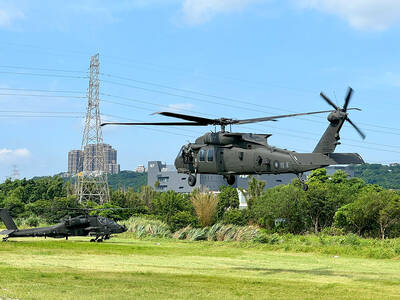
Taiwan’s AH-64E Apache attack helicopters have been grounded for inspections following a US technical notification about gearbox risks, Minister of National Defense Wellington Koo (顧立雄) said yesterday. Speaking briefly to reporters before a legislative committee hearing, Koo said the army would deploy AH-1W SuperCobra attack helicopters and OH-58D reconnaissance helicopters to carry out readiness missions during the inspection period. He did not elaborate on the inspection requirements or how long the Apaches would remain grounded. According to a US Army Public Affairs release issued on Oct. 2, the US Army has ordered an immediate, temporary pause in flight operations for AH-64E Apache helicopters


 RSS