


Located next to the Tainan High-Speed Rail Station, Shalun Smart Green Energy Science City is a forward-looking green energy industry base through collaboration between the central and local authorities. Utilizing the industrial and environmental advantages of southern Taiwan, we provide services encompassing green energy technology research and development to validation. Our hope is that this area will become the future Asia-Pacific Green Energy Development Center, fostering the creation of the next generation of smart green energy industry clusters through innovative research and development.
The once barren Shalun area outside of Tainan High-Speed Rail Station is gradually transforming. Besides being in close proximity to the High-Speed Rail and Taiwan Railway stations, MITSUI OUTLET PARK has already opened. The TaiSugar Circular Village, which received the first prize in the ‘TRAA Taiwan Residential Architecture Award — Best Congregate Housing,’ has also started have foreign employees of domestic technology companies live in.
In recent years, the completion and establishment of various facilities in the Shalun area, such as the Academia Sinica Southern Campus, the National Science and Technology Council’s Cybersecurity Building, National Yang Ming Chiao Tung University’s Tainan Campus, and ICC TAINAN, have brought a continuous influx of professionals and visiting businesses. This has significantly transformed the daily life of the Shalun area.
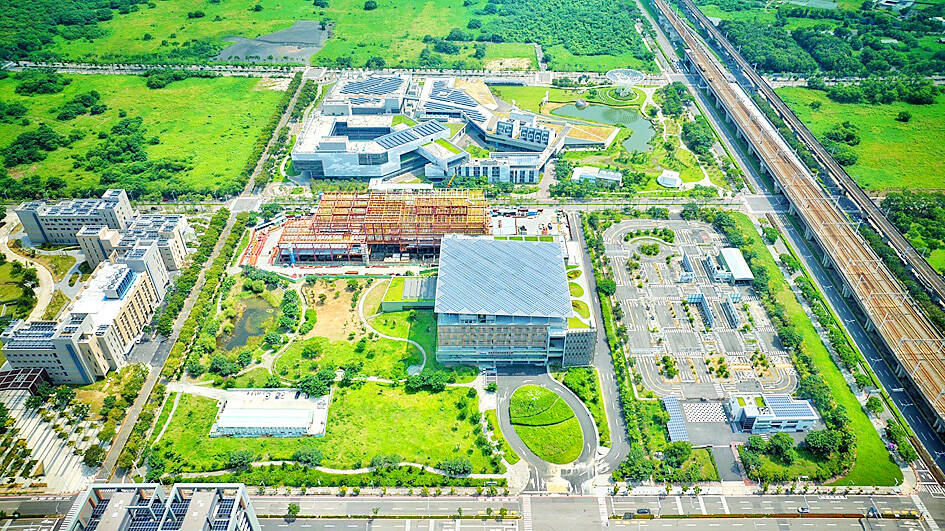
Photo provided by Tainan Bureau of Economic Development
In the future, it will further integrate with 30 science/industrial/industrial parks within a 45-kilometer radius, connecting the green energy innovation ecosystem to become a crucial stronghold for Taiwan’s energy transformation.
Realizing a Circular Sustainability Vision through Policy Guidance Shalun Smart Green Energy Science City is part of the Ministry of Economic Affairs’ Green Energy Technology initiative in conjunction with the ‘Five Plus Two Industry Innovation Plan.
Director of Tainan City Government Economic Development Bureau(林榮川) indicate, The long duration of sunlight in the southern region makes it suitable for photovoltaic development. The Science City boasts a large area and benefits from its proximity to the Tainan High-Speed Rail Station, making it an ideal location for various organizations. With government policies supporting this endeavor, numerous domestic entities have established their presence here. This not only promotes the development of the southern green energy industry but also supports the research and development needs of the hightech industry in the region, thereby driving the industrial and lifestyle functions of the surrounding cities and counties in the Greater Southern area.
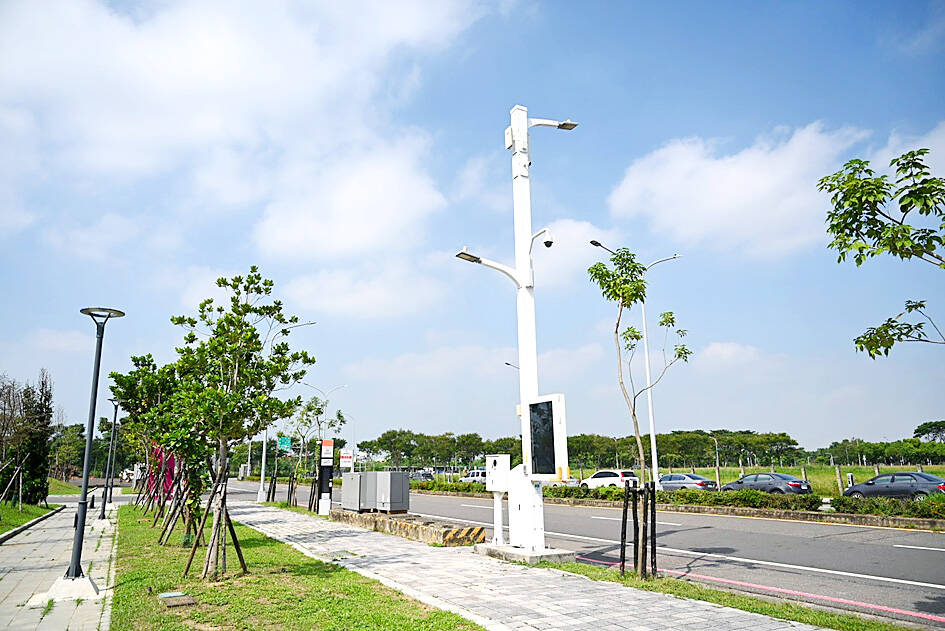
Photo provided by Tainan Bureau of Economic Development
Green energy technology encompasses not only common renewable energy equipment like Wind Turbines and Solar Panels but also requires the integration of Energy Storage and Energy Saving technologies.
Tainan City Mayor Huang (黃偉哲) indicate, Shalun Smart Green Energy Science City provides comprehensive services, covering everything from research and development to mass production, testing, and verification, creating an end-to-end support system. The Science City follows a ‘Research — Residency — Diffusion’ development model, further promoting the clustering of the green energy industry chain within the area. The goal is for this place to be not only a significant stronghold for Taiwan’s green energy industry but also to set a benchmark in the Asia-Pacific region.
Tainan City Government establish an office in Shalun to accelerate the implementation of central policies and promote collaborative industrial development
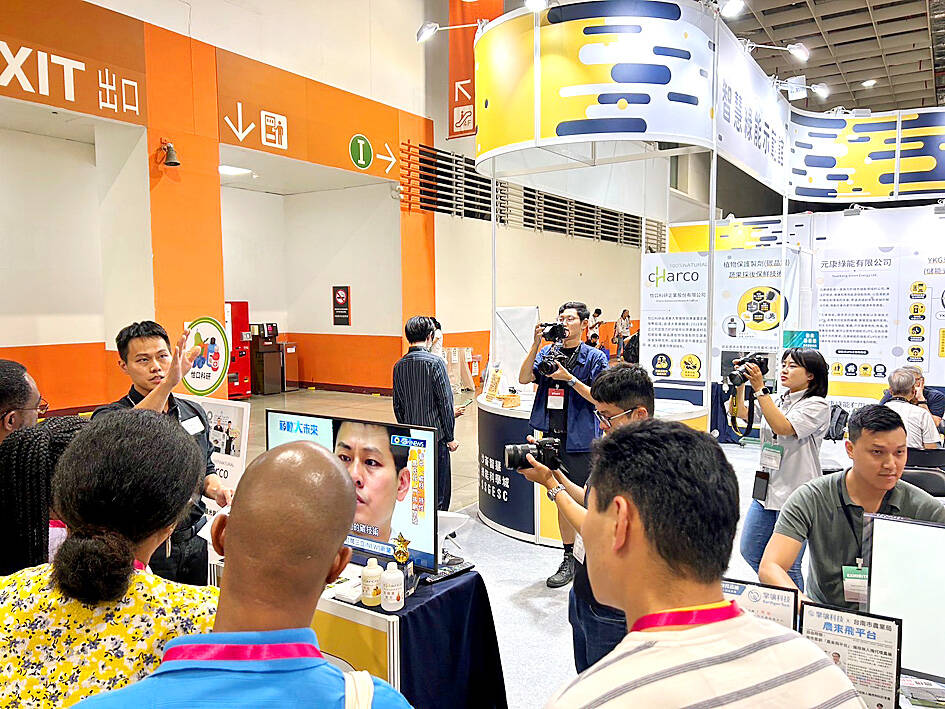
Photo provided by Tainan Bureau of Economic Development
To support the development of the Shalun Smart Green Energy Science City, Energy Administration, Ministry of Economic Affairs has commissioned the Tainan City Government to establish the ‘Shalun Smart Green Energy Science City Office,’ hereafter referred to as the ‘Shalun Office.’ The Shalun Office is responsible for coordinating the needs of various areas within the Science City. It holds monthly meetings to gather requirements from different regions and communicates with various city departments. Additionally, it assists in organizing events to promote industrial vitality and facilitates the connection to central policies. This allows various entities to quickly settle and initiate their development projects.
“For example, the ‘2023 Taiwan Smart Agriweek’ in early September and the ‘2023 Taiwan Sustainable Development & Low Carbon Building Exhibition’ in mid-September both was a collaboration between the Tainan City Government Economic Development Bureau and the Shalun Office, jointly leading the resident companies within Shalun Smart Green Energy Science City to participate in the exhibition.
In both exhibition events, companies presented innovative technology for sustainable agriculture and energy-saving carbon reduction. These exhibitions not only attracted approximately 4,600 visitors but also facilitated more than 120 potential future business collaborations, effectively showcasing the advantages of the green energy industry cluster.
As a key hub for the development of green energy technology, the Science City also provides opportunities for technology demonstrations and trials. ‘We are considering the use of technology to enhance the mobility experience within the Science City.’
Shalun Smart Green Energy Science City Office Deputy Director (蔡松伯) explained that the entire campus is spacious, with a core area covering 59.45 hectares.Science City’. Although located near the high-speed rail station, Deputy Director contemplated how to incorporate technologies such as photovoltaic energy storage, public transportation, and smart poles into the Science City infrastructure to create a more pedestrian-friendly environment.For example, creating a shuttle plan within the bus service that prioritizes passenger needs and integrating screens on lampposts for more convenient to various research buildings in Sharon.
Shalun will become one of the two main lantern zones for the ‘2024 Taiwan Lantern Festival in Tainan.’ Currently, there are active plans to integrate Tainan’s 400-year history and culture with green energy technology, allowing both local and national citizens to learn about Shalun and deeply experience the traditions and innovations of Tainan.
We hope that this place can become Asia-Pacific Green Energy Development Center in the future. It requires not only critical green energy technologies but also a supportive environment. We aim to attract foreign investment, foster supply chain growth, further promote international collaboration, and export Taiwan’s green energy expertise and technology overseas.
Tainan City Government Economic Development Bureau Industrial Development Division Section Chief (龔伯璋) envisions that the Smart Green Energy Science City will become an innovative research and development hub that connects the central government, local entities, state-owned enterprises, and academic institutions. Simultaneously, it will nurture the next generation of emerging green energy industry technologies, becoming an international green silicon valley for the new era.
Ad provided by Energy Administration, Ministry of Economic Affairs and Tainan Bureau of Economic Development
(Advertorial)

Netherlands-based semiconductor equipment supplier ASML Holding NV yesterday said that it is planning to hire an additional 1,000 people in Taiwan this year in response to growing demand from clients. ASML had previously planned to recruit 600 people this year, but that the plan has been adjusted upward, ASML vice president and ASML Taiwan general manager Grace Wang (汪佳慧) told reporters. ASML has a workforce of more than 4,500 in Taiwan, accounting for about 10 percent of its global total, Wang said. This year’s recruitment campaign would focus on adding people in the customer support, manufacturing and supply chain domains to assist ASML

UNDER MICROSCOPE: Taiwan detained three people who allegedly conspired to buy servers in Taiwan and export them using fraudulent documentation, prosecutors said Nvidia Corp chief executive officer Jensen Huang (黃仁勳) on Saturday urged Super Micro Computer Inc to tighten up on compliance after Taiwan detained three people this week for allegedly making fraudulent declarations about artificial intelligence (AI) servers made by its US partner. The development marked the nation’s first crackdown on semiconductor smuggling, which grew after the US slapped restrictions on exports of high-end chips such as Nvidia AI accelerators to China. Nvidia is “rigorous” in explaining regulations to all of its partners, Huang told reporters after arriving in Taipei. “Ultimately Super Micro has to run their own company,” he said in response to

Nvidia Corp yesterday announced that CEO Jensen Huang (黃仁勳) would attend an employee meeting in Taipei tomorrow to celebrate the launch of the company’s Taiwan headquarters project. Huang would attend a gathering at the site of Nvidia’s planned headquarters in Beitou Shilin Technology Park (北投士林科技園區), the company said in a statement. After arriving in Taiwan on Saturday last week, Huang told reporters that he plans to meet with Quanta Computer Inc (廣達) chairman Barry Lam (林百里) and Taiwan Semiconductor Manufacturing Co (TSMC, 台積電) chairman C.C. Wei (魏哲家), and would attend the groundbreaking ceremony for Nvidia’s Taiwan headquarters tomorrow. Nvidia has not yet applied

Huawei Technologies Co (華為) said it has come up with a new pathway to shorten its gap with industry leader Taiwan Semiconductor Manufacturing Co (TSMC, 台積電), potentially achieving a breakthrough in making advanced semiconductors without cutting-edge equipment. Right now there is about a five-year gap between what TSMC is capable of and what Huawei, together with its manufacturing partner Semiconductor Manufacturing International Corp (中芯), can produce. Huawei is to start making 1.4-nanometer chips by 2031 with its own “LogicFolding” technology, Huawei semiconductor chief He Tingbo (何庭波) said in a rare public appearance during a chip conference yesterday, while TSMC has


 RSS
RSS