

E.SUN Bank’s “E.SUN ESG Initiative Event” was convened for the third consecutive year in Taipei, Taiwan. President Tsai Ing-wen, Secretary-General Lin Chia-lung, Deputy Minister Yeh Chun-hung of the Ministry of the Environment, and Vice Chairman Chiu Shu-chen of the Financial Supervisory Commission (FSC) attended to support. More than one hundred excellent companies enrolled the initiative to advocate for the implementation of net-zero target.
The “E.SUN Sustainability Initiative Event” was launched in 2021 with 32 participating corporates, in 2022, the initiative garnered significant response, with a total of 101 influential companies accounted for an impressive NT$5.08 trillion in total revenue, they represented over 23% of Taiwan’s GDP in 2021. This year, the number of participating companies has increased to 157, including top performers in global market share, key component suppliers, and Taiwanese enterprises running in the USA, Australia, and ASEAN countries. Experienced consulting firms specializing in sustainability and net-zero also joined the initiative. They are committed to reducing greenhouse gas emissions through concrete energy-saving and carbon reduction actions to mitigate environmental impact.
President Tsai Ing-wen wrote down her blessing message “A better Taiwan to the World”, demonstrating her determination to accelerate the transition to net-zero. She appreciated that more companies are joining the ESG advocacy, and she expresses strong confidence in Taiwan’s bright future. President Tsai noted that the more companies start taking actions, the closer we can reach the target. President Tsai expects more companies to take action and to engage stakeholders in zero-carbon transformation, turning challenges into new opportunities, enabling Taiwan’s industries with strong competitiveness to face the global trend of sustainable development and the requirements of green supply chains.
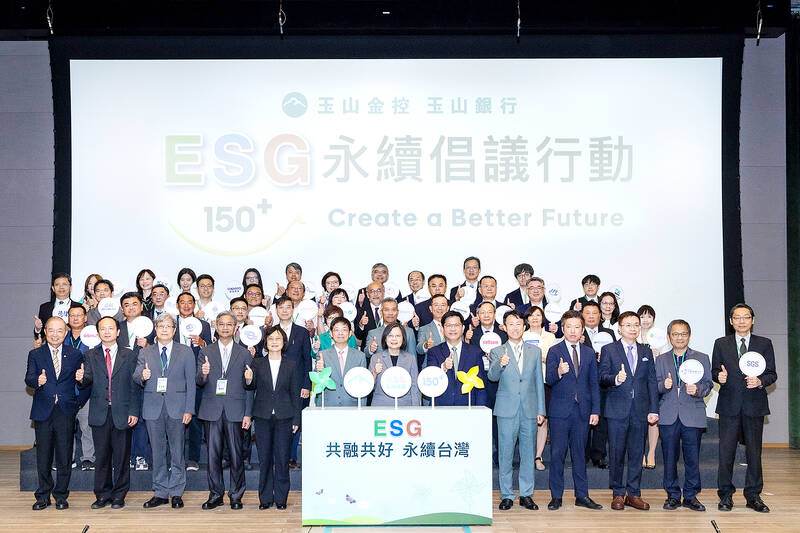
Photo: E.SUN Bank
E.SUN specially invited Helen Clarkson, CEO of The Climate Group, and Sam Kimmins, Chairman of RE100, to share their expectations and encouragement for Taiwan’s sustainable development through video. Additionally, the event featured expert discussions focusing key issues from various angles, including international trends, government policy, corporate practices, and talent development, to help address the challenges of net-zero sustainability and implement sustainability transformation effectively.
Chairman of E.SUN Joseph Huang emphasized that sustainability and climate action have become a new global language. Through the collective strength of the financial sector, E.SUN aims to amplify its positive influence and expand global perspective alongside its advocacy partners, and strengthening Taiwan’s sustainable competitiveness!
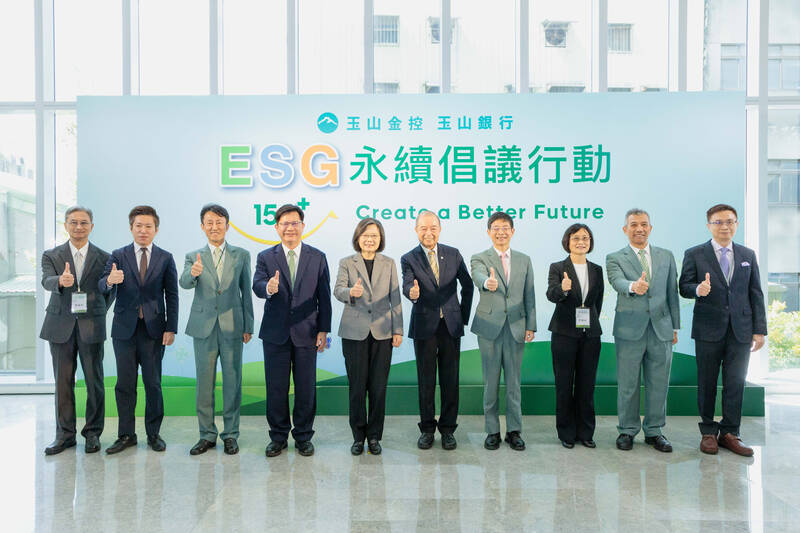
Photo: E.SUN Bank
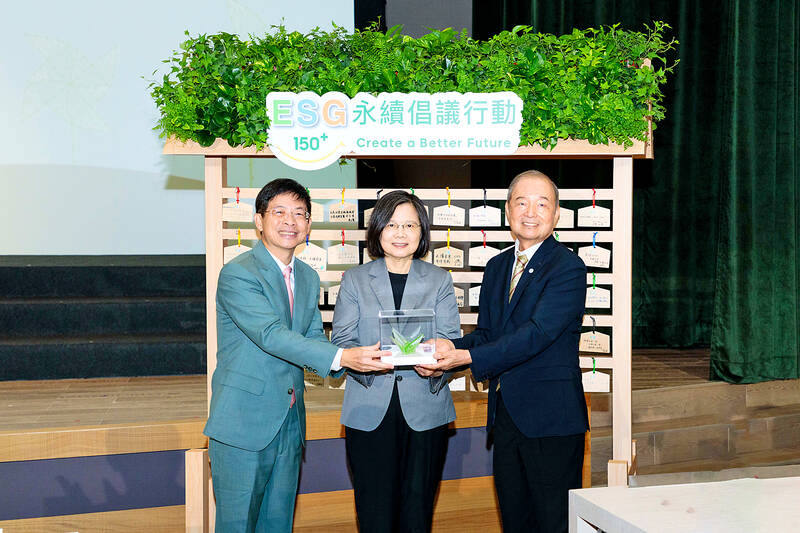
Photo: E.SUN Bank
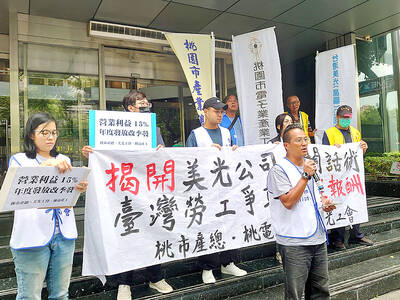
UNION DETERMINATION: Rejecting an offer for a one-time payout as an attempt to influence opinion, the union said a strike at the memory chip manufacturer is possible The Micron Taiwan workers’ union yesterday rejected a one-time payout unveiled by US-based Micron Technology Inc last week, saying it wants a long-term mechanism under which employees would share 15 percent of the company’s operating profits. While the union and the company are still in talks over the dispute, the reward package was proposed unilaterally by the employer without reaching an agreement with the union, union head Jerry Lin (林哲瑞) told reporters. Lin said he suspected the company was seeking to influence public opinion with the move. On Friday last week, Micron announced a reward package under which employees in Taiwan would receive
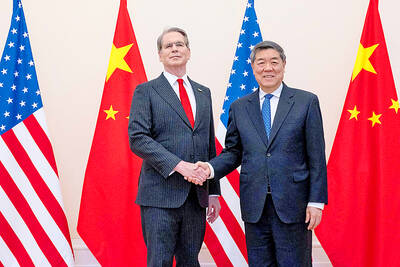
MINIMAL EXPECTATIONS: Analysts think that the two sides are likely to aim for ‘status quo’-level agreements, maintaining civility, without major trade breakthroughs US Secretary of the Treasury Scott Bessent and Chinese Vice Premier He Lifeng (何立峰) were set to meet yesterday to try to set up potential agreements on artificial intelligence (AI), tariffs and critical minerals for a summit in Washington this week between US President Donald Trump and Chinese President Xi Jinping (習近平). The meetings at JPMorgan Chase & Co’s headquarters in Manhattan, which included US Trade Representative Jamieson Greer, were due to start at about 10:30am on Sunday morning and were expected to run all day. Key topics would be the status of a US-China trade truce that is set to expire
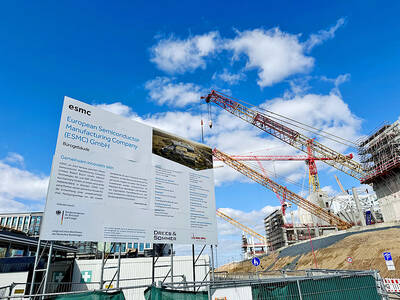
BUILDER’s RITES: The topping out ceremony is held when a project being built has its highest point laid out, a sure sign that TSMC’s European project is making solid progress A “topping out” ceremony was held on Monday at a plant under construction in Germany by Taiwan Semiconductor Manufacturing Co (TSMC, 台積電), indicating that the fab is progressing as planned and within budget, the head of a joint-venture company in charge of the project said. A topping out ceremony is the construction milestone of laying the final beam or structural piece at the highest point of a building, and it honors the construction crew, architects and engineers. European Semiconductor Manufacturing Co (ESMC) president Christian Koitzsch said that about 2,000 workers from 106 countries are working around the clock at the site in
APPEAL: Any agreement to produce advanced memory such as HBM or DRAM could run into opposition from Seoul as those technologies are sensitive, sources said South Korea’s SK Hynix Inc is in talks with Intel Corp about a deal that would see it manufacture memory chips on US soil for the first time, three people familiar with the discussions said. Under one potential scenario, SK Hynix would lease part of Intel’s long-planned chipmaking facility in Ohio, they said. Under another scenario, it could form a venture with Intel and major cloud firms that are keen to lock in memory supplies, two of the people said. A deal would relieve pressure on Intel, which has been struggling, and mark a big win for US President Donald


 RSS
RSS