


Minister of Digital Affairs Audrey Tang (唐鳳) yesterday announced the release of the Wi-Fi 6E spectrum in Taiwan to facilitate more efficient Internet connections on home routers or wireless devices, such as smartphones and notebook computers.
The spectrum, which works in the frequency band from 5.945 GHz to 6.425 GHz, the same band as used in the EU, would enable two to three times faster Internet connection speeds, lower latency and higher capacity than current Wi-Fi 6 technology, Tang said at a media gathering that marked the one-year anniversary of the opening of the ministry.
No license would be required, she said.
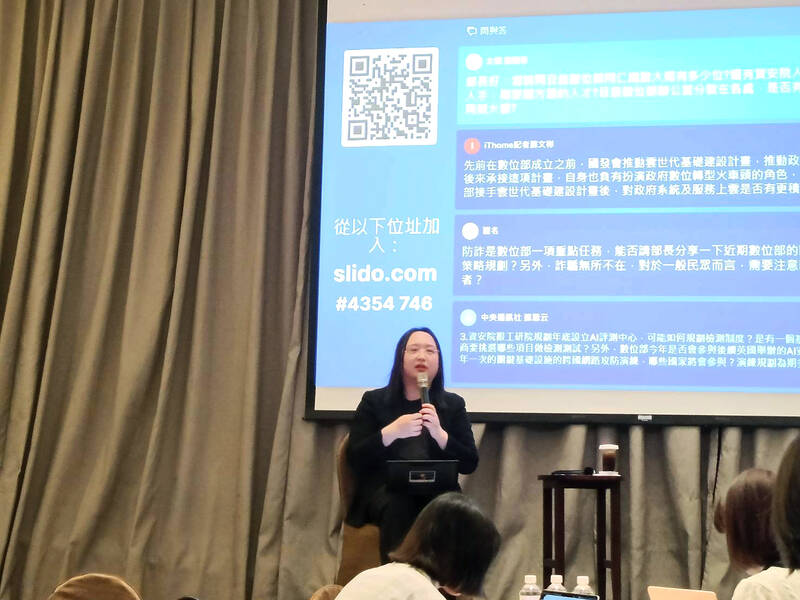
Photo: Lee Chin-hui, Taipei Times
Unlike existing bands ranging from 2.4 GHz to 5 GHz, Wi-Fi 6E improves the user experience for not only computers, but also immersive technologies such as augmented reality and virtual reality, Tang said.
Wi-Fi 6E could also allow the transmission of data sets that are two to three times larger, making working from home and videoconferencing easier, she added.
The introduction of Wi-Fi 6E is in line with operational standards in nations such as the US, Canada, Brazil and Japan, as well as the EU, Tang said.
The National Communications Commission is to start taking applications from telecoms to operate Wi-Fi 6E devices after it completes the regulations for its use, she said.
Designated numbers could help avoid confusion and reduce the chance of people being scammed, she added.
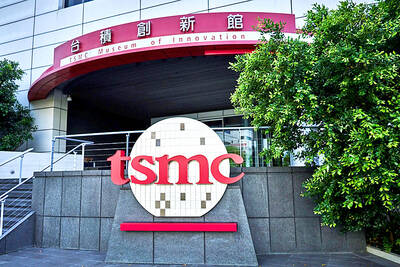
SEEKING CLARITY: Washington should not adopt measures that create uncertainties for ‘existing semiconductor investments,’ TSMC said referring to its US$165 billion in the US Taiwan Semiconductor Manufacturing Co (TSMC, 台積電) told the US that any future tariffs on Taiwanese semiconductors could reduce demand for chips and derail its pledge to increase its investment in Arizona. “New import restrictions could jeopardize current US leadership in the competitive technology industry and create uncertainties for many committed semiconductor capital projects in the US, including TSMC Arizona’s significant investment plan in Phoenix,” the chipmaker wrote in a letter to the US Department of Commerce. TSMC issued the warning in response to a solicitation for comments by the department on a possible tariff on semiconductor imports by US President Donald Trump’s
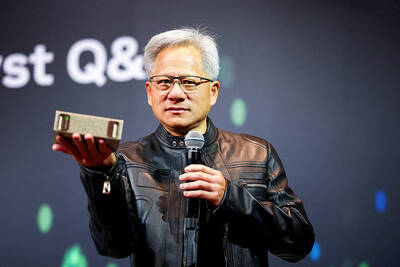
‘FAILED EXPORT CONTROLS’: Jensen Huang said that Washington should maximize the speed of AI diffusion, because not doing so would give competitors an advantage Nvidia Corp cofounder and chief executive officer Jensen Huang (黃仁勳) yesterday criticized the US government’s restrictions on exports of artificial intelligence (AI) chips to China, saying that the policy was a failure and would only spur China to accelerate AI development. The export controls gave China the spirit, motivation and government support to accelerate AI development, Huang told reporters at the Computex trade show in Taipei. The competition in China is already intense, given its strong software capabilities, extensive technology ecosystems and work efficiency, he said. “All in all, the export controls were a failure. The facts would suggest it,” he said. “The US

The government has launched a three-pronged strategy to attract local and international talent, aiming to position Taiwan as a new global hub following Nvidia Corp’s announcement that it has chosen Taipei as the site of its Taiwan headquarters. Nvidia cofounder and CEO Jensen Huang (黃仁勳) on Monday last week announced during his keynote speech at the Computex trade show in Taipei that the Nvidia Constellation, the company’s planned Taiwan headquarters, would be located in the Beitou-Shilin Technology Park (北投士林科技園區) in Taipei. Huang’s decision to establish a base in Taiwan is “primarily due to Taiwan’s talent pool and its strength in the semiconductor

French President Emmanuel Macron has expressed gratitude to Hon Hai Precision Industry Co (鴻海精密) for its plan to invest approximately 250 million euros (US$278 million) in a joint venture in France focused on the semiconductor and space industries. On his official X account on Tuesday, Macron thanked Hon Hai, also known globally as Foxconn Technology Group (富士康科技集團), for its investment projects announced at Choose France, a flagship economic summit held on Monday to attract foreign investment. In the post, Macron included a GIF displaying the national flag of the Republic of China (Taiwan), as he did for other foreign investors, including China-based


 RSS
RSS