


A total of 83 Taiwanese publicly listed companies with paid-in capital adding up to more than NT$10 billion (US$319.18 million) would be required to compile a sustainability report from 2026, and disclose the reports from 2027, the Financial Supervisory Commission (FSC) said on Thursday.
The firms include some of the largest or most well-known local companies, such as Taiwan Power Co (台電), Taiwan Semiconductor Manufacturing Co (台積電), Hon Hai Precision Industry Co (鴻海精密) and Formosa Petrochemical Corp (台塑石化).
The commission’s announcement came after the International Sustainability Standards Board (ISSB) on June 26 issued IFRS S1 — which refers to general requirements for disclosure of sustainability-related information — and IFRS S2, a guideline for climate-related disclosures.
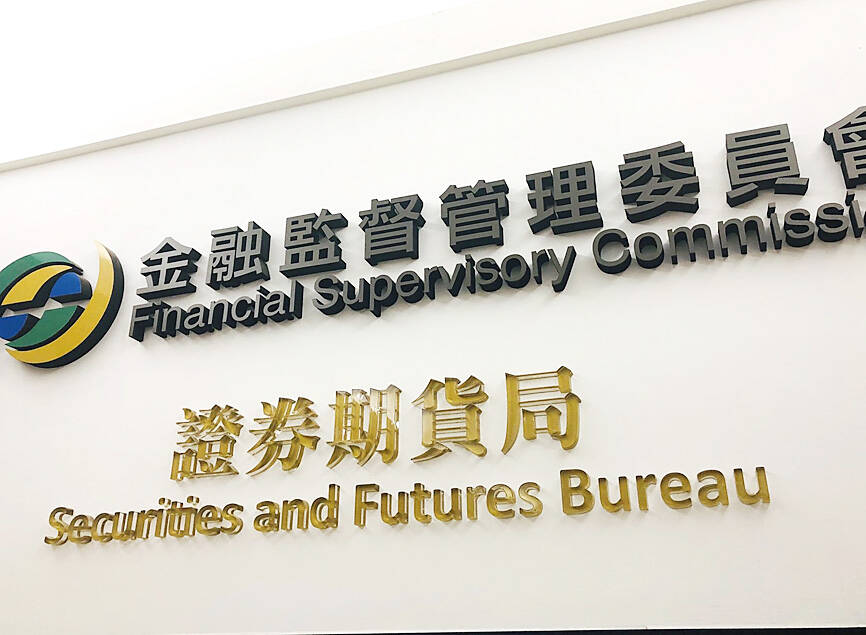
Photo: Kelson Wang, Taipei Times
The two disclosure standards demand that companies reveal quantitative data related to carbon emissions and their sustainability practices, Securities and Futures Bureau Deputy Director Kao Ching-ping (高晶萍) said.
While Japan and Hong Kong have pledged to adopt the ISSB standards, Taiwan would set its own standards, considering the attributes of local industries and the carbon footprint verification, Kao said.
However, Taiwan would refer to the ISSB standards in drawing up its code, which would require companies to present solid information on their sustainability efforts, she added.
For example, companies would be asked to reveal how much they spend on carbon emission reduction, how much carbon fees or taxes they would be subject to if they cannot meet the reduction goal, and how much they benefit from carbon emission reduction in terms of new order growth, Kao said.
The new disclosure standards would also make it easier for the public to compare different companies in terms of their sustainability practices and sustainability-related financial information, the commission said.
Meanwhile, the commission is scheduled to hold a public hearing on Aug. 8 to discuss whether the nation’s 53 steel and cement companies, which generally have considerable carbon emissions, would be required to disclose their data in 2027, Kao said.
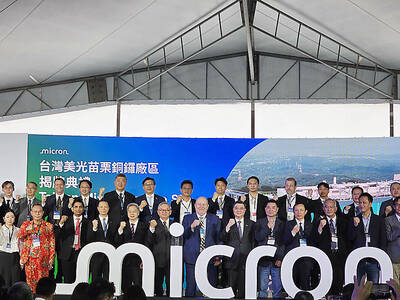
UNPRECEDENTED PACE: Micron Technology has announced plans to expand manufacturing capabilities with the acquisition of a new chip plant in Miaoli Micron Technology Inc unveiled a newly acquired chip plant in Miaoli County yesterday, as the company expands capacity to meet growing demand for advanced DRAM chips, including high-bandwidth memory chips amid the artificial intelligence boom. The plant in Miaoli County’s Tongluo Township (銅鑼), which Micron acquired from Powerchip Semiconductor Manufacturing Corp (力積電) for US$1.8 billion, is expected to make a sizeable capacity contribution to the company from fiscal 2028, the company said in a statement. It would be an extended production site of Micron’s large-scale manufacturing hub in Taichung, the company said. As the global semiconductor industry is racing to reach US$1 trillion

Singapore-based ride-hailing and delivery giant Grab Holdings Ltd has applied for regulatory approval to acquire the Taiwan operations of Germany-based Delivery Hero SE's Foodpanda in a deal valued at about US$600 million. Grab submitted the filing to the Fair Trade Commission on Friday last week, with the transaction subject to regulatory review and approval, the company said in a statement yesterday. Its independent governance structure would help foster a healthy and competitive market in Taiwan if the deal is approved, Grab said. Grab, which is listed on the NASDAQ, said in the filing that US-based Uber Technologies Inc holds about 13 percent of

Taiwan’s food delivery market could undergo a major shift if Singapore-based Grab Holdings Ltd completes its planned acquisition of Delivery Hero SE’s Foodpanda business in Taiwan, industry experts said. Grab on Monday last week announced it would acquire Foodpanda’s Taiwan operations for US$600 million. The deal is expected to be finalized in the second half of this year, with Grab aiming to complete user migration to its platform by the first half of next year. A duopoly between Uber Eats and Foodpanda dominates Taiwan’s delivery market, a structure that has remained intact since the Fair Trade Commission (FTC) blocked Uber Technologies Inc’s

Memory chip stocks extended their losses yesterday after Alphabet Inc’s Google publicized research that could allow more efficient use of the storage needed for artificial intelligence (AI) development. SK Hynix Inc and Samsung Electronics Co, South Korean leaders in the market, fell more than 6 percent and about 5 percent respectively in Seoul. In the US, Micron Technology Inc, Western Digital Corp and Sandisk Corp slid more than 2 percent in pre-market trading, after they all closed lower on Wednesday. Memory companies have been on a tear in recent months as the rapid development of AI infrastructure triggered a spike in chip


 RSS
RSS