


UBS Group AG is planning to cut more than half of Credit Suisse Group AG’s 45,000-strong workforce starting next month as a result of the bank’s emergency takeover.
Bankers, traders and support staff in Credit Suisse’s investment bank in London, New York and in some parts of Asia are expected to bear the brunt of the cuts, with almost all activities at risk, people familiar with the matter said.
Staffers have been told to expect three rounds of cuts this year, with the first expected by the end of next month and two more rounds tentatively planned for September and October, the people said, asking not to be named, as the plans are not public.

Photo: EPA-EFE
Three months after UBS agreed to take over Credit Suisse in a government-brokered rescue, the full extent of the job cuts is starting to become clear.
UBS, whose combined workforce jumped to about 120,000 when the deal closed, has said it aims to save about US$6 billion in staff costs in the coming years.
It intends to ultimately reduce the total combined headcount by about 30 percent, or 35,000 people, two of the people said.
That is broadly in line with an overall reduction of about 30,000 estimated by analysts at Redburn in a report on UBS this month.
A spokesperson for UBS declined to comment on the job exits.
The combined firm’s executive ranks already display UBS’ dominance. The executive board contains only one Credit Suisse holdover, Ulrich Koerner, who remains CEO of the acquired bank. In the key wealth management unit, only five of the more than two dozen leadership appointments come from Credit Suisse.
UBS is hoping to retain the majority of Credit Suisse’s private bankers, though many have already left, two of the people said.
In the Asia-Pacific region, UBS is planning to keep a few hundred Credit Suisse private bankers, bringing its total to more than 1,200, people familiar with the matter said earlier this month.
Some private bankers in Singapore are set to relocate to UBS’ flagship offices near a prime shopping district in the city-state as soon as next month in one of the first concrete signs of the merger taking shape.
UBS will also need to retain, at least in the near term, the people responsible for managing Credit Suisse’s structured loans to wealthy clients and the equity derivatives books, one of the people said.
With respect to the Swiss domestic business, UBS plans to make a decision in the third quarter on whether it would fully integrate it with its own Swiss unit or seek another option, such as spinning it off or listing it publicly.
The fate of the Swiss bank has been widely watched as Swiss-based companies and politicians have voiced concerns over the market power that the combined bank would exercise.


Taiwanese firms have increased investment in the Philippines in recent years as Manila’s ties with Washington deepen and global supply chains continue to shift away from China, an expert at the Chung-Hua Institution for Economic Research (CIER, 中華經濟研究院) said yesterday. The Philippines had not been among Taiwanese investors’ top choices in Southeast Asia, CIER Taiwan ASEAN Studies Center director Kristy Hsu (徐遵慈) said at a seminar in Taipei. However, Taiwan’s investment in the country has grown significantly since the COVID-19 pandemic, reaching US $257 million last year, a high in recent years, she said. Although Taiwan’s total investment in the Philippines still lags
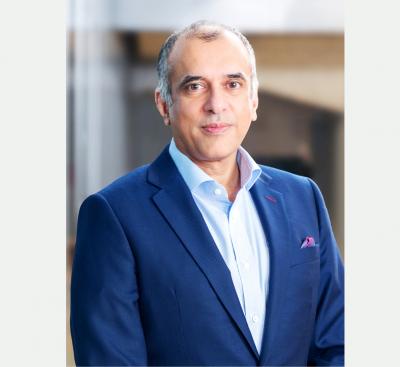
HSBC Holdings PLC is deepening its commitment to Taiwan as the economy emerges as one of the bank’s fastest-growing markets globally, driven by an artificial intelligence (AI) investment boom, expanding cross-border trade, and rising wealth creation. “The advantage that Taiwan has is a growth story linked to the semiconductor and broader AI industries, strong underlying corporate performance, and wealth creation,” said Surendra Rosha, HSBC’s co-chief executive for Asia and the Middle East, in an exclusive interview with the Taipei Times on June 2, during this year’s HSBC Taiwan Conference. That combination has helped HSBC cement its position as the most profitable international

Intel Corp regards Taiwan Semiconductor Manufacturing Co (TSMC, 台積電) as a longstanding partner, as the US chipmaker would continue outsourcing production of advanced chips to TSMC, Intel chief executive officer Lip-Bu Tan (陳立武) said yesterday. “I don’t look at people as competitors. I look at the collaboration... Nvidia is also, you know, a good friend,” Tan told a news conference following his keynote speech at the Computex trade show in Taipei. “It’s a very trusted partnership for us... We are a big, top customer for them, and we’re going to continue doing that,” he said, referring to TSMC, the world’s largest foundry

Hon Hai Precision Industry Co (鴻海精密) yesterday said it would work with US chipmaker Intel Corp to jointly develop and deploy next-generation artificial intelligence (AI) infrastructure and intelligent computing platforms in a move to capture booming demand for AI computing systems. Hon Hai, also known as Foxconn Technology Group (富士康), said in a statement that the partnership would combine its global manufacturing scale, system integration expertise and AI data center deployment capabilities with Intel’s strengths in processor architecture, silicon technologies and software ecosystem. The companies said they plan to work on equipment used in AI data centers, including server racks powered by


 RSS
RSS