

Taiwan Semiconductor Manufacturing Co (TSMC, 台積電) chairman Mark Liu (劉德音) has been invited to meet with Japanese Prime Minister Fumio Kishida in Japan, the world’s largest contract chipmaker said yesterday.
In a statement, TSMC said that Liu would today attend a meeting hosted by Kishida, but did not elaborate.
The confirmation came after international news media reported a day earlier that executives from several global semiconductor giants had been invited to attend discussions at the prime minister’s office.
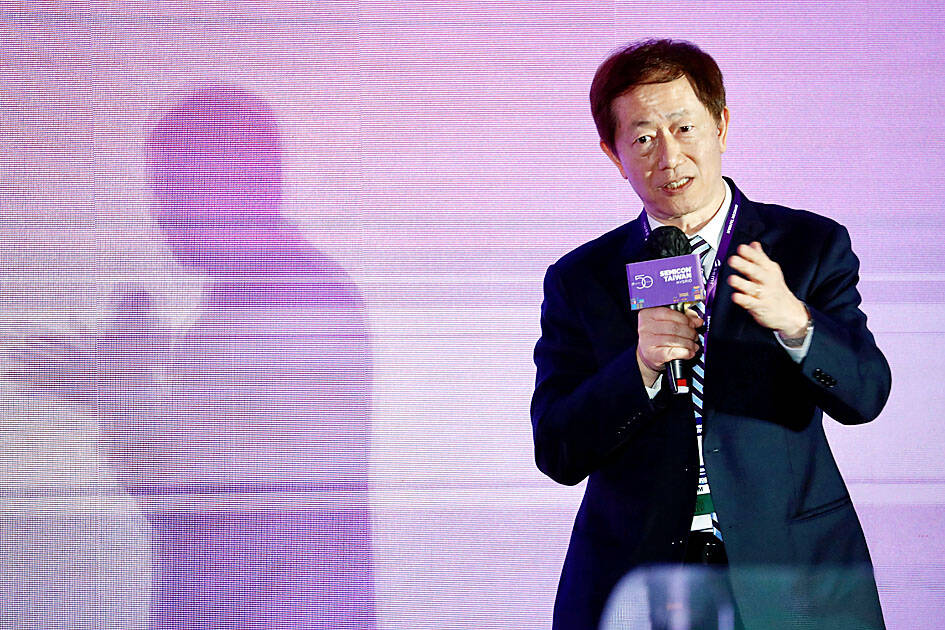
Photo: Ritchie B. Tongo, EPA-EFE
The firms include TSMC, Micron Technology Inc, Applied Materials Inc, International Business Machines Corp, Intel Corp, Samsung Electronics Co and Belgium’s semiconductor research group Interuniversity Microelectronics Centre, reports said.
Nikkei Asia said it is unusual for top executives from global semiconductor heavyweights to gather in one place for such a meeting.
In addition to Kishida, who is focused on enhancing Japan’s economic security and aiming to bolster the country’s semiconductor supply chain, Japanese Minister of Economy, Trade and Industry Yasutoshi Nishimura, along with other senior Japanese officials, would attend the meeting, Nikkei said.
The executives are expected to outline their investment and business development plans in Japan, it said.
Japanese Chief Cabinet Secretary Hirokazu Matsuno said it is unlikely that a single country could achieve semiconductor supply chain resilience, and it is important to work together with like-minded nations and regions to reach such a goal, Reuters reported.
The meeting comes as Washington is increasingly urging its allies to work together to address challenges from China in semiconductors and other areas of technological development, Reuters said.
TSMC is building a wafer fab in Kumamoto, Japan, with commercial production planned for next year to use its 12-nanometer, 16-nanometer and 28-nanometer processes.
In March 2021, the company established the TSMC Japan 3DIC R&D Center, a subsidiary in the Tsukuba Center of the National Institute of Advanced Industrial Science and Technology to develop high-end integrated circuit packaging and testing services with the aim of providing a one-stop service to customers using the chipmaker’s advanced chips.
The Japanese research-and-development center inaugurated a clean room facility in June last year.
TSMC said that the technologies developed by the subsidiary would enable system-level innovations to enhance computing performance and integrate more functionality, which is expected to facilitate new ways to drive semiconductor technology forward, beyond the industry’s conventional path of shrinking transistor size.
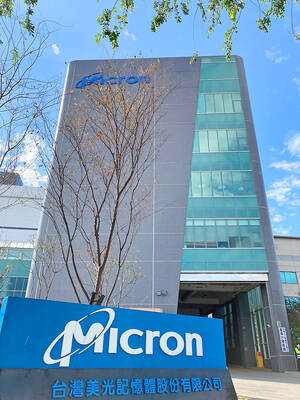
STOCK, CASH: Quarterly profit-sharing bonuses would supplement payments under the Incentive Pay Plan, offering ‘transparency’ and ‘predictability,’ an executive said Micron Memory Taiwan Co (台灣美光) yesterday unveiled a new profit-sharing program and structural wage hikes as part of its efforts to build a predictable and transparent compensation framework in response to feedback from unions. The memorychip maker, a subsidiary of US-based Micron Technology Inc, announced the major compensation structural overhaul during an online news conference following a milestone agreement with the union representing more than 10,000 workers at its Taichung facility. Under the new framework, quarterly profit-sharing bonuses would supplement payments under the Incentive Pay Plan (IPP), the company said. The IPP formula has also been substantially enhanced, it said. “Profit-sharing mechanisms are common
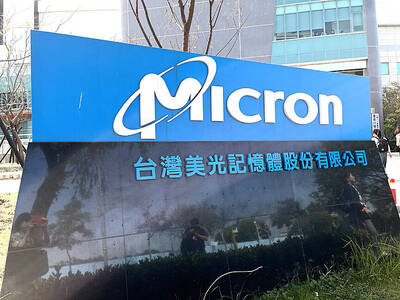
Micron Memory Taiwan and a union representing workers at its Taichung operations today said they had signed a labor-management agreement covering multiple issues, prompting both sides to withdraw from mediation scheduled for tomorrow. The joint statement did not disclose the terms of the agreement, saying the company and the union would separately communicate details to affected employees in the coming days. Idaho-based Micron, the world's third-largest memory chipmaker, employs about 15,000 people in Taiwan, a key manufacturing base where it produces DRAM and high-bandwidth memory chips used in artificial intelligence (AI) servers. Any disruption to Micron's Taiwan operations could affect already strained global
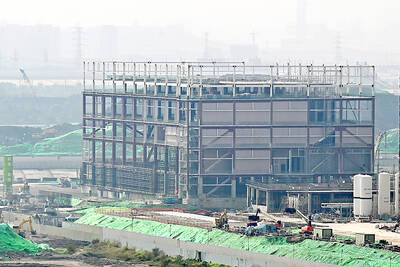
Taiwan Semiconductor Manufacturing Co (TSMC, 台積電) is suspending some construction work after an accident at one of its building sites in southern Taiwan led to the deaths of four workers. The incident took place on Tuesday during steel structure construction at TSMC’s Fab 22 in Kaohsiung, the company said. Workers fell from a height while performing steel structure hoisting and installation, a report from the Central News Agency said. A cause might be aged bolts, it said, citing a preliminary assessment by the Southern Taiwan Science Park Bureau. The bureau said that work would only resume after Shang Hao Machinery Co (上昊機械),
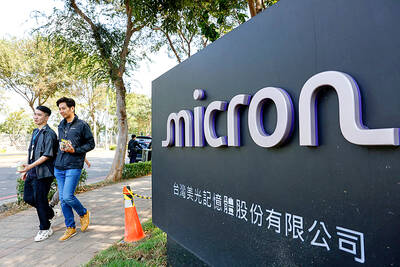
AGREEMENT REACHED: The joint statement did not disclose the details of the deal, which comes a day before the Taoyuan union is to hold a strike Micron Memory Taiwan Co (台灣美光) and a union representing workers at its Taichung operations yesterday said that they had signed a labor-management agreement covering multiple issues, prompting both sides to withdraw from mediation scheduled for today. The joint statement did not disclose the terms of the agreement, saying the company and the union would separately communicate details to affected employees in the coming days. Idaho-based Micron, the world’s third-largest memory maker, employs about 15,000 people in Taiwan, a key manufacturing base where it produces DRAM and high-bandwidth memory chips used in artificial intelligence (AI) servers. Any disruption to Micron’s Taiwan operations could affect


 RSS
RSS