


Three of the four major units of Formosa Plastics Group (FPG, 台塑集團), the nation’s largest industrial conglomerate, returned to profitability in the first quarter of this year, while another unit posted a smaller loss than the previous quarter on the back of improving market fundamentals.
Formosa Plastics Corp (台灣塑膠), Nan Ya Plastics Corp (南亞塑膠) and Formosa Petrochemical Corp (台塑石化) posted net profits of NT$2.34 billion (US$75.47 million), NT$864 million and NT$4.44 billion in the first three months of the year respectively, the companies said in separate regulatory filings yesterday.
Formosa Chemicals and Fibre Corp (台灣化學纖維) reported a net loss of NT$755 million last quarter, down from a net loss of NT$7.46 billion the previous quarter, a regulatory filing showed.
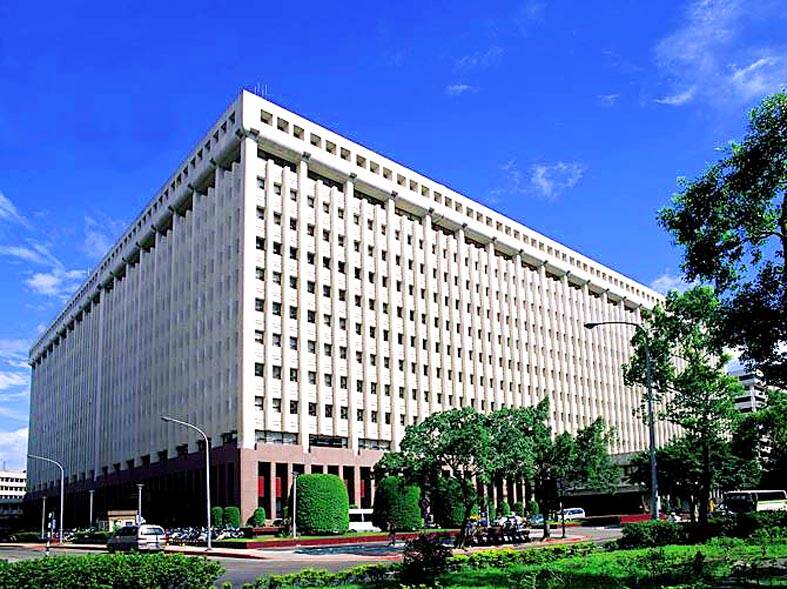
Photo: Chang Hui-wen, Taipei Times
Overall, the four FPG units posted a combined net profit of NT$6.89 billion in the first quarter, compared with a combined net loss of NT$25.29 billion in the fourth quarter of last year, but last quarter’s total remained 86.6 percent less than the same period of last year, data showed.
Formosa Plastics Corp, the group’s flagship company, said its improved bottom line last quarter, compared with a net loss of NT$7.3 billion the previous quarter, reflected recovering demand and higher product prices, as well as higher investment gains and larger spreads between revenues and material costs.
The company’s sales in the first quarter were NT$52.21 billion, up 2.2 percent from the previous quarter, and it expects higher sales this quarter coupled with improved capacity utilization, as the industry enters the high season, while its operations in the US benefited from lower natural gas costs.
Nan Ya Plastics Corp, the nation’s largest plastics maker, attributed last quarter’s profit, compared with a NT$660 million loss the previous quarter, to improved performances in the electronics, chemical and plastic processing businesses, even though customers continued to deplete their inventories.
While the company’s sales last quarter decreased 13.2 percent quarter-on-quarter to NT$65.77 billion, investment gains helped boost its profitability, it said.
As some negative factors, such as high inventory in supply chains, are expected to wane gradually and consumption momentum is likely to turn stronger, the firm’s sales are expected to recover from this quarter onward, the company said.
Formosa Petrochemical, which posted a NT$9.88 billion loss in the fourth quarter of last year, said last quarter’s results came as it earned more in the refinery business, but suffered a smaller loss at its naphtha cracking business.
The nation’s only listed oil refiner reported first-quarter sales of NT$184.64 billion, down 4.9 percent quarter-on-quarter, and said it is cautious about the sales outlook for this quarter.
That is because crude oil prices might not benefit much from an output cut by OPEC+ as the US economy appears to be slowing, which would dent oil demand, the company said.
Formosa Chemicals and Fibre, which manufactures aromatics and styrenics, said its loss improved markedly last quarter on better cost controls and investment gains, but adverse factors such as high inflation, a slower recovery in China, inventory in supply chains and new capacity from peers could still weigh on product prices and its business performance.
The company forecast sales for this quarter would be flat from last quarter’s NT$83.03 billion, while revenue this month could be lower than the NT$29.43 billion it booked for last month, it said.

Apple Inc increased iPhone production in India by about 53 percent last year and now makes a quarter of its marquee devices there, reflecting the US company’s efforts to avoid tariffs on China. The company assembled about 55 million iPhones in India last year, up from 36 million a year earlier, people familiar with the matter said, asking not to be named because the numbers aren’t public. Apple makes about 220 million to 230 million iPhones a year globally, with India’s share of the total increasing rapidly. Apple has accelerated its expansion in the world’s most populous country in recent years, bolstered

Taiwan Semiconductor Manufacturing Co’s (TSMC, 台積電) share of the global foundry market rose to almost 70 percent last year amid booming demand for artificial intelligence (AI), market information advisory firm TrendForce Corp (集邦科技) said on Thursday. The contract chipmaker posted US$122.54 billion in revenue, up 36.1 percent from a year earlier, accounting for 69.9 percent of the global market, TrendForce said. Its share was up from 64.4 percent in 2024, it said. TSMC’s closest rival, Samsung Electronics, was a distant second, posting US$12.63 billion in sales, down 3.9 percent from a year earlier, for a 7.2 percent share of the global market. In the

HEADWINDS: The company said it expects its computer business, as well as consumer electronics and communications segments to see revenue declines due to seasonality Pegatron Corp (和碩) yesterday said it aims to grow its artificial intelligence (AI) server revenue more than 10-fold this year from last year, driven by orders from neocloud solutions clients and large cloud service providers. The electronics manufacturing service provider said AI server revenue growth would be driven primarily by the Nvidia Corp GB300 server platform. Server shipments are expected to increase each quarter this year, with the second half likely to outperform the first half, it said. The AI server market is expected to broaden this year as more inference applications emerge, which would drive demand for system-on-chip, application-specific integrated circuits
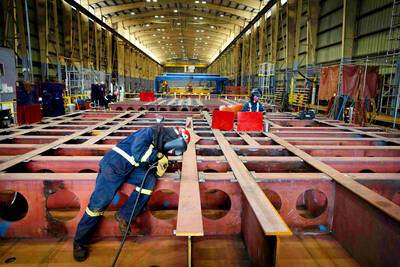
At a massive shipyard in North Vancouver, Canadian workers grind metal beams for a powerful new icebreaker crucial to cementing the country’s presence in the increasingly contested arctic. Icebreakers are specialized, expensive vessels able to navigate in the frozen far north. And “this is the crown jewel,” said Eddie Schehr, vice president of production at the Seaspan shipyard. For Canadian Prime Minister Mark Carney, who heads to Norway next Friday to observe arctic defense drills involving troops from 14 NATO states, Canada’s extreme north has emerged as a strategic priority. “Canada is and forever will be an Arctic nation,” he said ahead of


 RSS
RSS